Other Condensed Matter
arXiv:cond-mat.other
Work in condensed matter that does not fit into the other categories.
Work in condensed matter that does not fit into the other categories.
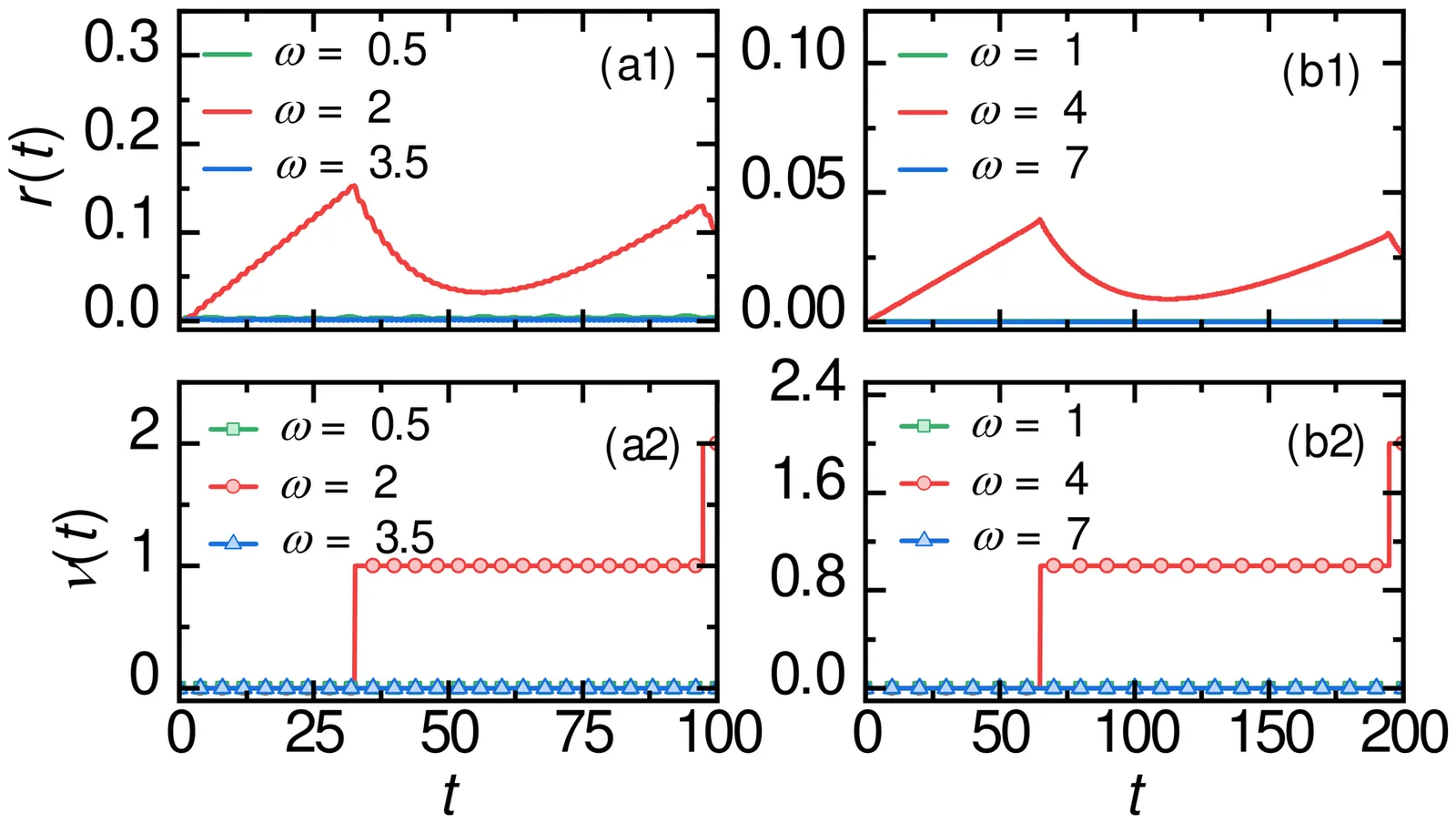
This work investigates dynamical quantum phase transitions (DQPTs) in a one-dimensional Ising model subjected to a periodically modulated transverse field. In contrast to sudden quenches, we demonstrate that DQPTs can be induced in two distinct ways. First, when the system remains within a given phase--ferromagnetic (FM) or paramagnetic (PM), a resonant periodic drive can trigger a DQPT when its frequency matches the energy-level transition of the system. The timescale for the transition is governed by the perturbation strength $λ'$, the critical mode $k_c$, and its energy gap $Δ_{k_c}$, following the scaling relation $τ\propto \sin^{-1}k_c Δ_{k_c}λ'^{-1}$. Second, for drives across the critical point between the FM and PM phases, low frequencies can always induce DQPTs, regardless of resonance. This behavior stems from the degeneracy of the energy-level at the critical point, which ensures that any drive with a frequency lower than the system's intrinsic transition frequency will inevitably excite the system. However, in the high-frequency regime, such excitation will be strongly suppressed, thereby inhibiting the occurrence of DQPTs. This study provides deeper insight into the nonequilibrium dynamics of quantum spin chains.
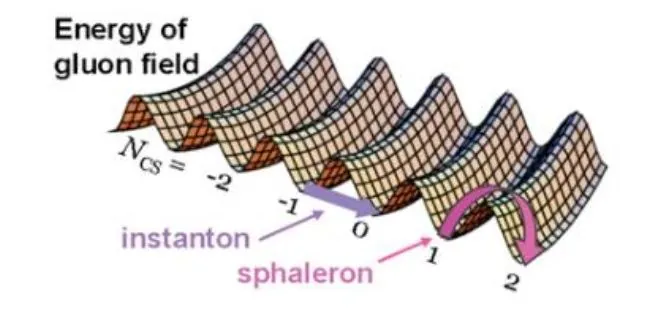
This dissertation presents a systematic theoretical investigation into realizing a condensed matter analogue of the Chiral Magnetic Effect (CME) in a quasi-planar, 2+1D system. The research establishes a conceptual bridge between the anomalous transport phenomena of high-energy physics and the emergent electronic properties of engineered honeycomb lattices. The central objective is the formulation of a low-energy effective Hamiltonian that incorporates the necessary ingredients for a CME-like effect. This is achieved by moving beyond pristine graphene, whose inherent sublattice symmetry precludes the formation of a mass gap necessary for defining robust pseudo-chiral states. The core of this work is a model based on a honeycomb lattice with explicitly broken sublattice symmetry, which introduces a band gap and endows the quasi-particles system with a well-defined pseudo-chirality based on sublattice polarization. A time-reversal symmetry-breaking parameter is introduced to asymmetrically modify the valley gaps, creating a controllable non-equilibrium imbalance analogous to the chiral chemical potential in relativistic systems. A key finding is the validation of the physical model consistency; through commutator calculations, the total angular momentum - comprising both orbital and an emergent lattice spin component - is shown to be a conserved quantity. This research successfully transforms the abstract possibility of a 2D CME into a concrete, self-consistent theoretical framework, detailing the precise symmetry conditions required for its manifestation.
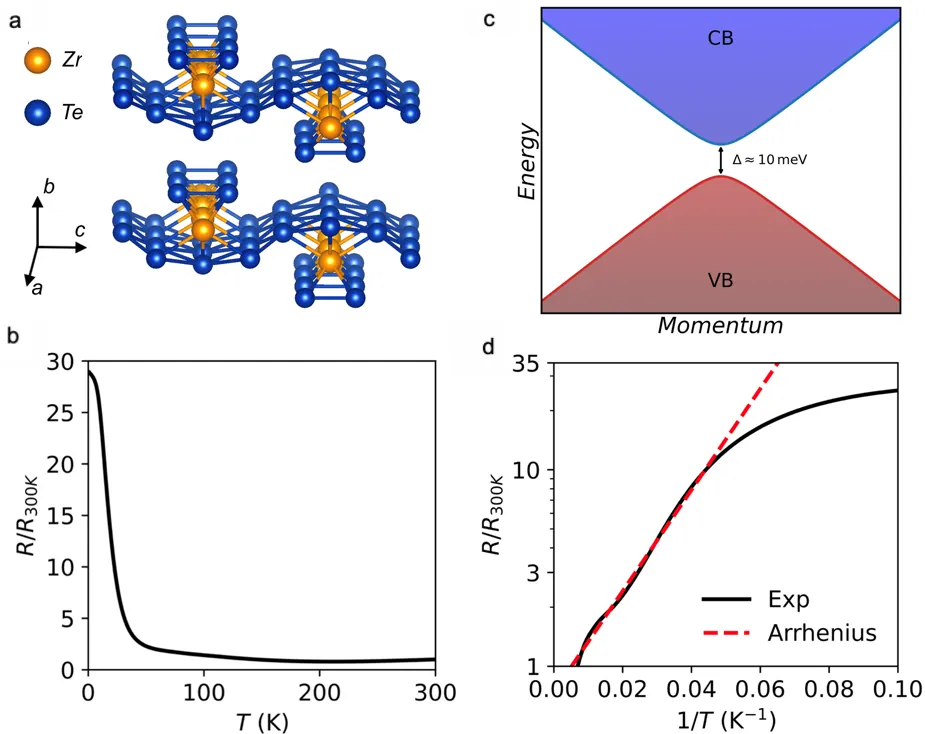
The quantum limit, where magnetic fields confine carriers to the lowest Landau level, is predicted to host exotic quantum phases arising from strengthened electronic correlations, reduced dimensionality, and increased degeneracy. We report a novel quantization regime realized in the ultra-quantum limit of the narrow-gap Dirac insulator ZrTe5, marked by anomalous magnetoresistance oscillations. These oscillations, measured in ZrTe5 single crystals down to 700 mK and up to 60 T, are distinctly non-1/B periodic and persist for magnetic fields well beyond the quantum limit. In this regime, the competition between Zeeman and cyclotron energies drives a nonlinear evolution and back-bending of Landau levels, causing low-index levels to re-cross the Fermi energy at high fields. This mechanism departs from the standard Lifshitz-Kosevich description and provides a framework to describe how the electronic structure in topological Dirac insulators evolves beyond the quantum limit.
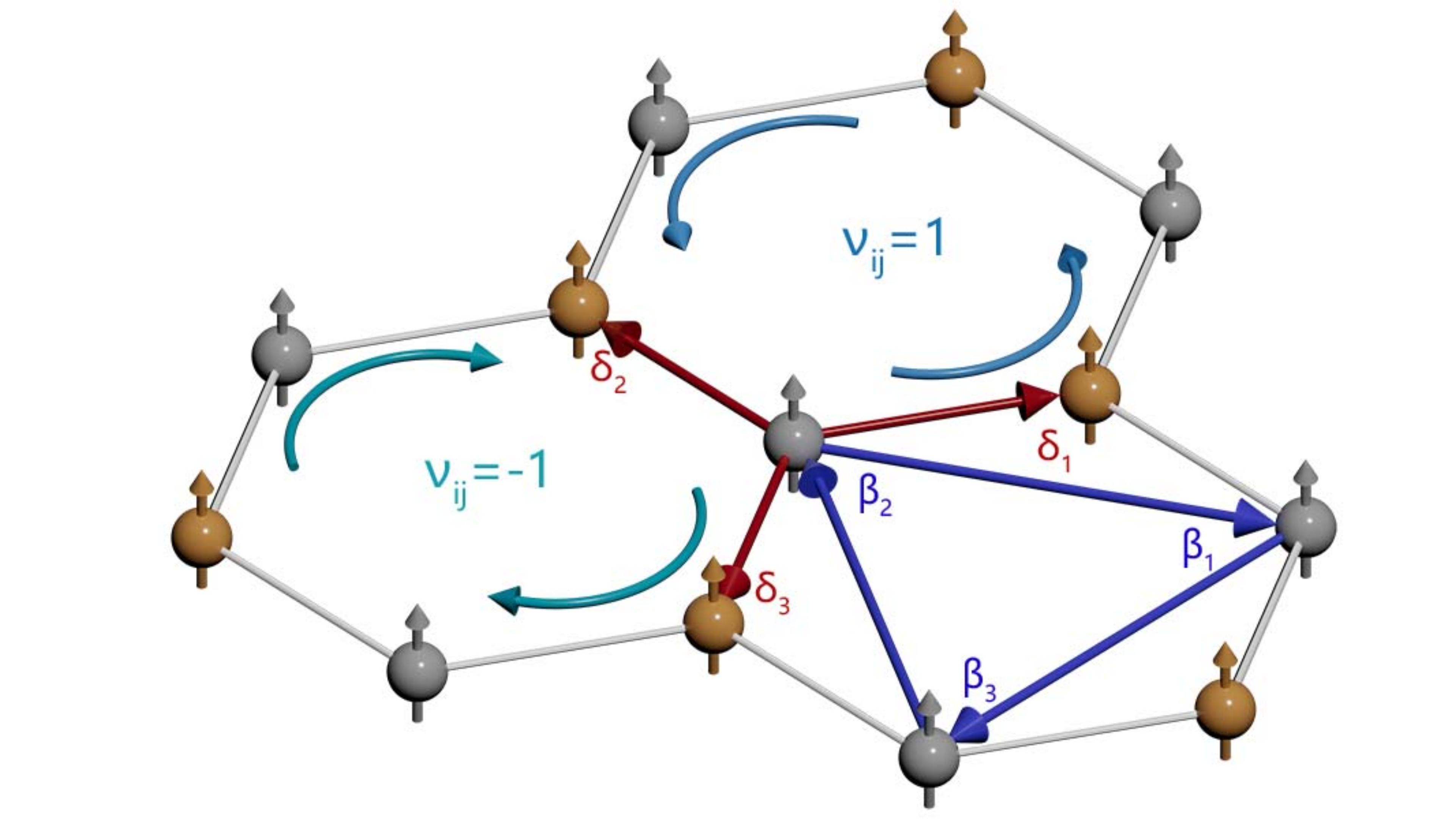
The Comment [Y.-M. Li, B. Wei, and K. Chang, Phys. Rev. Lett. 132, 219601 (2024)] pointed out that it is incorrect to predict the temperature-driven topological phase transition of Dirac magnons in honeycomb ferromagnets with Dzyaloshinskii-Moriya interactions based on the theory in Lu et al. [Y.-S. Lu, J.-L. Li, and C.-T. Wu, Phys. Rev. Lett. 127, 217202 (2021)]. Here we propose that by breaking the sublattice symmetries in honeycomb ferromagnets, increasing temperature could induce topological transitions from the trivial phase at zero temperature based on the linear spin wave theory to the Chern insulating phase above a critical temperature without changing any spin-spin interactions. The key to the finite-temperature topological magnons is considering the magnon-magnon interactions (MMIs) at a mean-field level. A self-consistently renormalized spin wave theory is employed to include self-energy corrections from MMIs, guaranteeing that the critical temperatures for topological transitions are below the Curié temperatures. Across the critical temperatures, the magnon band gap closes and reopens at K or K? points in the Brillouin zone, accompanied by nontrivial Berry curvature transitions. However, in stark contrast to the work of Lu et al. [Phys. Rev. Lett. 127, 217202 (2021)], the topological transitions cannot be revealed by the thermal Hall effect of magnons. Our work provides a realistic scheme for achieving a finite-temperature topological phase in honeycomb ferromagnets.
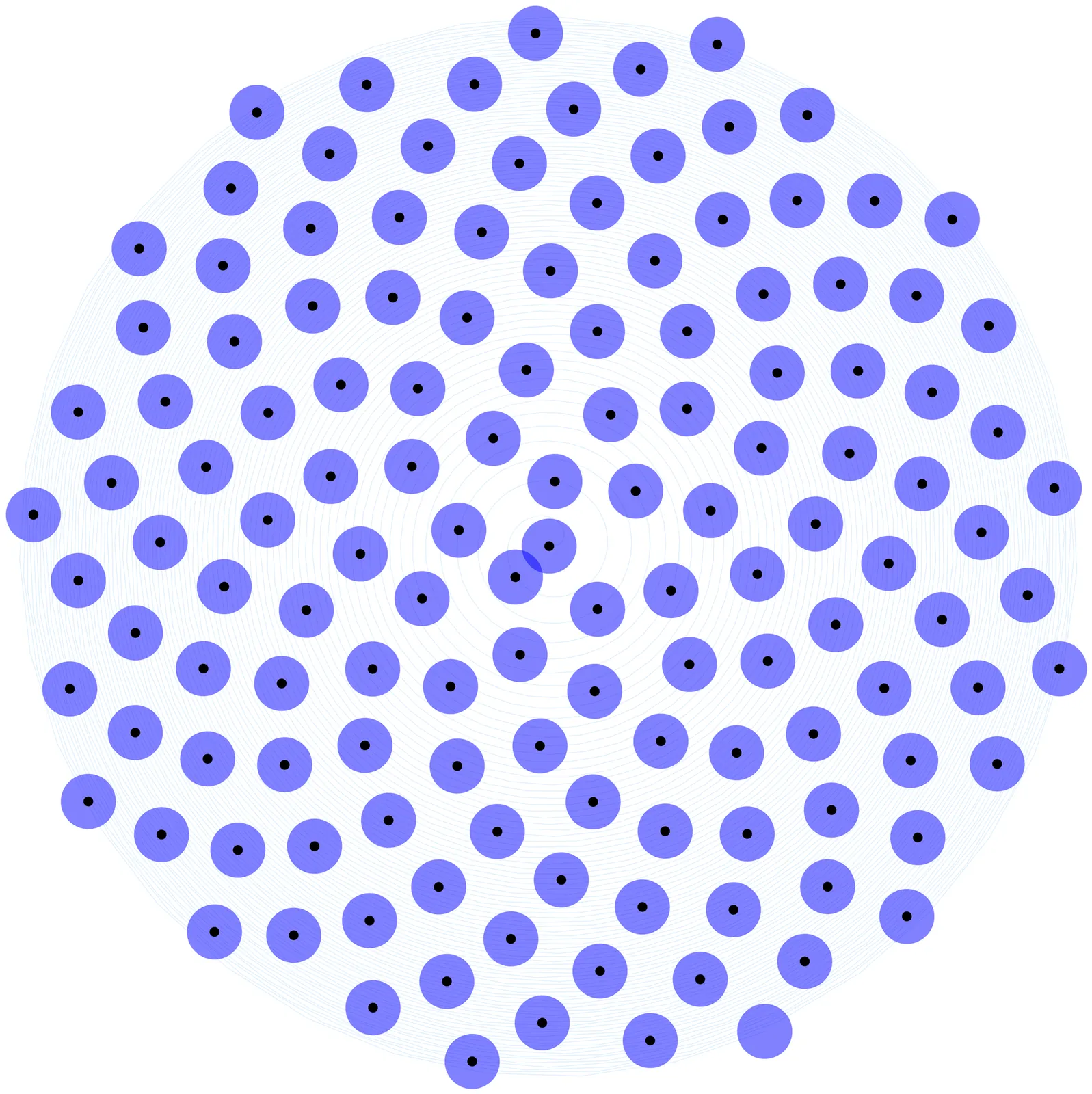
This paper investigates several distinct attempts to generalize in higher dimension the standard 2-dimensional phyllotaxy set construction. We first recall known contructions for these sets on $2D$ manifolds of constant curvature (the Euclidean plane $\mathbb{R}^2$, the sphere $\mathbb{S}^2$ and the hyperbolic plane $\mathbb{H}^2$). We then propose a first attempt to get a $3D$ phyllotactic set by piling up suitably shifted Euclidean $2D$ phyllotactic sets. A different, radially triggered, solution is then analyzed. An interesting phyllotactic set on the hypersphere $\mathbb{S}^3$ is then generated using a Hopf fibration approach. Finally,a simple 4-dimensional example is presented, generated as a simple product of two 2-dimensional planar sets. A $3D$ phyllotaxy candidate is then derived by applying a "Cut and Project" algorithm.
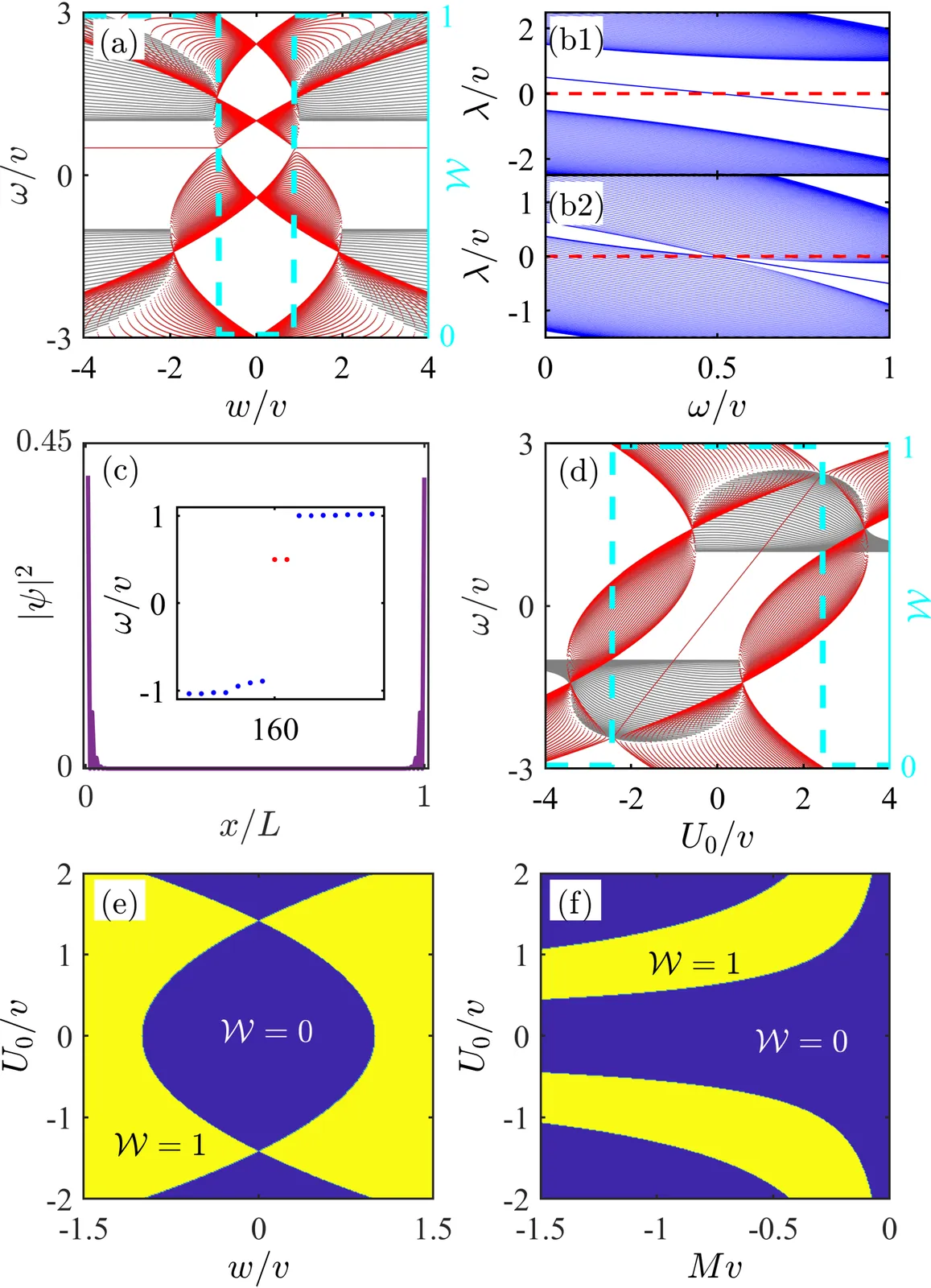
The discovery of topological phases has ushered in a new era of condensed matter physics and revealed a variety of natural and artificial materials. They obey the bulk-boundary correspondence (BBC), which guarantees the emergence of boundary states with non-zero topological invariants in the bulk. A wide attention has been paid to extending topological phases to nonlinear and non-Hermitian systems. However, the BBC and topological invariants of non-Hermitian nonlinear systems remain largely unexplored. Here, we establish a complete BBC and topological characterization of the topological phases in a class of non-Hermitian nonlinear-eigenvalue systems by introducing an auxiliary system. We restore the BBC broken by non-Hermiticity via employing the generalized Brillouin zone on the auxiliary system. Remarkably, we discover that the interplay between non-Hermiticity and nonlinearity creates an exotic complex-band topological phase that coexists with the real-band topological phase. Our results enrich the family of nonlinear topological phases and lay a foundation for exploring novel topological physics in metamaterial systems.
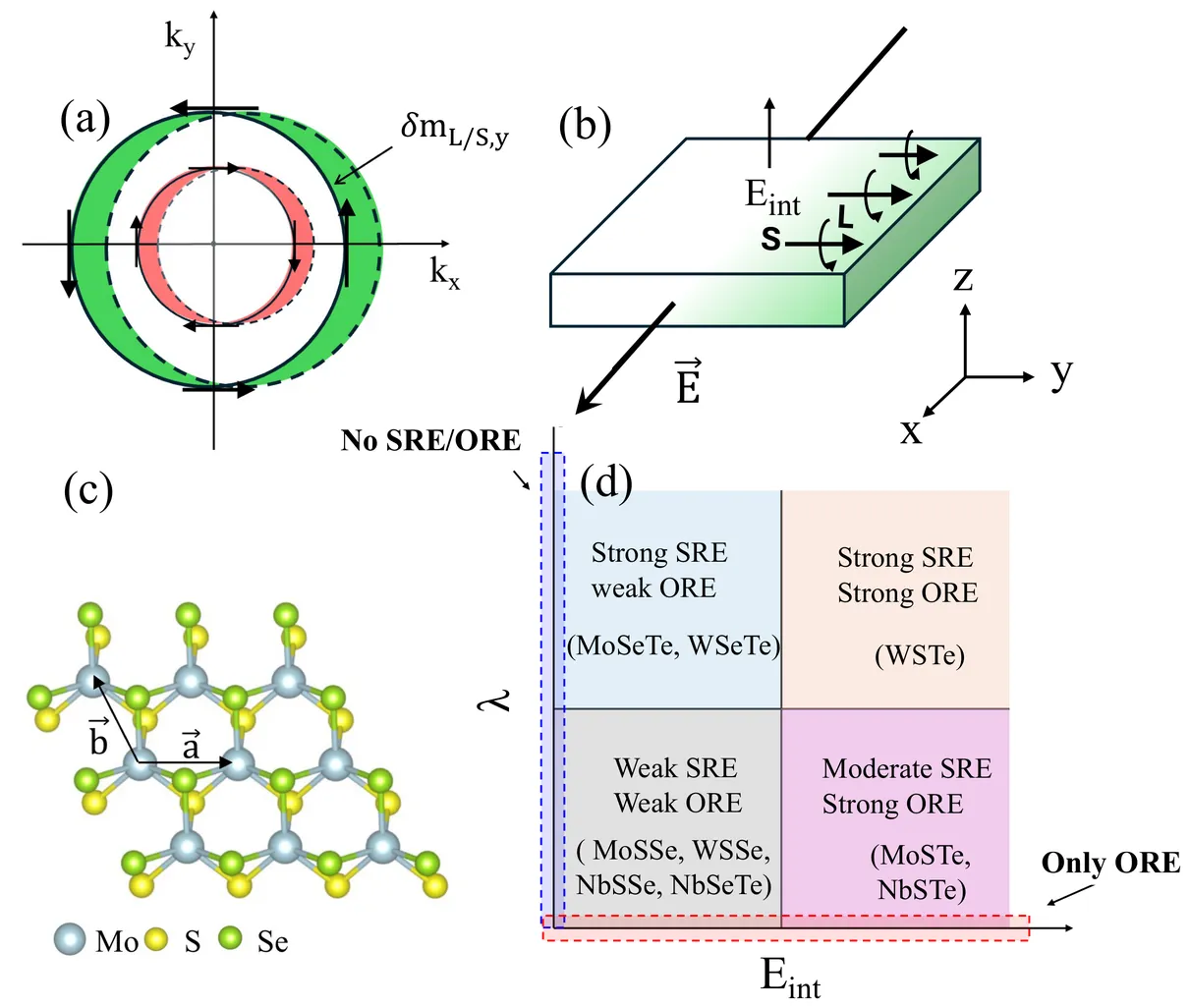
We investigate the orbital and spin Edelstein effect(OEE and SEE) in two-dimensional Janus transition metal dichalcogenides (TMDs) of the form MXX$^\prime$ $(M = Mo,\ W,\ Nb;\ X/X^\prime = S,\ Se,\ Te)$ with the aid of density functional theory calculations and tight-binding model Hamiltonian studies. The chalcogen layers $X$ and $X^\prime$, break the mirror symmetry to introduce an internal electric field $E_{int}$ normal to the plane, which is responsible for OEE and SEE. Our results show that in a non-Janus framework, the wavefunctions at the valence and conduction bands are dominated with the $|x^2-y^2>$, $|xy>$, and $|z^2>$ orbitals. Due to the $E_{int}$ of the Janus system, these orbitals are now intermixed with the $|xz>$ and $|yz>$ orbitals to produce a robust orbital texture around the valleys $Γ,K$ and $K^\prime$. The spin orbit coupling, in addition to the formation of a spin texture, introduces a chirality reversal to the orbital texture. An applied in plane electric field creates both OEE and SEE with the former being one order higher in magnitude. This makes the Janus materials promising for spin-orbitronics. Our work paves the way for further experimental exploration for orbital and spin orbital torque in Janus TMDs.
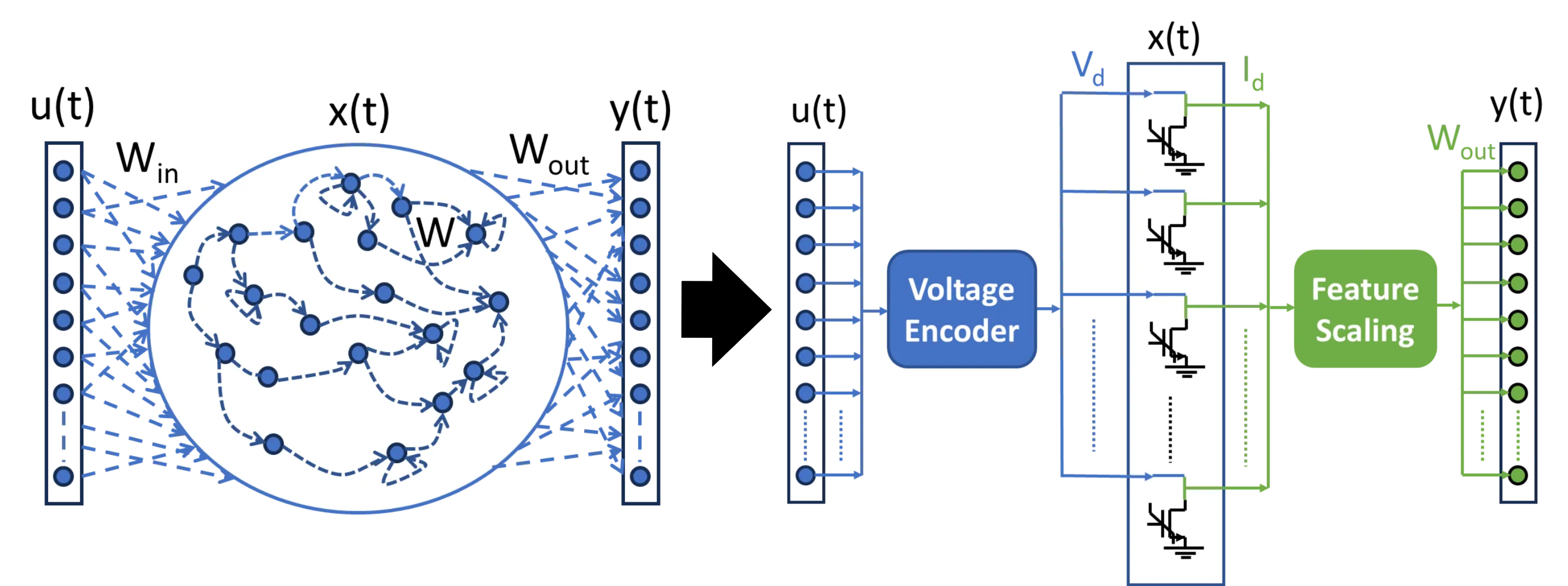
The exponential growth of edge artificial intelligence demands material-focused solutions to overcome energy consumption and latency limitations when processing real-time temporal data. Physical reservoir computing (PRC) offers an energy-efficient paradigm but faces challenges due to limited device scalability and reconfigurability. Additionally, reservoir and readout layers require memory of different timescales, short-term and long-term respectively - a material challenge hindering CMOS-compatible implementations. This work demonstrates a CMOS-compatible ferroelectric transistor using hafnium-zirconium-oxide (HZO) and silicon, enabling dual-memory operation. This system exhibits non-volatile long-term memory (LTM) from ferroelectric HZO polarization and volatile short-term memory (STM) from engineered non-quasi-static (NQS) channel-charge relaxation driven by gate-source/drain overlap capacitance. Ferroelectric polarization acts as non-volatile programming of volatile dynamics: by modulating threshold voltage, the ferroelectric state deterministically switches the NQS time constant and computational behavior between paired-pulse facilitation (PPF) and depression (PPD). This establishes a generalizable material-design principle applicable to diverse ferroelectric-semiconductor heterostructures, extending beyond silicon to oxide semiconductors and heterogeneously-integrated systems. The device solves second-order nonlinear tasks with 3.69 x 10^-3 normalized error using only 16 reservoir states - ~5x reduction - achieving 20 us response time (~1000x faster) and 1.5 x 10^-7 J energy consumption, providing an immediately manufacturable pathway for neuromorphic hardware and energy-efficient edge intelligence.
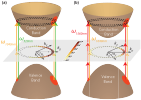
Although the absorption of light in a bulk homogeneous semiconductor produces photocarriers with non-zero momentum, it generally does not produce a current in the absence of an applied electric field because equal amounts of carriers with opposite momentum are injected. The interference of absorption processes, for example, between one-photon and two-photon absorption, can produce a current because constructive interference for carriers with one momentum can correspond to destructive interference for carriers with the opposite momentum. We show that for the interference between two-photon and three-photon absorption, the current has a narrower angular spread, i.e., a ``beam'' of electrons in a specified direction is produced in the semiconductor.
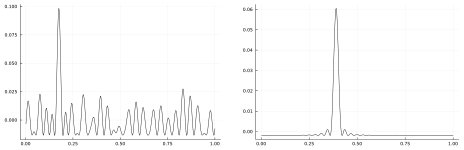
We present an open-source Julia-based software toolkit for solving the phase problem using dual-space iterative algorithms. The toolkit is specifically designed for aperiodic crystals and quasicrystals, supporting general space group symmetries in arbitrary dimensions. A key feature is the symmetry-breaking anti-aliasing sampling scheme, optimized for computational efficiency when working with strongly anisotropic diffraction data, common for quasicrystals. This scheme avoids sampling redundancy caused by symmetry constraints, imposed during phasing iterations. The toolkit includes a reference implementation of the charge flipping algorithm and also allows users to implement custom phasing algorithms with fine-grained control over the iterative process.
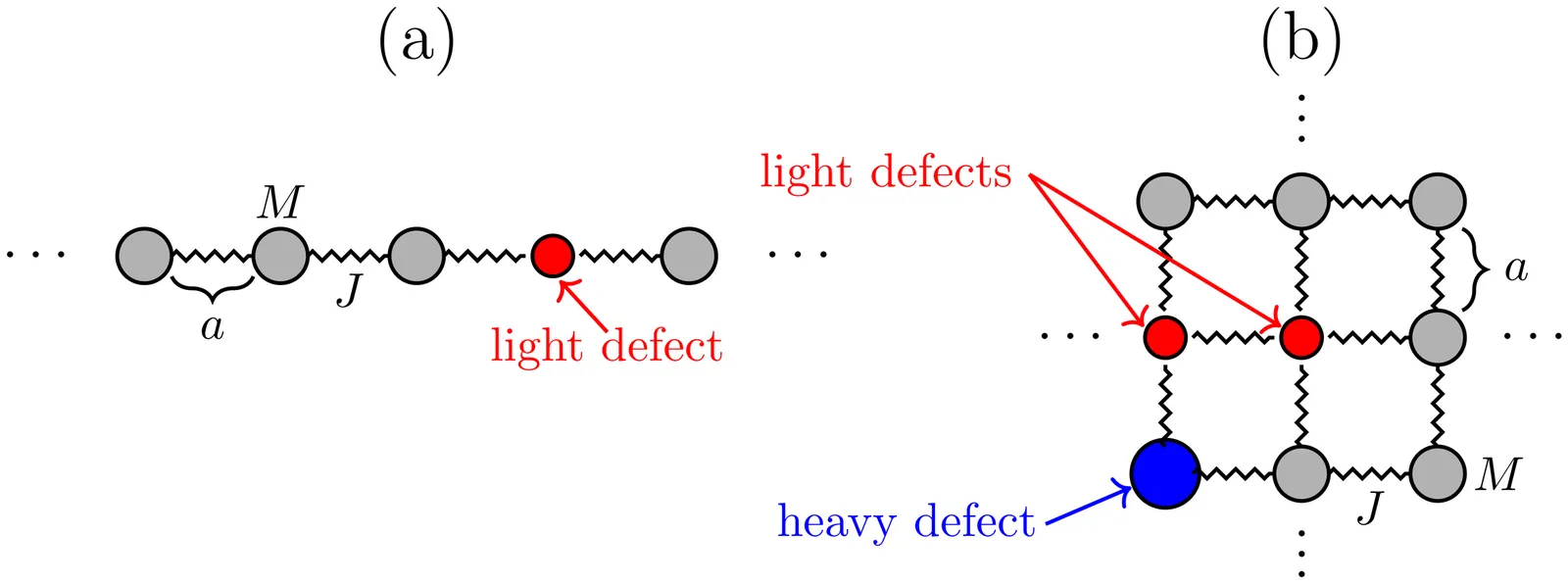
This paper presents a rigorous proof that arbitrarily weak perturbations produce localized vibrational (phonon) modes in one- and two-dimensional discrete lattices, inspired by analogous results for the Schr{ö}dinger and Maxwell equations, and complementing previous explicit solutions for specific perturbations (e.g., decreasing a single mass). In particular, we study monatomic crystals with nearest-neighbor harmonic interactions, corresponding to square lattices of masses and springs, and prove that arbitrary localized perturbations that decrease the net mass lead to localized vibrating modes. The proof employs a straightforward variational method that should be extensible to other discrete lattices, interactions, and perturbations.
 2511.03510
We derive a repulsive, charge-dipole-like interaction for a Dirac particle in a rotating frame, arising from a geometric $U(1)$ gauge symmetry associated with the Berry phase. The Lagrangian of this system includes a non-inertial correction due to centrifugal field coupling. By imposing gauge symmetry and treating it as a full gauge theory, the Lagrangian is extended to include Berry connection and curvature terms. Upon integrating out the geometric gauge field, the effective action is obtained. This leads to the emergence of a repulsive, long-range effective interaction in the Lagrangian. Explicitly, in the non-inertial frame of the observer, the geometric gauge invariance effectively leads to a repulsive Coulomb-interaction in momentum space. In real space, the inertial repulsion manifests in a $1/\vert r\vert^{2}$ potential, which is symmetric about the origin of rotation and mirrors charge-dipole interaction.
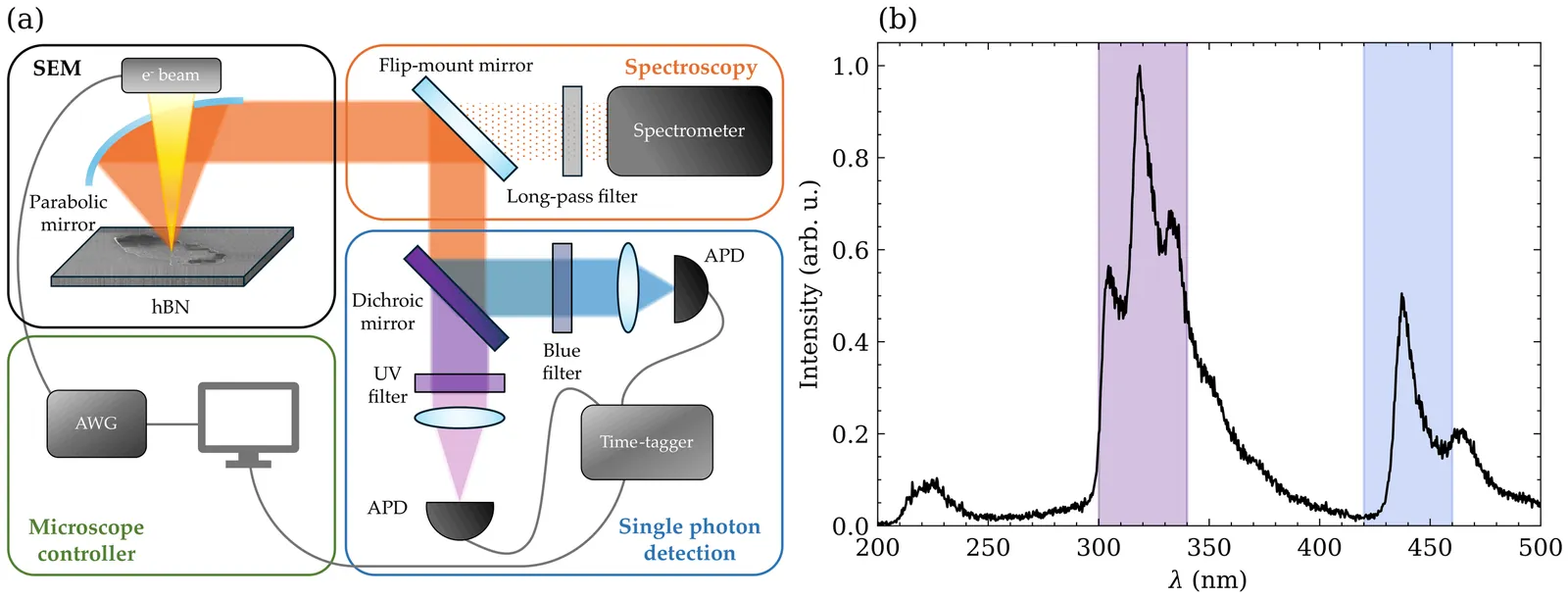
Among the variety of quantum emitters in hexagonal boron nitride (hBN), blue-emitting color centers, or B centers, have gathered a particular interest owing to their excellent quantum optical properties. Moreover, the fact that they can be locally activated by an electron beam makes them suitable for top-down integration in photonic devices. However, in the absence of a real-time monitoring technique sensitive to individual emitters, the activation process is stochastic in the number of emitters, and its mechanism is under debate. Here, we implement an in-situ cathodoluminescence monitoring setup capable of detecting individual quantum emitters in the blue and ultraviolet (UV) range. We demonstrate that the activation of individual B centers is spatially and temporally correlated with the deactivation of individual UV centers emitting at 4.1 eV, which are ubiquitous in hBN. We then make use of the ability to detect individual B center activation events to demonstrate the controlled creation of an array with only one emitter per irradiation site. Additionally, we demonstrate a symmetric technique for heralded selective deactivation of individual emitters. Our results provide insights into the microscopic structure and activation mechanism of B centers, as well as versatile techniques for their deterministic integration.
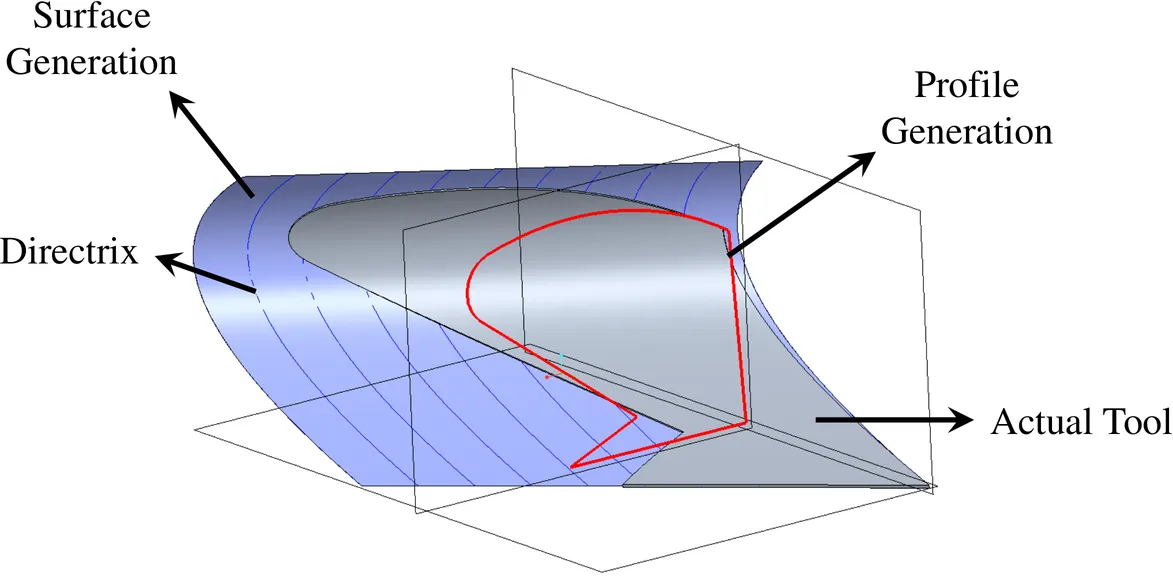
The design of a mouldboard (MB) plough is critical for achieving efficient soil inversion, which directly impacts soil aeration, weed control, and overall agricultural productivity. In this work, a design modification of the cylindroid-shaped MB plough is proposed, focusing on optimizing its surface profile to enhance performance. The discrete element method is used to simulate the ploughing process and evaluate the performance of the modified plough profile. The modified plough profile is compared against a previously proposed design to assess its impact on soil inversion efficiency, wear reduction, and stress distribution. A novel methodology is introduced to evaluate the plough's performance in soil inversion. The modified design demonstrates superior soil inversion efficiency, with improvements of up to $32.95\%$ in the inversion index for different velocities. The modified design achieves a notable reduction in wear up to $23.7\%$, compared to the original design. Although a slight increase in stress is observed in the modified design due to higher forces, the induced stresses remain well within the permissible limits for the plough material. Overall, the findings highlight the advantages of the modified plough design, including enhanced soil inversion efficiency and reduced wear, underscoring its potential for improved performance in tillage applications. However, the current study is limited to simulation-based analysis without experimental or field validation. Future work will focus on full-scale physical experiments to validate the simulation outcomes and incorporate additional factors such as depth-dependent moisture, soil cohesion, and multi-factor wear models for improved predictive accuracy.
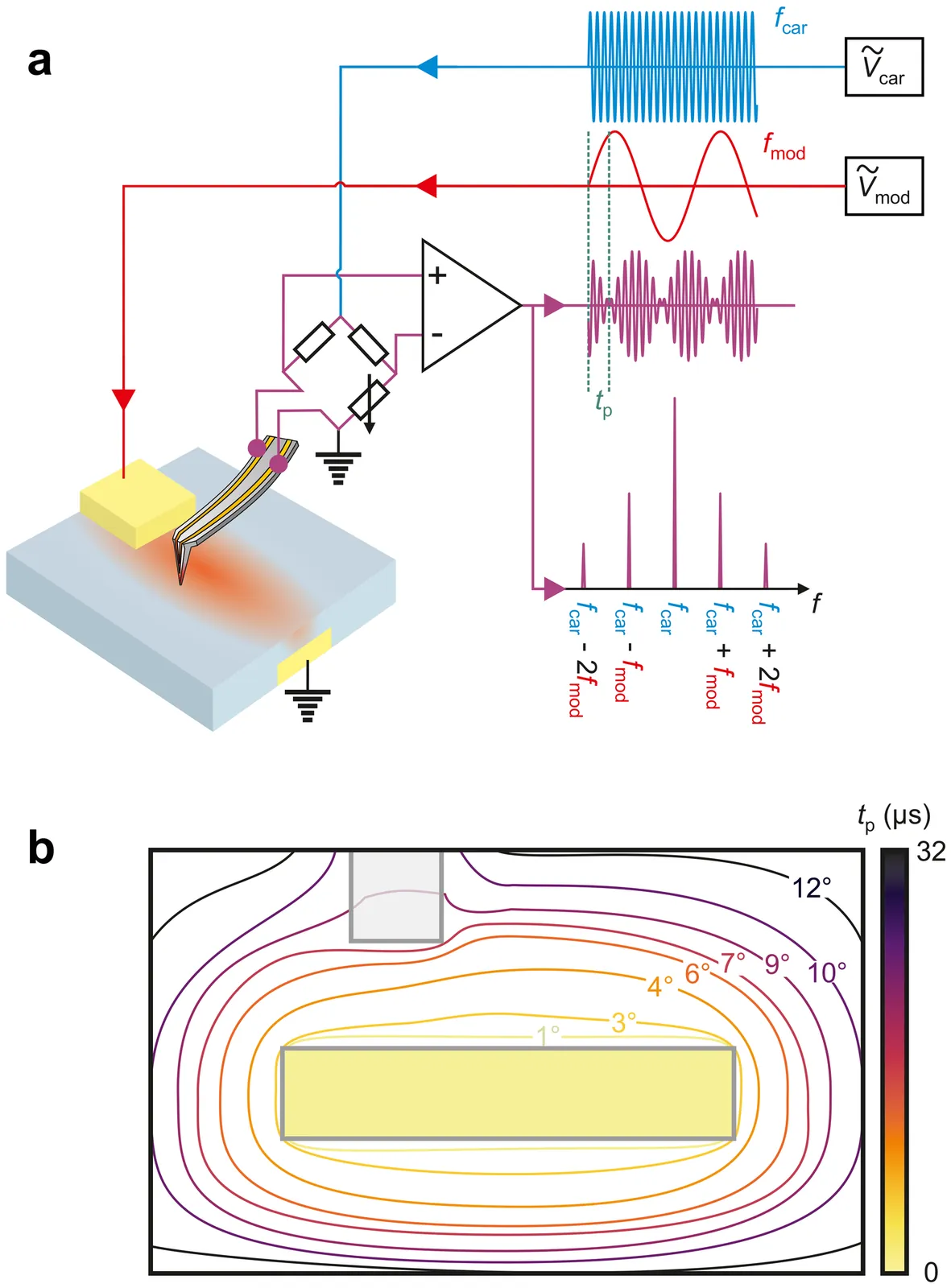
Efficient thermal management is critical for cryogenic CMOS circuits, where local heating can compromise device performance and qubit coherence. Understanding heat flow at the nanoscale in these multilayer architectures requires localized, high-resolution thermal probing techniques capable of accessing buried structures. Here, we introduce a sideband thermal wave detection scheme for Scanning Thermal Microscopy, S-STWM, to probe deeply buried heater structures within CMOS dies. By extracting the phase of propagating thermal waves, this method provides spatially resolved insight into heat dissipation pathways through complex multilayer structures. Our approach enables quantitative evaluation of thermal management strategies, informs the design of cryo-CMOS circuits, and establishes a foundation for in situ thermal characterization under cryogenic operating conditions.
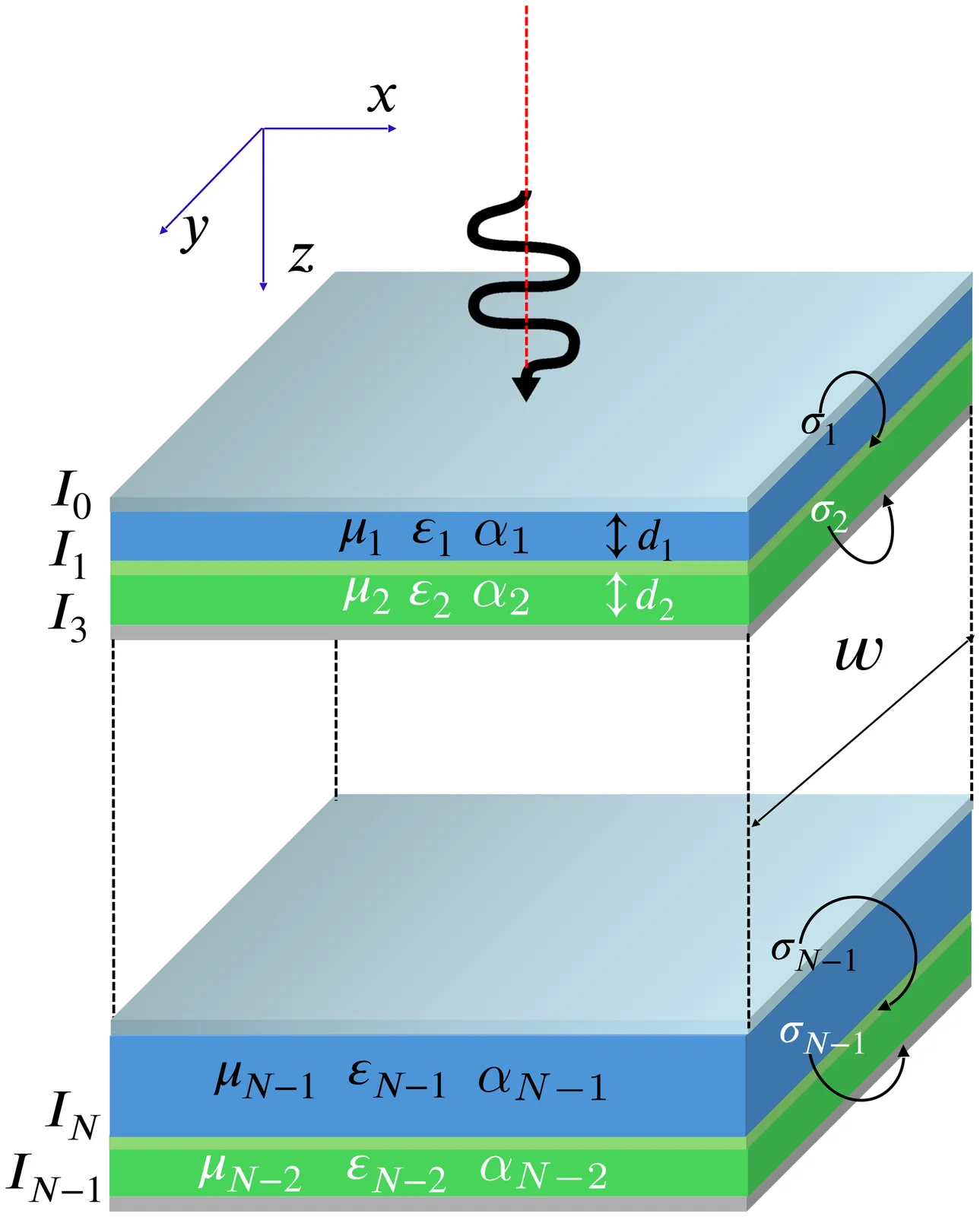
In this work, we investigate the bi-isotropic effects in the formation and tunability of hybrid surface polaritons in bilayer configurations. We consider a heterostructure composed of a medium with bi-isotropic constitutive relations and an AFM layer. Using the transfer matrix formalism, we derive general expressions for the dispersion relations of surface polaritonic modes, including the dependence on the bi-isotropic parameter, and analyze their coupling to bulk magnon-polaritons. As an illustration of application, we consider a heterostructure formed with Bi$_{2}$Se$_{3}$ interfaced with antiferromagnetic (AFM) materials that support terahertz-frequency magnons, specifically Cr$_{2}$O$_{3}$ and FeF$_{2}$. In the strong bi-isotropic coupling regime, the surface Dirac plasmon--phonon--magnon polariton (DPPMP) dispersion undergoes a pronounced redshift, accompanied by suppression of the characteristic anticrossing between the Dirac plasmon and the phonon. This effect, observed in all AFM materials considered, suggests a weakening of the hybrid interaction, possibly due to saturation or detuning mechanisms induced by increased $α$. Furthermore, increasing the Fermi energy of the topological insulator enhances the surface plasmon and phonon contributions, inducing a blueshift of the DPPP branches and bringing them closer to resonance with the magnon mode, thereby increasing the hybridization strength. Intriguingly, this redshift partially compensates the blueshift induced by a higher Fermi level, restoring the system to a weak-coupling regime analogous to that observed at lower Fermi energies. Our findings reveal that both the Fermi level and the bi-isotropic response offer independent and complementary control parameters for tuning the strength of light--magnon coupling in TI/AFM heterostructures, with potential implications for reconfigurable THz spintronic and photonic devices.
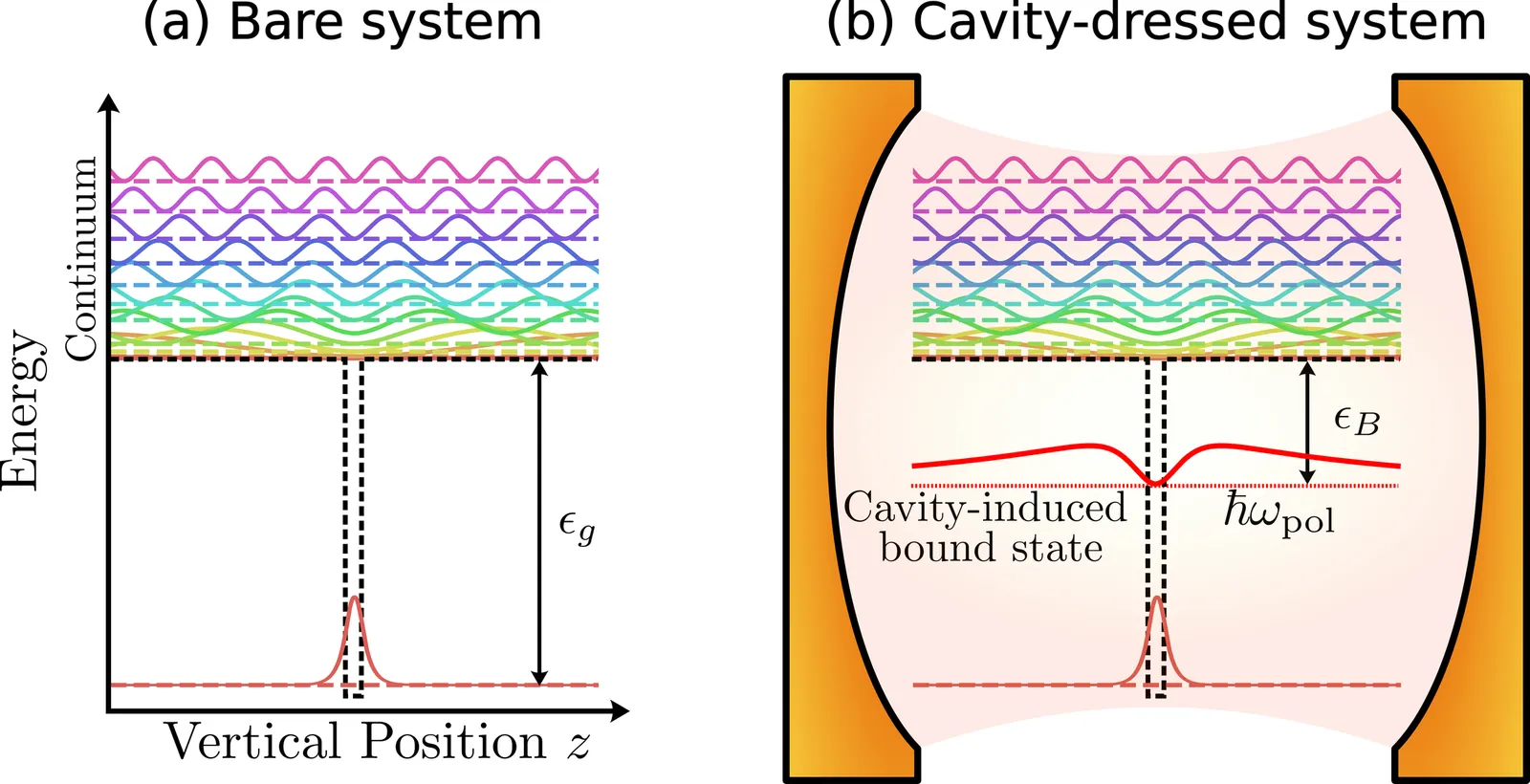
We theoretically predict the interaction between polaritonic excitations arising from the coupling of a cavity photon mode with bound to continuum intersubband transitions in a doped quantum well. The resulting exciton bound by photon exchange, recently demonstrated experimentally, exhibits a binding energy that can be continuously tuned by varying the cavity frequency. We show that polariton-polariton interactions, originating from both Coulomb interactions and Pauli blocking, can be dramatically enhanced by reducing the exciton binding energy, thereby increasing the effective Bohr radius along the growth direction. This regime is reminiscent of Rydberg atoms, where weak binding leads to strong quantum interactions. Our predictions indicate that this physics can give rise to giant quantum optical nonlinearities in the mid and far infrared, a spectral region that remains largely unexplored in quantum optics and offers exciting opportunities for both fundamental studies and applications.
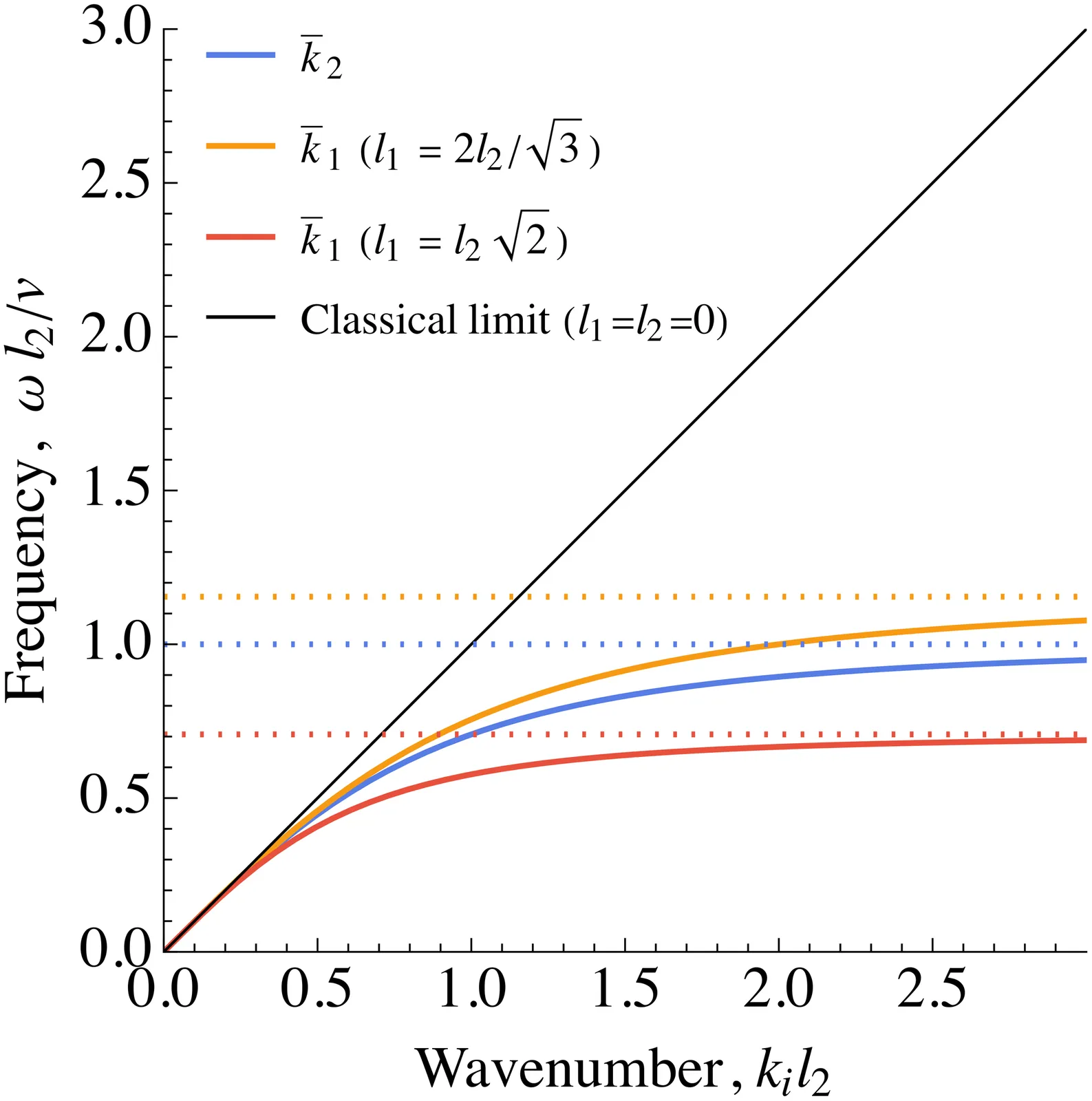
In this work, we develop a potential-based formalism for Maxwell's equations in isotropic media with weak spatial dispersion within the electric quadrupole-magnetic dipole approximation. We introduce an operator form of the constitutive relations along with a modified Lorenz gauge condition, which enables the derivation of decoupled generalized wave equations for electromagnetic potentials. For time-harmonic processes, we derive the representation of general solution for these equations as a combination of solutions to Helmholtz-type equations, whose parameters are determined by both standard and hyper-susceptibilities of the medium. We show that the proposed approach can be extended to more general constitutive relations and it provides a convenient framework for solving various applied problems. Specifically, using a derived closed-form solution for the problem of plane wave incidence on a planar interface, we demonstrate that a correct definition of the Poynting vector within the multipole theory must incorporate quadrupole effects -- an aspect overlooked in some previous works that has led to inconsistent results. We further establish the necessity of accounting for both propagated and evanescent longitudinal components in reflected and transmitted waves. The presence of these components, which follow directly from the general solution for electromagnetic potentials, is essential for satisfying all classical and additional boundary conditions in media with quadrupolar response (e.g., in metamaterials or quadrupolar liquid mixtures). The complete set of these boundary conditions is derived based on the least action principle, ensuring variational consistency with the field equations and generalizing previously known formulations of multipole theory.
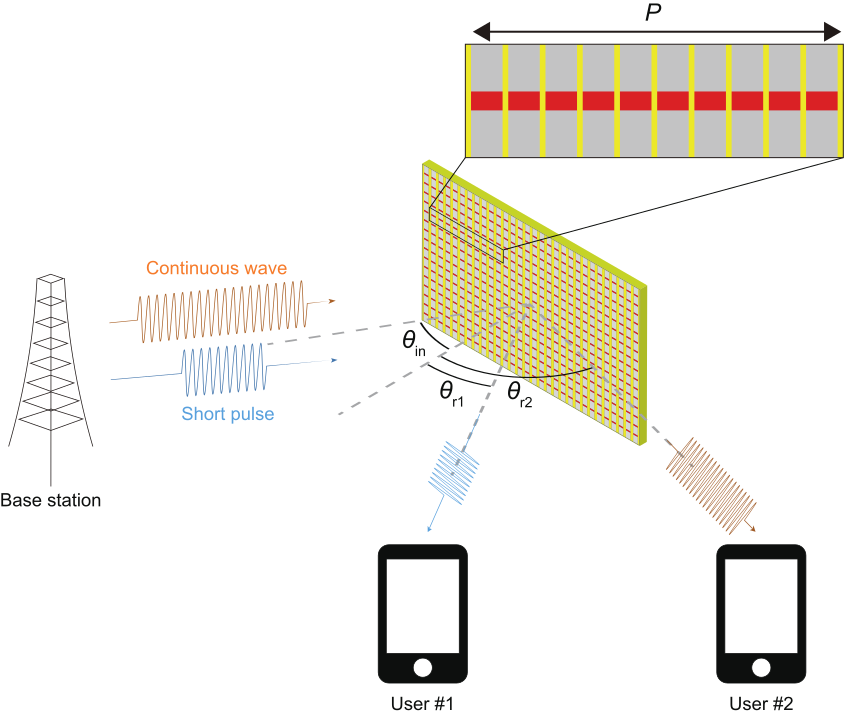
In this study, we introduce a design concept that leverages pulse width variation to enable a reconfigurable intelligent surface (RIS) and to autonomously switch reflection properties between two angles without any active control system. Our RIS alters its beam pattern from a singular specular reflection to another unique singular anomalous reflection when the incoming waveform changes from a short pulse to a continuous wave, even at the same frequency. Unlike conventional RISs, our passive control mechanism eliminates the requirements of active components and precise symbol-level synchronization with the transmitting antennas, reducing the system complexity level while offering dynamic material adaptability. We numerically show that the proposed RIS design is capable of varying the received magnitude of an incident wave by a factor of ten, which is also experimentally validated for the first time. Employing binary phase-shift keying (BPSK) modulation, we further report that the communication characteristics can be varied by 7 dB or more, which indicates that the proposed design is not limited to a single frequency component as long as the bandwidth of the given signal is covered by that of the RIS design. These results may present new opportunities for exploring and deploying pulse width-dependent RISs in practical scenarios involving next-generation communication systems.
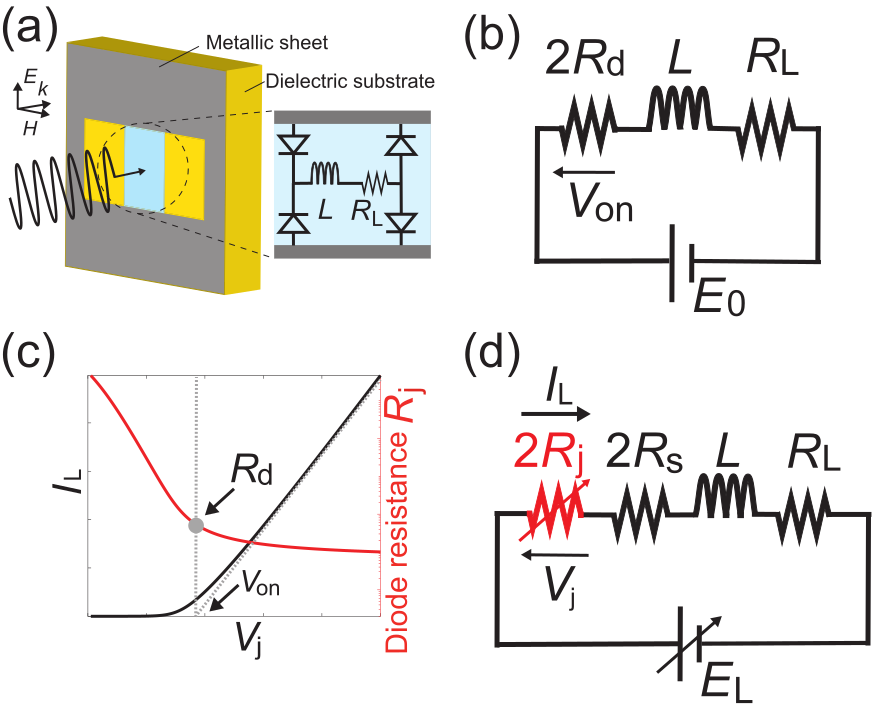
Waveform-selective metasurfaces offer unprecedented control over electromagnetic waves on the basis of pulse width. However, existing circuit models fail to capture the power-dependent behaviors of these metasurfaces, thereby limiting their use in practical applications. Here, for the first time, we present analytical equivalent circuit models that accurately predict both power- and time-dependent responses by incorporating voltage-dependent diode resistance through the Maclaurin series and Wright omega functions. As a result, the variations in the input power and time domain are effectively predicted theoretically. Moreover, our concept is successfully extended to different types of waveform-selective metasurfaces and increasingly complex scenarios, including repeated pulses and nonresonant frequencies. Thus, our equivalent circuit approach can readily explain and quantify the electromagnetic behaviors of waveform-selective metasurfaces. This strategy provides a high degree of control for addressing complex electromagnetic problems by leveraging pulse width as a tuning parameter, even at a fixed frequency.
Among the variety of quantum emitters in hexagonal boron nitride (hBN), blue-emitting color centers, or B centers, have gathered a particular interest owing to their excellent quantum optical properties. Moreover, the fact that they can be locally activated by an electron beam makes them suitable for top-down integration in photonic devices. However, in the absence of a real-time monitoring technique sensitive to individual emitters, the activation process is stochastic in the number of emitters, and its mechanism is under debate. Here, we implement an in-situ cathodoluminescence monitoring setup capable of detecting individual quantum emitters in the blue and ultraviolet (UV) range. We demonstrate that the activation of individual B centers is spatially and temporally correlated with the deactivation of individual UV centers emitting at 4.1 eV, which are ubiquitous in hBN. We then make use of the ability to detect individual B center activation events to demonstrate the controlled creation of an array with only one emitter per irradiation site. Additionally, we demonstrate a symmetric technique for heralded selective deactivation of individual emitters. Our results provide insights into the microscopic structure and activation mechanism of B centers, as well as versatile techniques for their deterministic integration.
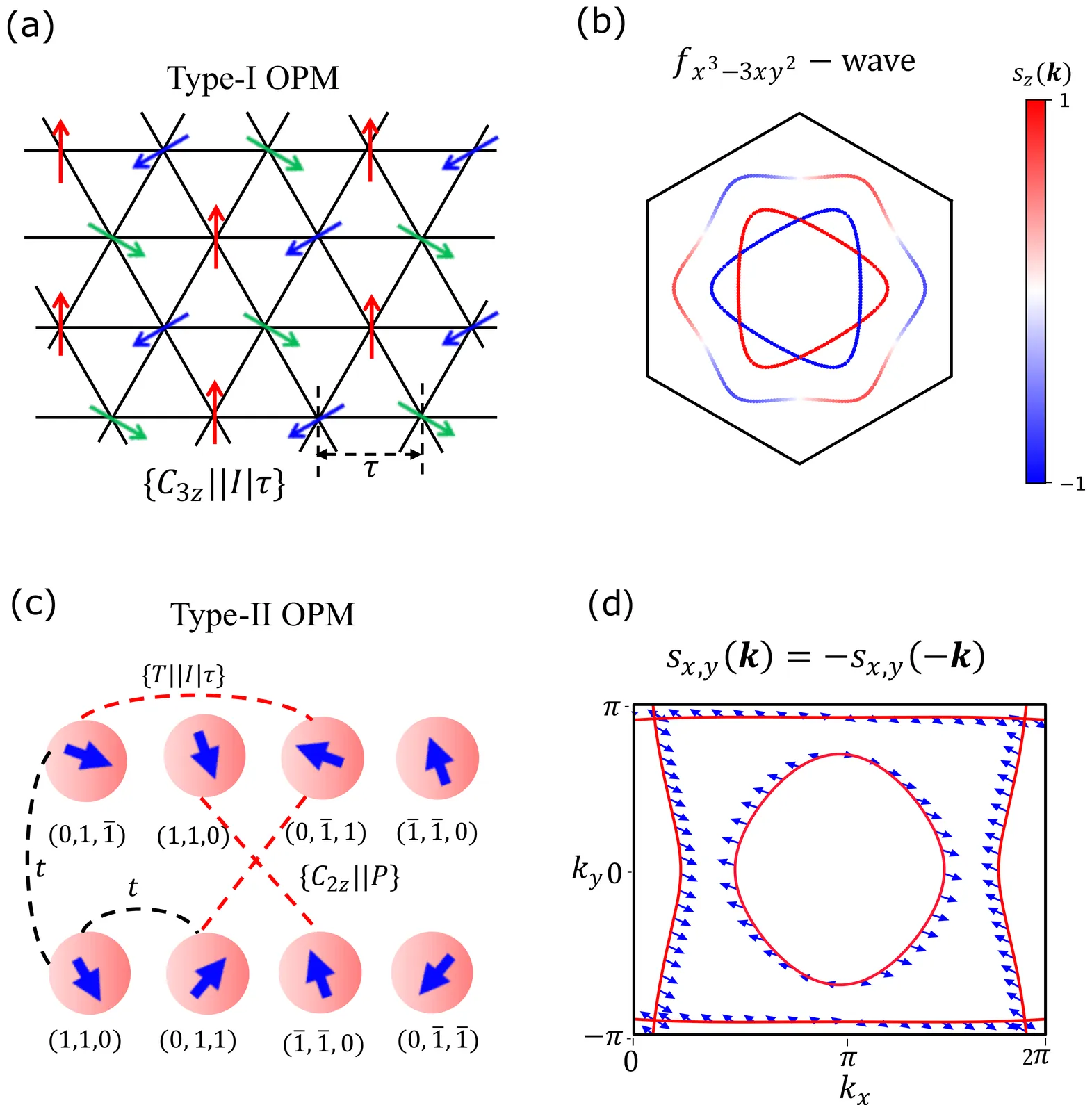
Inspired by the discovery of altermagnets, which exhibit even-parity nonrelativistic spin splitting, odd-parity magnets (OPMs) have been proposed and emerged as a novel research frontier. In this study, we perform a comprehensive spin group symmetry analysis to establish symmetry criteria for the emergence of OPMs. We identify eight distinct symmetry-driven cases that support OPMs, enabling their realization in collinear, coplanar, and noncoplanar magnetic orders. These OPMs are categorized into three types based on their spin textures for Bloch states: collinear (type-I), coplanar (type-II), and noncoplanar (type-III). For type-I OPMs, we further delineate additional symmetry requirements for $p$-wave and $f$-wave spin splitting. We identify 48 candidate materials in the Magndata database that satisfy these symmetry criteria. Additionally, we construct two theoretical models to validate the effectiveness of the established symmetry criteria. Finally, we show that OPMs can exhibit an intrinsic $\mathbb{Z}_2$ topology and construct a theoretical model to realize this phase.
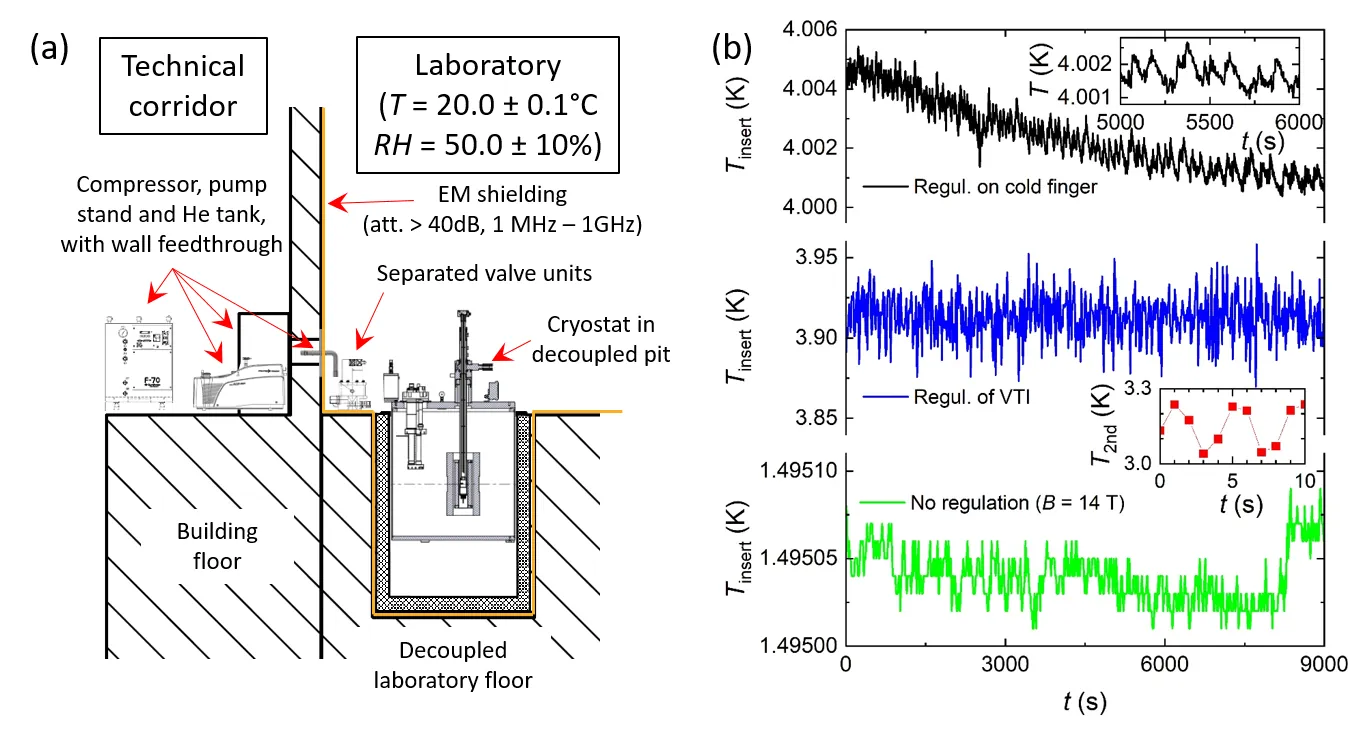
A shift of paradigm to obtain (sub-)Kelvin environment is currently on-going with the democratization of cryogen-free cryocoolers, boosted by their easy-to-use and continuous operation without the need of liquid helium whose cost and scarcity globally increase. Thanks to their large sample space and cooling power, they can host a superconducting magnet and are an adapted platform for quantum technologies, material science, low temperature detectors and even medical fields. The drawback is that this type of system is inherently based on gas compression that induces a certain level of vibrations and electromagnetic perturbations, which can potentially prevent the determination of low amplitude signals or spoil their stability. In this paper we demonstrate that pulse-tube based cryocoolers can be used for electrical precision measurements, using a commercial cryomagnetic system combined with our home-made a coaxial cryoprobe. In particular, parts-per-billion level of measurement uncertainties in resistance determination, based on quantum Hall resistance standards, is achievable at the level of state-of-the-art measurements involving conventional cryostats based on liquid helium. We performed an extensive characterization of the cryomagnetic system to determine the level of vibrations and electromagnetic perturbations, and revealed that although the magnetic field has a drastic effect on the noise level, only marginal interplays on the measurement are observed as long as the working frequencies of the instrumentation are not in the vicinity of the ones of the perturbations. The set of characterization measurements presented here are easily implementable in laboratories, which can help to determine the vibrations and electromagnetic pollution generated by any cryocooler.
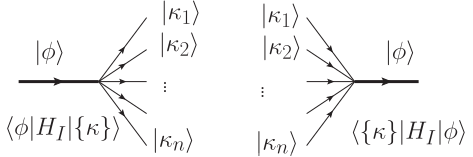
Dynamical axion (quasi) particles are emergent collective excitations in topological magnetic insulators that break parity and time reversal invariance or in Weyl semimetals. They couple to electromagnetism via a topological Chern-Simons term, leading to their decay into two photons. We extend the Weisskopf-Wigner formulation of atomic spontaneous emission to the quantum field theory of dynamical axion quasiparticles, allowing us to obtain the quantum two-photon state emerging from axion decay in real time. This state features \emph{hyperentanglement} in momentum and polarization with a distinct polarization pattern, a consequence of the parity and time reversal breaking of the axion-photon interaction. Polarization aspects of this two-photon state are studied by introducing quantum Stokes operators. Whereas the two-photon quantum state features vanishing \emph{averages} of the degree of polarization and polarization asymmetry, there are non-trivial momentum correlations of the Stokes operators. In particular momentum correlations of the \emph{polarization asymmetry} can be obtained directly from coincident momentum and polarization resolved two photon detection. Correlations of Stokes operators are directly related to momentum and polarization resolved Hanbury-Brown Twiss second order coherences. This relationship suggests two-photon correlations as a direct probe of dynamical axion quasiparticles. Similarities and differences with parametrically down converted photons and other systems where spontaneous emission yield hyperentangled two photon states are recognized, suggesting experimental avenues similar to tests of Bell inequalities to probe dynamical axion quasiparticles with coincident two photon detection.
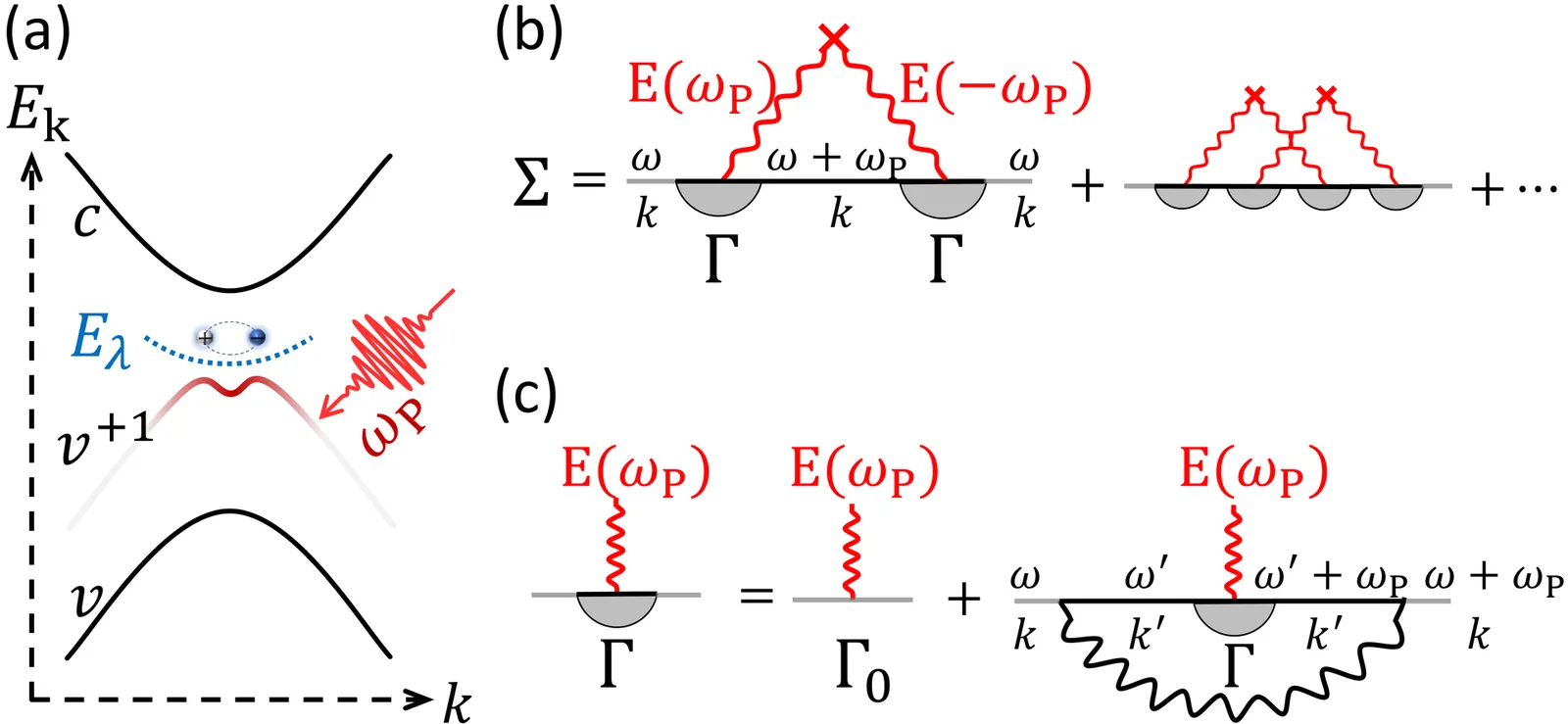
Floquet engineering of electronic states by light is a central topic in modern experiments. However, the impact of many-body interactions on the single-electron properties remains unclear in this non-equilibrium situation. We propose that interaction effects could be reasonably understood by performing perturbative expansion in both the pump field and the electron-electron interaction when computing physical quantities. As an example, we apply this approach to semiconductors and show analytically that excitonic effects, i.e., effects of electron-hole interaction, lead to dramatic corrections to the single-electron Floquet spectra even when the excitons are only virtually excited by the pump light. We compute these effects in phosphorene and monolayer MoS$_2$ for time- and angle-resolved photoemission spectroscopy and ultrafast optical experiments.
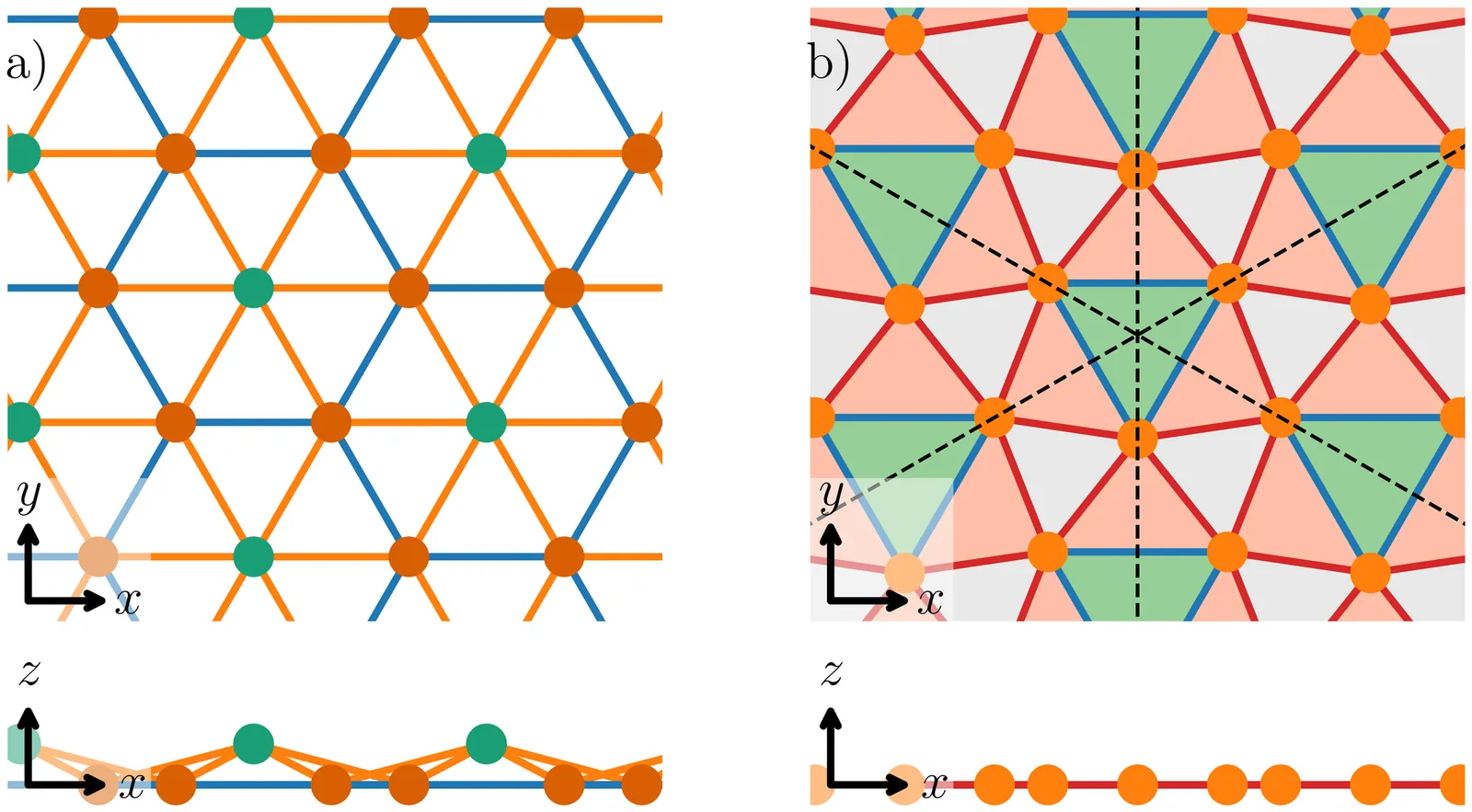
A periodic lattice distortion that reduces the translational symmetry folds electron bands into a reduced Brillouin zone, leading to band mixing and a tendency to gap formation, as in the Peierls transition in one-dimensional systems. However, in higher dimensions, the resulting phase can present topological obstructions preventing a complete gap opening. We discuss two different mechanisms for such obstructions, emergent Weyl nodes and symmetry protected band crossings. Based on density-functional calculations, we show these mechanisms are at play in trigonal PtBi$_2$.
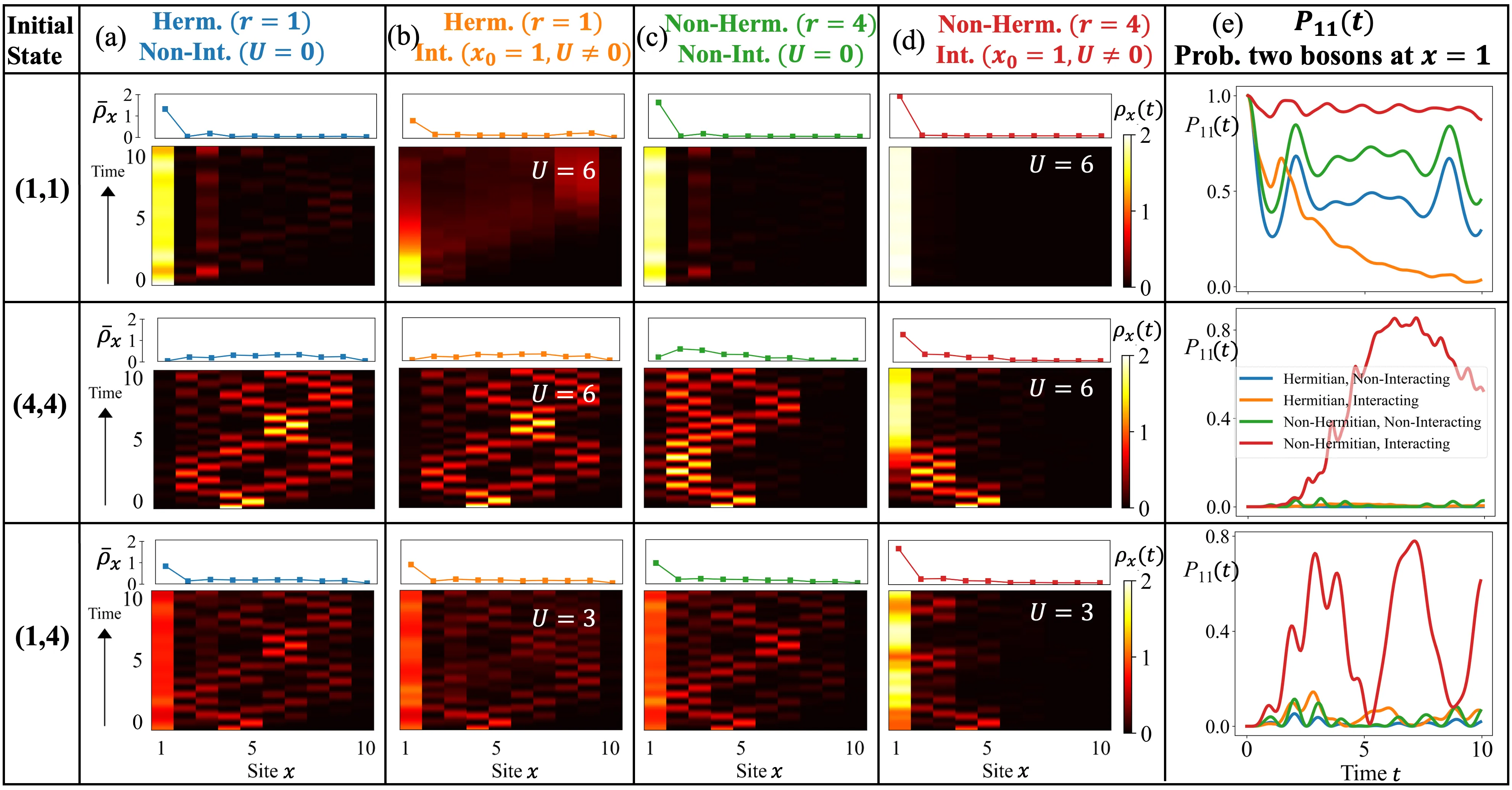
We uncover a new mechanism whereby the triple interplay of non-Hermitian pumping, bosonic interactions and nontrivial band topology leads to ultra-strong bosonic condensation. The extent of condensation goes beyond what is naively expected from the interaction-induced trapping of non-Hermitian pumped states, and is based on an emergent caging mechanism that can be further enhanced by topological boundary modes. Beyond our minimal model with 2 bosons, this caging remains applicable for generic many-boson systems subject to a broad range of density interactions and non-Hermitian hopping asymmetry. Our novel new mechanism for particle localization and condensation would inspire fundamental shifts in our comprehension of many-body non-Hermitian dynamics and opens new avenues for controlling and manipulating bosons.
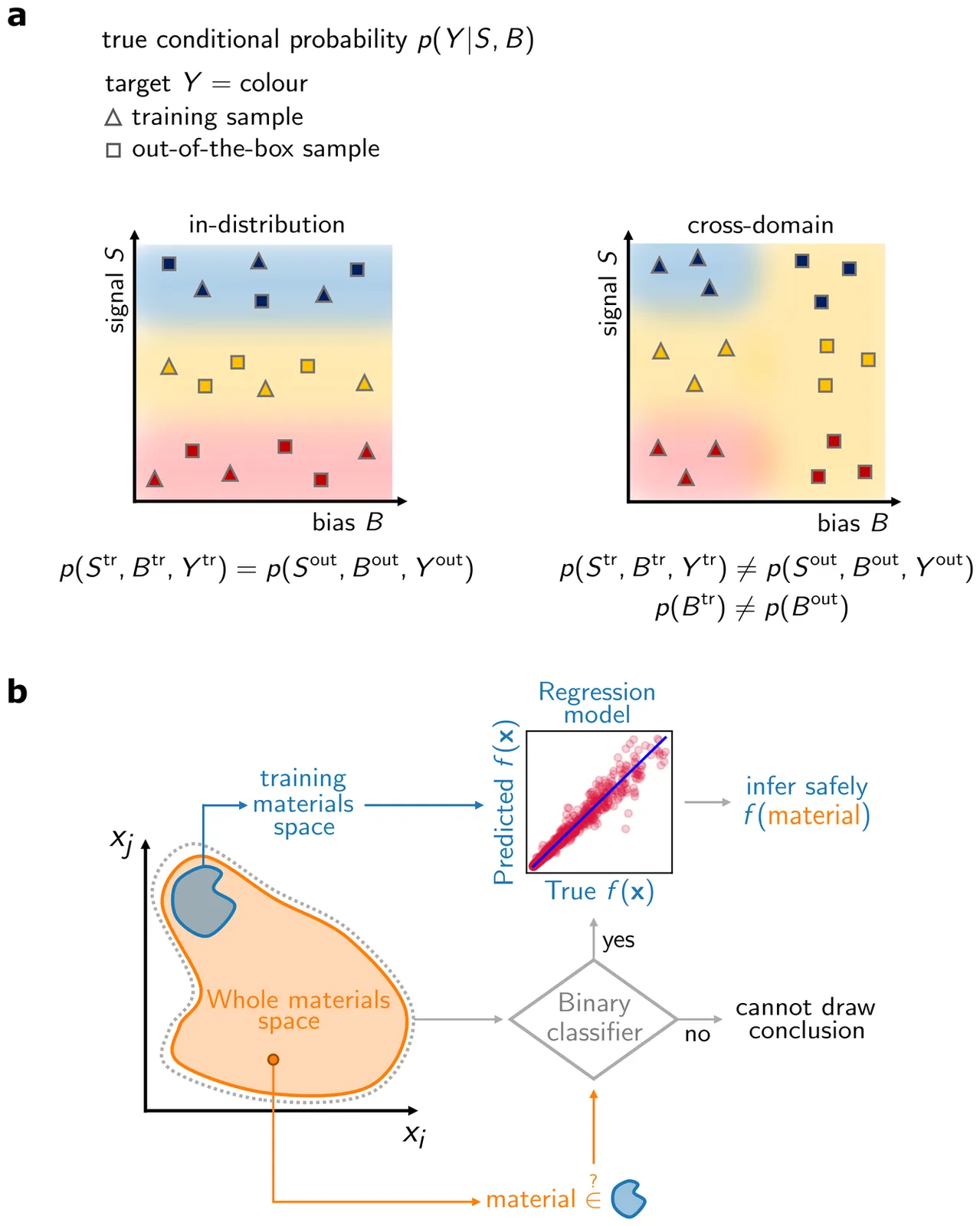
It stands to reason that the amount and the quality of data is of key importance for setting up accurate AI-driven models. Among others, a fundamental aspect to consider is the bias introduced during sample selection in database generation. This is particularly relevant when a model is trained on a specialized dataset to predict a property of interest, and then applied to forecast the same property over samples having a completely different genesis. Indeed, the resulting biased model will likely produce unreliable predictions for many of those out-of-the-box samples. Neglecting such an aspect may hinder the AI-based discovery process, even when high quality, sufficiently large and highly reputable data sources are available. In this regard, with superconducting and thermoelectric materials as two prototypical case studies in the field of energy material discovery, we present and validate a new method (based on a classification strategy) capable of detecting, quantifying and circumventing the presence of cross-domain data bias.
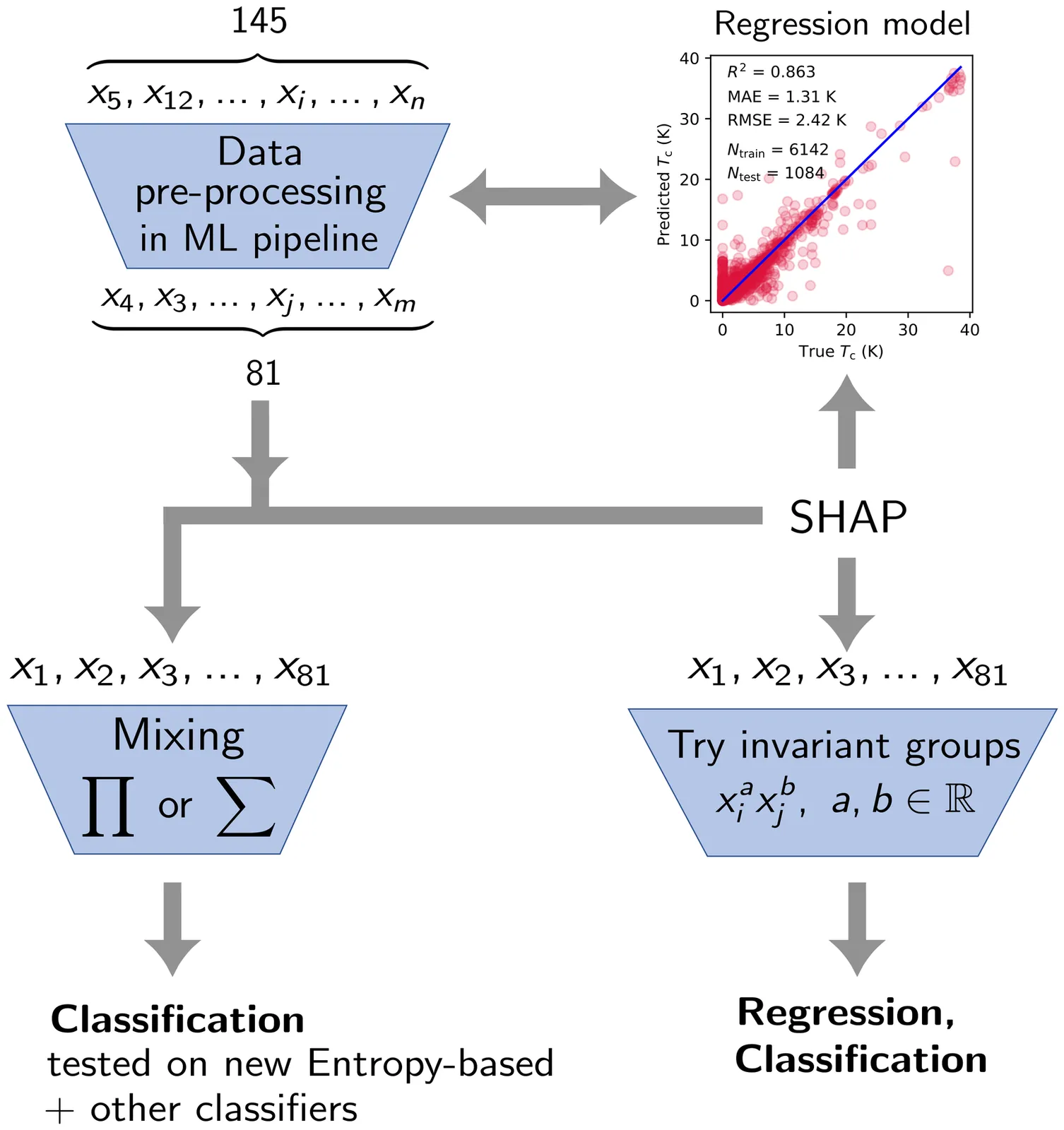
In this study, we evaluate several classifiers and focus on selecting a minimal set of appropriate material features. Our objective is to propose and discuss general strategies for reducing the number of descriptors required for material classification. The first strategy involves testing whether the critical temperature of the target material property is invariant with respect to binary groups of composition-based features. We also propose a multi-objective optimization procedure to reduce the set of composition-based material descriptors. The latter procedure is found to be particularly useful when applied to Bayesian classifiers. We test the proposed strategies focusing on low-temperature superconductors material data extracted from a public database.
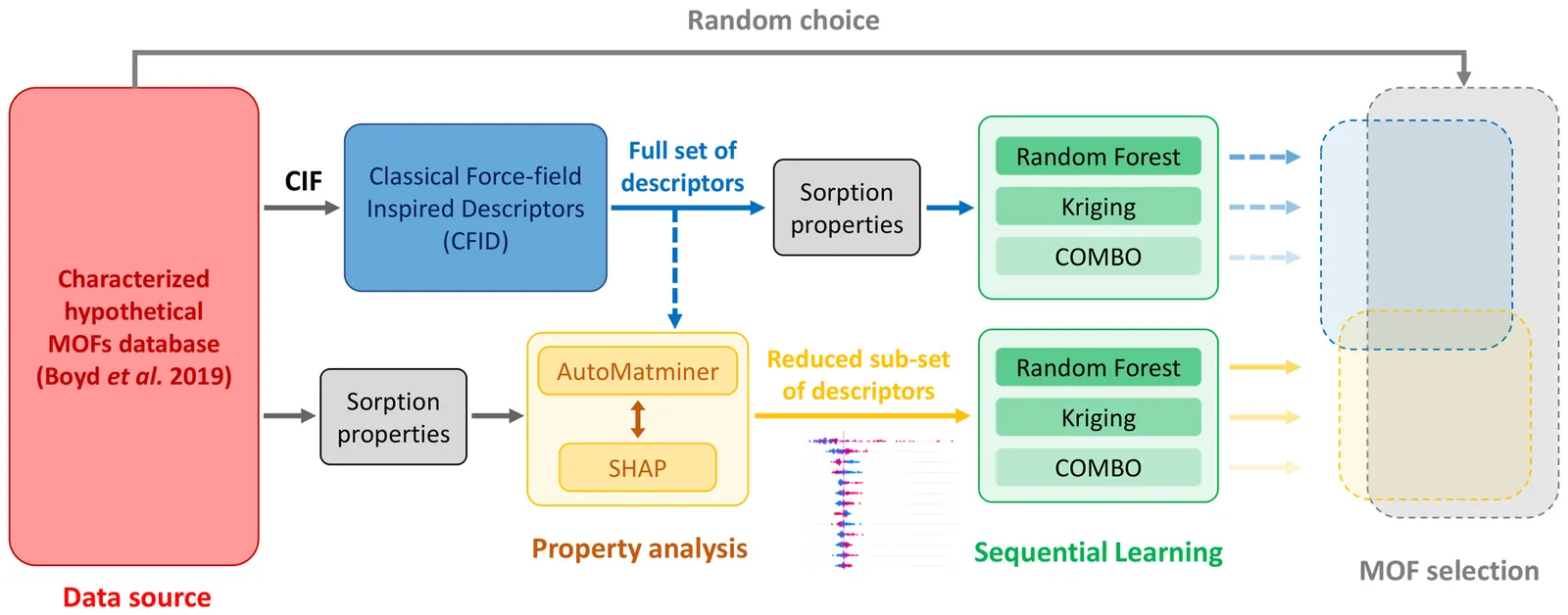
Several studies have been recently reported in the literature on sorption properties of MOFs with a number of organic sorbates, such as ethanol and methanol. Surprisingly, still few studies have been reported on water sorbate despite its large availability, low cost and environmental sustainability, and the screening of a large number of hypothetical MOFs-water working pairs for engineering applications is still challenging. Based on a recently reported database of over 5000 hypothetical MOFs, a first contribution of this study is the identification of the minimal set of crystallographic descriptors underpinning the most important sorption properties of MOFs for \ch{CO2} and, importantly, for \ch{H2O}. Furthermore, a comprehensive comparison of several Sequential Learning (SL) algorithms for MOFs properties optimization is carried out and the role played by the above minimal set of crystallographic descriptors clarified. In sorption-based energy transformations, thermodynamic limits of important figures of merit (e.g. maximum specific energy) depend both on operating conditions and equilibrium sorption properties in a wide range of sorbate coverage values. The access to the latter properties is often incomplete, with essential quantities such as equilibrium adsorption isotherms spanning over the full sorbate coverage range and values of the isosteric heat being only partially available. As a result, this may prevent the computation of objective functions during the optimization procedure. We propose a fast procedure for optimizing specific energy in a closed sorption energy storage system with the only access to the water Henry coefficient at a fixed temperature value and to the specific surface area.

We study the Levin-Wen string-net model with a $Z_N$ type fusion algebra. Solutions of the local constraints of this model correspond to $Z_N$ gauge theory and double Chern-simons theories with quantum groups. For the first time, we explicitly construct a spin-$(N-1)/2$ model with $Z_N$ gauge symmetry on a triangular lattice as an exact dual model of the string-net model with a $Z_N$ type fusion algebra on a honeycomb lattice. This exact duality exists only when the spins are coupled to a $Z_N$ gauge field living on the links of the triangular lattice. The ungauged $Z_N$ lattice spin models are a class of quantum systems that bear symmetry-protected topological phases that may be classified by the third cohomology group $H^3(Z_N,U(1))$ of $Z_N$. Our results apply also to any case where the fusion algebra is identified with a finite group algebra or a quantusm group algebra.

The purpose of this review is to provide a comprehensive pedagogical introduction into Keldysh technique for interacting out-of-equilibrium fermionic and bosonic systems. The emphasis is placed on a functional integral representation of underlying microscopic models. A large part of the review is devoted to derivation and applications of the non-linear sigma-model for disordered metals and superconductors. We discuss such topics as transport properties, mesoscopic effects, counting statistics, interaction corrections, kinetic equation, etc. The sections devoted to disordered superconductors include Usadel equation, fluctuation corrections, time-dependent Ginzburg-Landau theory, proximity and Josephson effects, etc. (This review is a substantial extension of arXiv:cond-mat/0412296.)

The field theory of nonrelativistic fermions interacting via contact interactions can be used to calculate the properties of few-body systems of cold atoms confined in harmonic traps. The state-operator correspondence of Non-Relativistic Conformal Field Theory (NRCFT) shows that the energy eigenvalues (in oscillator units) of N harmonically trapped fermions can be calculated from the scaling dimensions of N-fermion operators in the NRCFT. They are also in one-to-one correspondence with zero-energy, scale-invariant solutions to the N-body problem in free space. We show that these two mappings of the trapped fermion problem to free space problems are related by an automorphism of the SL(2,R) algebra of the conformal symmetry of fermions at the unitary limit. This automorphism exchanges the internal Hamiltonian of the gas with the trapping potential and hence provides a novel method for deriving virial theorems for trapped Fermi gases at the unitary limit. We also show that the state-operator correspondence can be applied directly in three spatial dimensions by calculating the scaling dimensions of two- and three-fermion operators and finding agreement with known exact results for energy levels of two and three trapped fermions at the unitary limit.
This article reviews the basic theoretical aspects of graphene, a one atom thick allotrope of carbon, with unusual two-dimensional Dirac-like electronic excitations. The Dirac electrons can be controlled by application of external electric and magnetic fields, or by altering sample geometry and/or topology. We show that the Dirac electrons behave in unusual ways in tunneling, confinement, and integer quantum Hall effect. We discuss the electronic properties of graphene stacks and show that they vary with stacking order and number of layers. Edge (surface) states in graphene are strongly dependent on the edge termination (zigzag or armchair) and affect the physical properties of nanoribbons. We also discuss how different types of disorder modify the Dirac equation leading to unusual spectroscopic and transport properties. The effects of electron-electron and electron-phonon interactions in single layer and multilayer graphene are also presented.
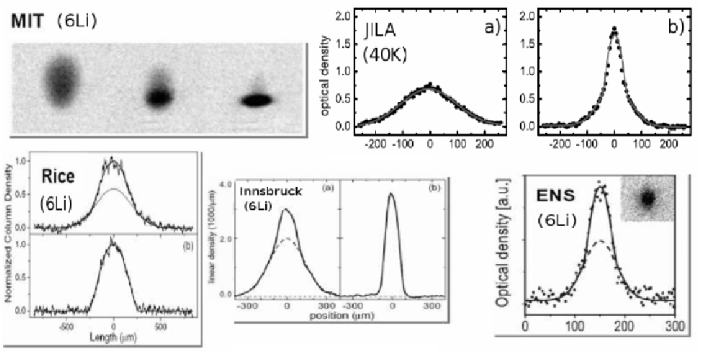
The physics of quantum degenerate Fermi gases in uniform as well as in harmonically trapped configurations is reviewed from a theoretical perspective. Emphasis is given to the effect of interactions which play a crucial role, bringing the gas into a superfluid phase at low temperature. In these dilute systems interactions are characterized by a single parameter, the s-wave scattering length, whose value can be tuned using an external magnetic field near a Feshbach resonance. The BCS limit of ordinary Fermi superfluidity, the Bose-Einstein condensation (BEC) of dimers and the unitary limit of large scattering length are important regimes exhibited by interacting Fermi gases. In particular the BEC and the unitary regimes are characterized by a high value of the superfluid critical temperature, of the order of the Fermi temperature. Different physical properties are discussed, including the density profiles and the energy of the ground-state configurations, the momentum distribution, the fraction of condensed pairs, collective oscillations and pair breaking effects, the expansion of the gas, the main thermodynamic properties, the behavior in the presence of optical lattices and the signatures of superfluidity, such as the existence of quantized vortices, the quenching of the moment of inertia and the consequences of spin polarization. Various theoretical approaches are considered, ranging from the mean-field description of the BCS-BEC crossover to non-perturbative methods based on quantum Monte Carlo techniques. A major goal of the review is to compare the theoretical predictions with the available experimental results.
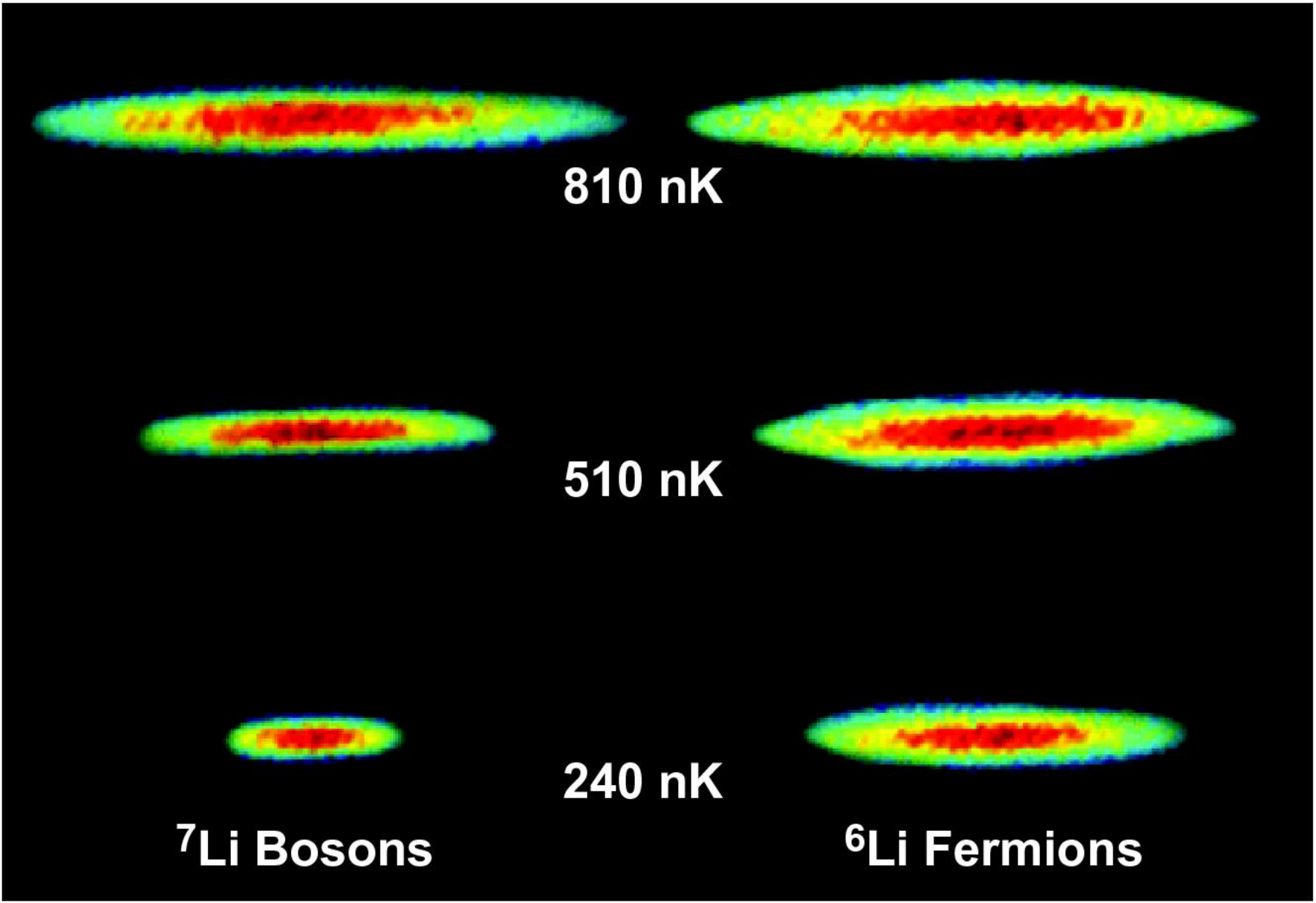
This article reviews recent experimental and theoretical progress on many-body phenomena in dilute, ultracold gases. Its focus are effects beyond standard weak-coupling descriptions, like the Mott-Hubbard-transition in optical lattices, strongly interacting gases in one and two dimensions or lowest Landau level physics in quasi two-dimensional gases in fast rotation. Strong correlations in fermionic gases are discussed in optical lattices or near Feshbach resonances in the BCS-BEC crossover.
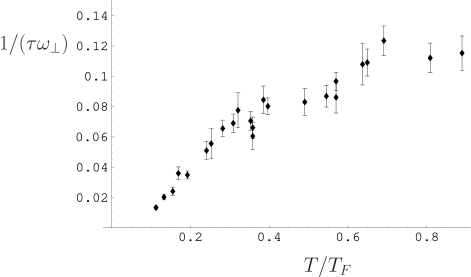
We extract the shear viscosity to entropy density ratio η/s of cold fermionic atoms in the unitarity limit from experimental data on the damping of collective excitations. We find that near the critical temperature η/s is roughly equal to 1/2 in units of \hbar/k_B. With the possible exception of the quark gluon plasma, this value is closer to the conjectured lower bound 1/(4π) than any other known liquid.
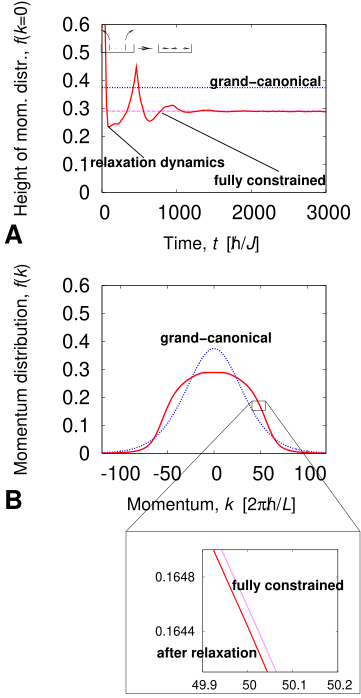
In this Letter we pose the question of whether a many-body quantum system with a full set of conserved quantities can relax to an equilibrium state, and, if it can, what the properties of such state are. We confirm the relaxation hypothesis through a thorough ab initio numerical investigation of the dynamics of hard-core bosons on a one-dimensional lattice. Further, a natural extension of the Gibbs ensemble to integrable systems results in a theory that is able to predict the mean values of physical observables after relaxation. Finally, we show that our generalized equilibrium carries more memory of the initial conditions than the usual thermodynamic one. This effect may have many experimental consequences, some of which having already been observed in the recent experiment on the non-equilibrium dynamics of one-dimensional hard-core bosons in a harmonic potential [T. Kinoshita, T. Wenger, D. S. Weiss, Nature (London) 440, 900 (2006)].

We sample a velocity field that has an inertial spectrum and a skewness that matches experimental data. In particular, we compute a self-consistent correction to the Kolmogorov exponent and find that for our model it is zero. We find that the higher order structure functions diverge for orders larger than a certain threshold, as theorized in some recent work. The significance of the results for the statistical theory of homogeneous turbulence is reviewed.
cond-mat/0511721By requiring general-coordinate and conformal invariance of the hydrodynamic equations, we show that the unitary Fermi gas has zero bulk viscosity, zeta=0, in the normal phase. In the superfluid phase, two of the bulks viscosities have to vanish, zeta_1=zeta_2=0, while the third one zeta_3 is allowed to be nonzero.