Applied Physics
arXiv:physics.app-ph
Physics applied to areas of technology and for interdisciplinary research.
Physics applied to areas of technology and for interdisciplinary research.
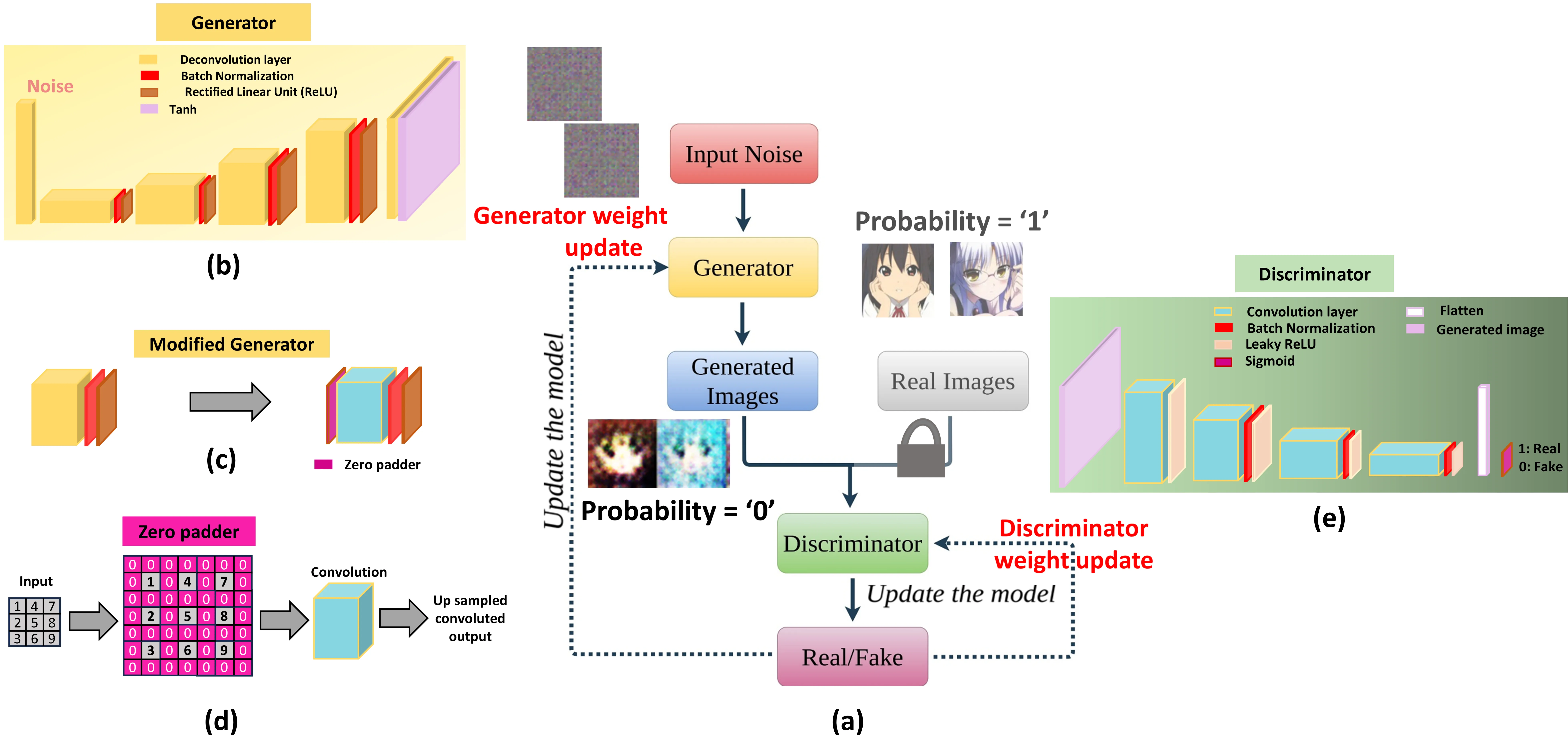
The computational requirements of generative adversarial networks (GANs) exceed the limit of conventional Von Neumann architectures, necessitating energy efficient alternatives such as neuromorphic spintronics. This work presents a hybrid CMOS-spintronic deep convolutional generative adversarial network (DCGAN) architecture for synthetic image generation. The proposed generative vision model approach follows the standard framework, leveraging generator and discriminators adversarial training with our designed spintronics hardware for deconvolution, convolution, and activation layers of the DCGAN architecture. To enable hardware aware spintronic implementation, the generator's deconvolution layers are restructured as zero padded convolution, allowing seamless integration with a 6-bit skyrmion based synapse in a crossbar, without compromising training performance. Nonlinear activation functions are implemented using a hybrid CMOS domain wall based Rectified linear unit (ReLU) and Leaky ReLU units. Our proposed tunable Leaky ReLU employs domain wall position coded, continuous resistance states and a piecewise uniaxial parabolic anisotropy profile with a parallel MTJ readout, exhibiting energy consumption of 0.192 pJ. Our spintronic DCGAN model demonstrates adaptability across both grayscale and colored datasets, achieving Fr'echet Inception Distances (FID) of 27.5 for the Fashion MNIST and 45.4 for Anime Face datasets, with testing energy (training energy) of 4.9 nJ (14.97~nJ/image) and 24.72 nJ (74.7 nJ/image).
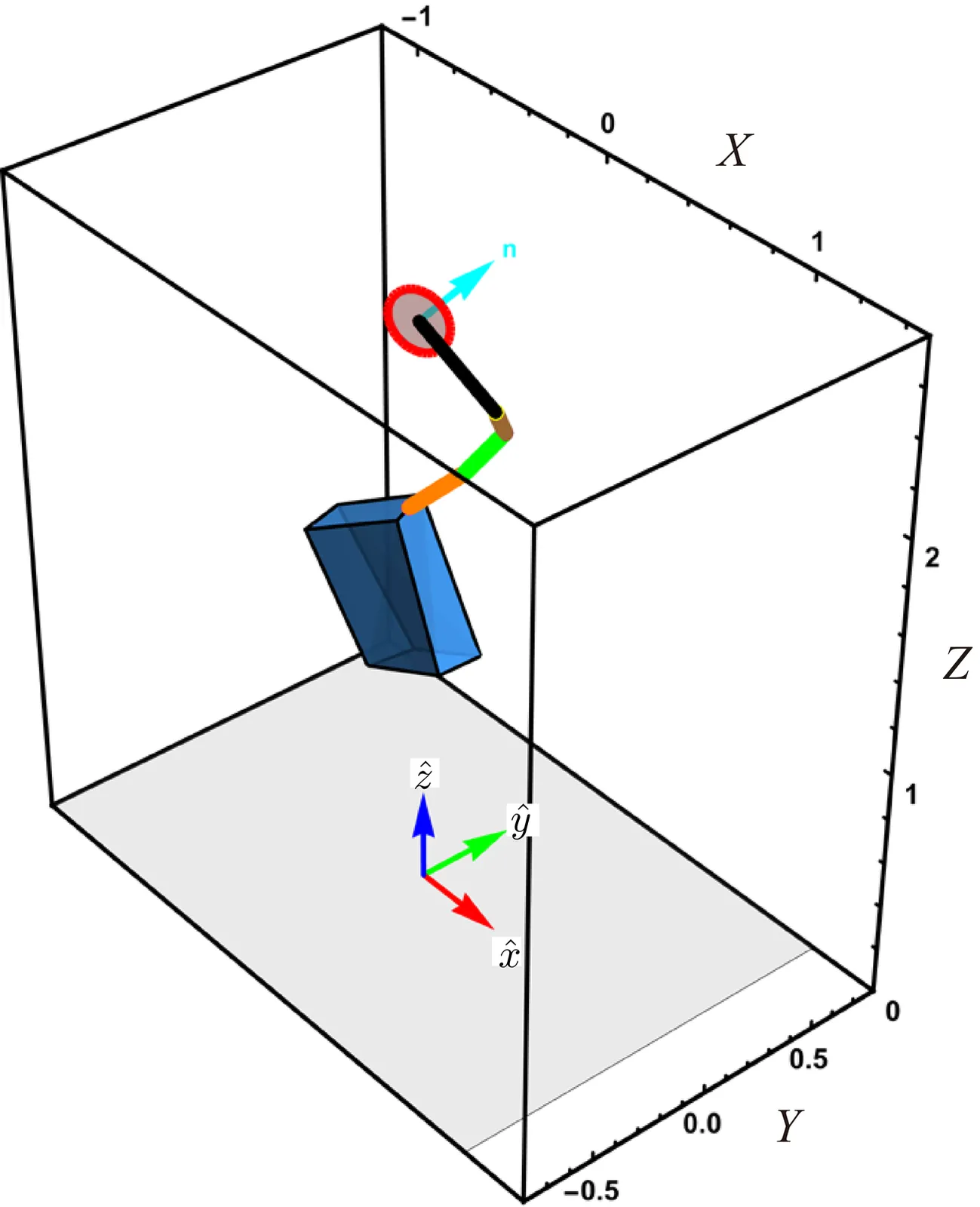
Most conventional studies on tennis serve biomechanics rely on phenomenological observations comparing professional and amateur players or, more recently, on AI-driven statistical analyses of motion data. While effective at describing \textit{what} elite players do, these approaches often fail to explain \textit{why} such motions are physically necessary from a mechanistic perspective. This paper proposes a deterministic, physics-based approach to the tennis serve using a 12-degree-of-freedom multi-segment model of the human upper body. Rather than fitting the model to motion capture data, we solve the inverse kinematics problem via trajectory optimization to rigorously satisfy the aerodynamic boundary conditions required for Flat, Slice, and Kick serves. We subsequently perform an inverse dynamics analysis based on the Principle of Virtual Power to compute the net joint torques. The simulation results reveal that while the kinematic trajectories for different serves may share visual similarities, the underlying kinetic profiles differ drastically. A critical finding is that joints exhibiting minimal angular displacement (kinematically ``quiet'' phases), particularly at the wrist, require substantial and highly time-varying torques to counteract gravitational loading and dynamic coupling effects. By elucidating the dissociation between visible kinematics and internal kinetics, this study provides a first-principles framework for understanding the mechanics of the tennis serve, moving beyond simple imitation of elite techniques.
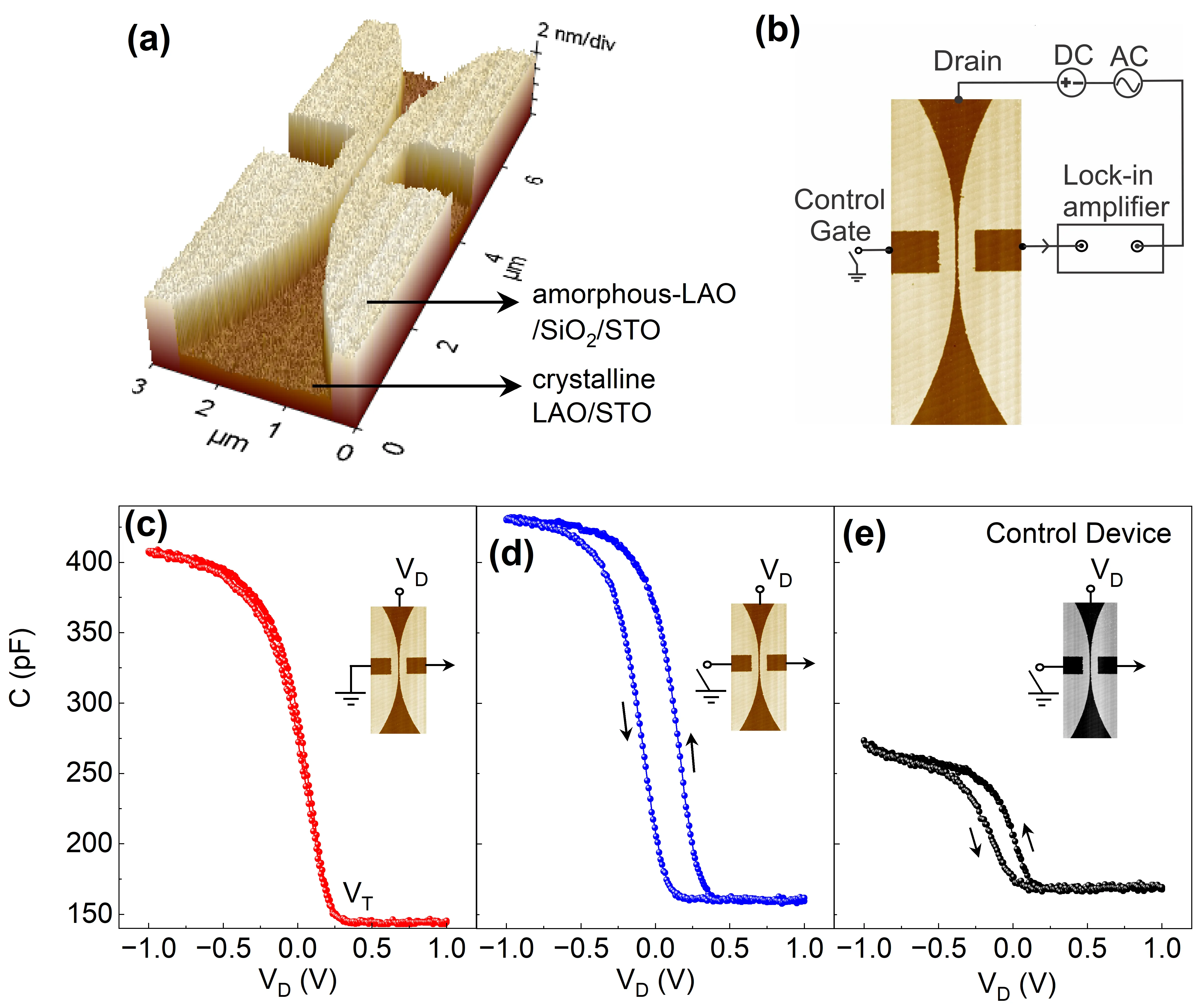
Current memcapacitor implementations typically demand complex fabrication processes or depend on organic materials exhibiting poor environmental stability and reproducibility. Here, we demonstrate memcapacitor structures utilizing a quasi 2-dimensional electron gas, formed at the crystalline LaAlO3/SrTiO3 heterointerface, as electrodes and SiO2/SrTiO3 as dielectric layer. The observed memcapacitance originates from the charge localization in a lateral floating gate, while an applied gate voltage enables reversible tuning of the device capacitance. Furthermore, preprogrammed or erased gate biases enable controllable shifts of the capacitance hysteresis window toward positive or negative bias, leading to an enlarged capacitance gap at zero bias. A memcapacitor model developed for this system reproduces the main features of the experimental capacitance hysteresis, capturing the effects of charge fluctuations and dielectric frequency modulation within the oxide layer. The demonstrated low-voltage operation and gate tunability of oxide interface-based memcapacitors highlight their potential for power-efficient, capacitor-based neuromorphic and synaptic electronic architectures.
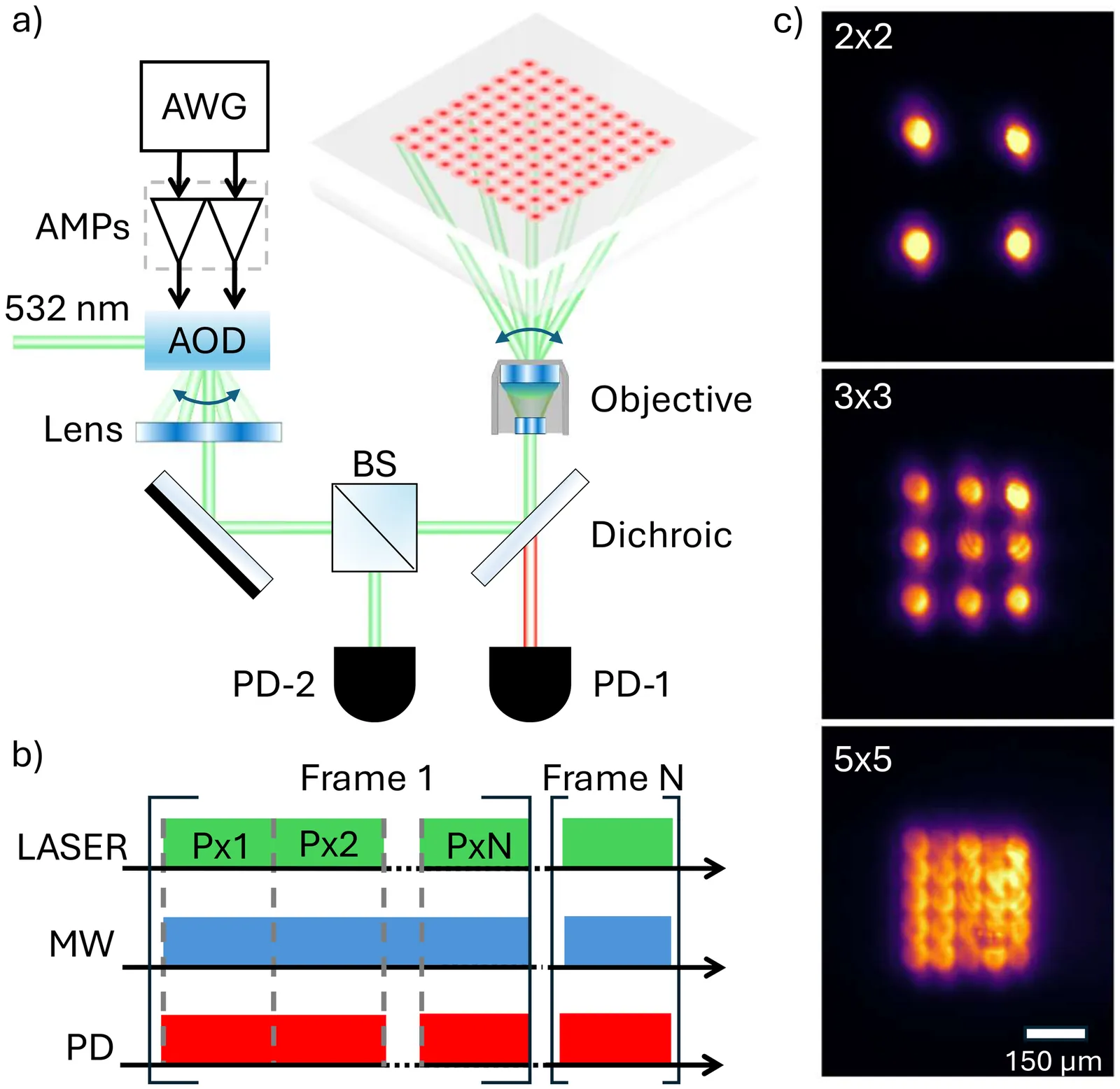
We present a technique that uses an ensemble of nitrogen-vacancy (NV) centers in diamond to image magnetic fields with high spatio-temporal resolution and sensitivity. A focused laser beam is raster-scanned using an acousto-optic deflector (AOD) and NV center fluorescence is read out with a single photodetector, enabling low-noise detection with high dynamic range. The method operates in a previously unexplored regime, quasi-continuous-wave optically detected magnetic resonance (qCW-ODMR). In this regime, NV centers experience short optical pump pulses for spin readout and repolarization -- analogous to pulsed ODMR -- while the microwave field continuously drives the spin transitions. We systematically characterize this regime and show that the spin response is governed by a tunable interplay between coherent evolution and relaxation, determined by the temporal spacing between pump laser pulses. Notably, the technique does not require precise microwave pulse control, thus simplifying experimental implementation. To demonstrate its capabilities, we image time-varying magnetic fields from a microwire with sub-millisecond temporal resolution. This approach enables flexible spatial sampling and, with our diamond, achieves $\text{nT}/\sqrt{\text{Hz}}$-level per-pixel sensitivity, making it well suited for detecting weak, dynamic magnetic fields in biological and other complex systems.
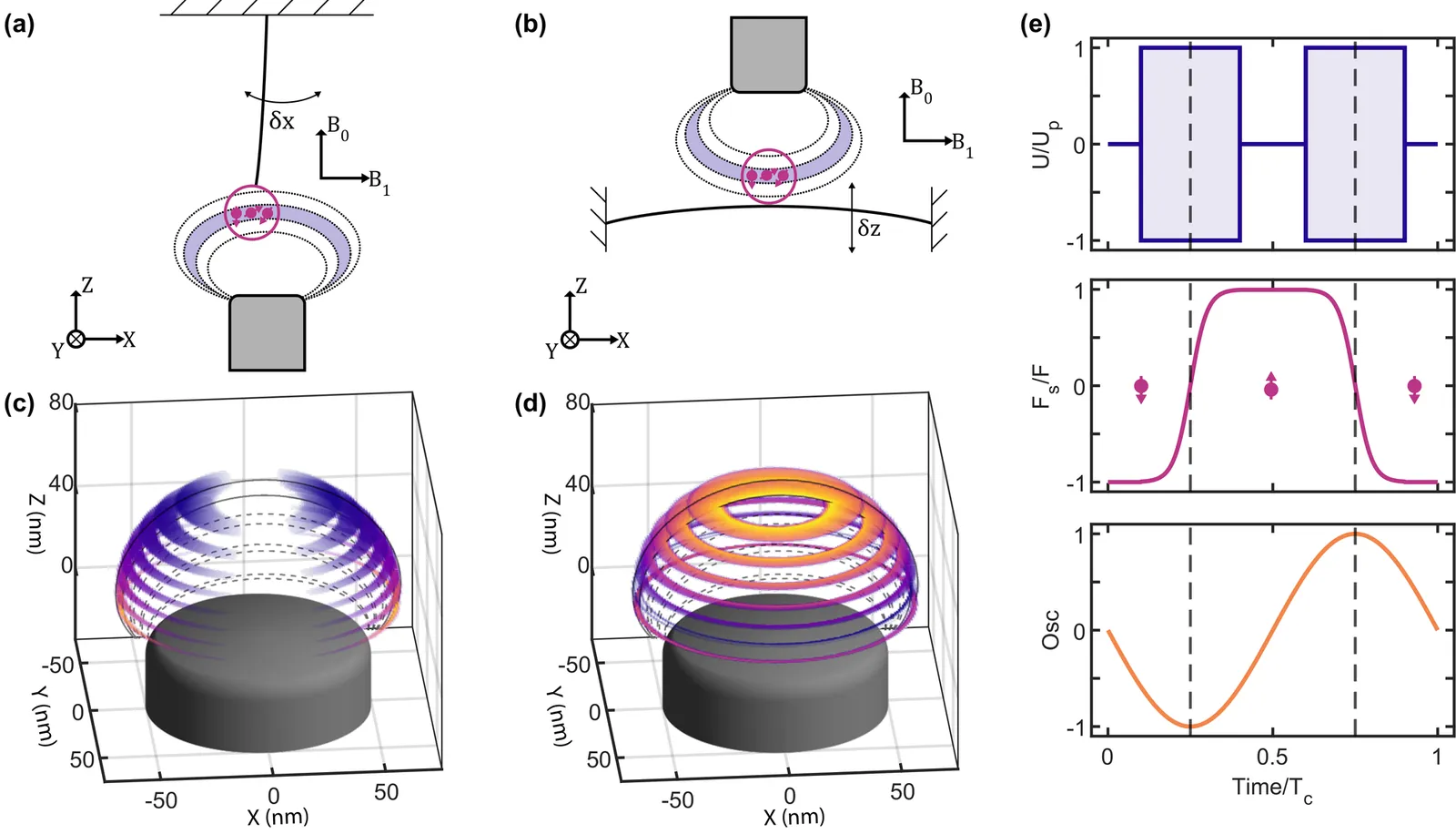
Magnetic Resonance Force Microscopy (MRFM) enables three-dimensional imaging of nuclear spin densities in nanoscale objects. Based on numerical simulations, we evaluate the performance of strained SiN resonators as force sensors and show that their out-of-plane oscillation direction improves the quality of the reconstructed sample. We further introduce a multislice, compressed-sensing scan protocol that maximizes the information obtained for a given measurement time. Our simulations predict that these new scanning protocols and optimized algorithms can shorten the total acquisition time by up to two orders of magnitude while maintaining the reconstruction fidelity. Our results demonstrate that combining advanced scanning protocols with state-of-the-art resonators is a promising path toward high-resolution MRFM for volumetric imaging of biological nanostructures.
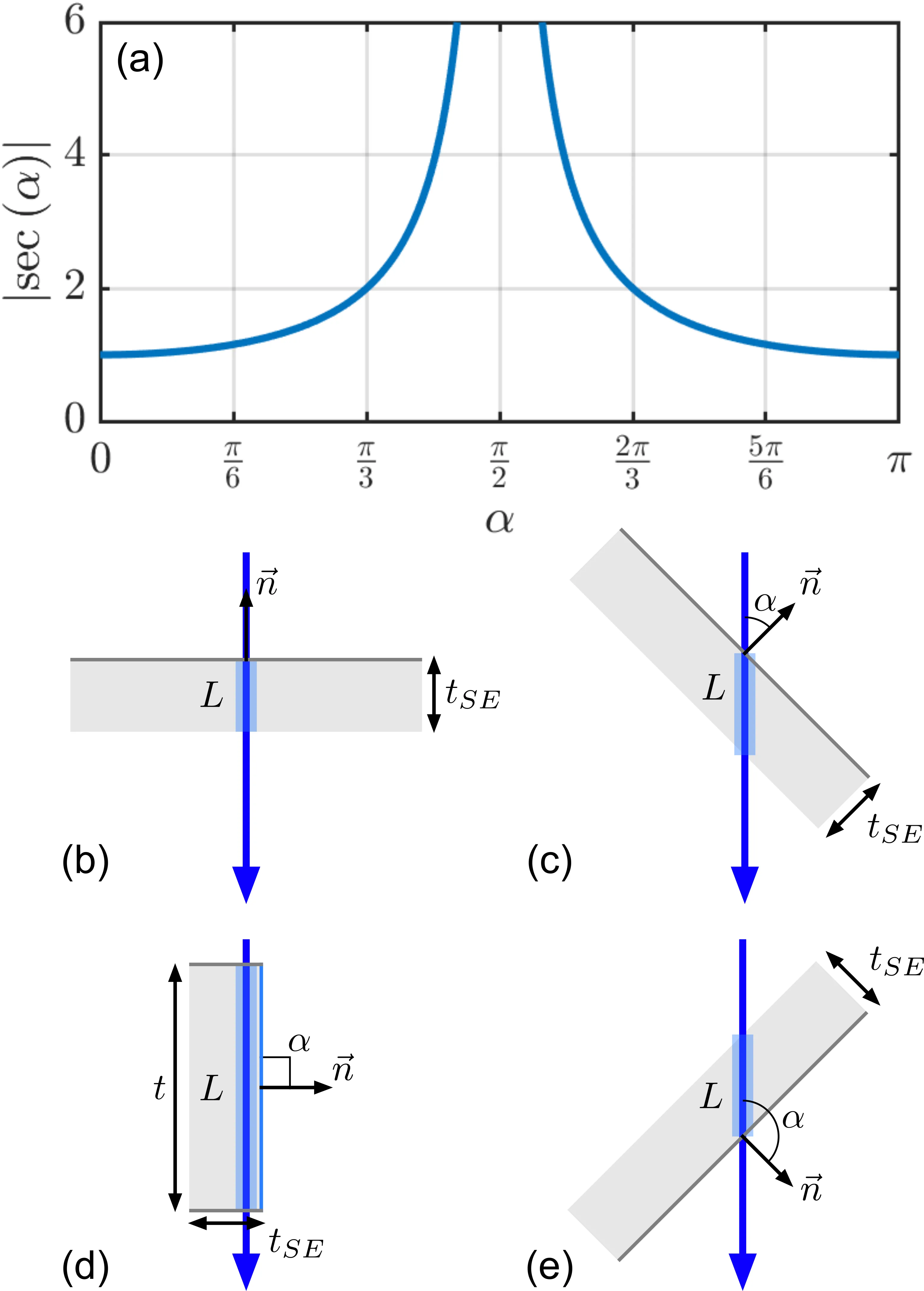
Secondary electron (SE) imaging offers a powerful complementary capabilities to conventional scanning transmission electron microscopy (STEM) by providing surface-sensitive, pseudo-3D topographic information. However, contrast interpretation of such images remains empirical due to complex interactions of emitted SE with the magnetic field in the objective field of TEM. Here, we propose an analytical physical model that takes into account the physics of SE emission and interaction of the emitted SEs with magnetic field. This enables more reliable image interpretation and potentially lay the foundation for novel 3D surface reconstruction algorithms.
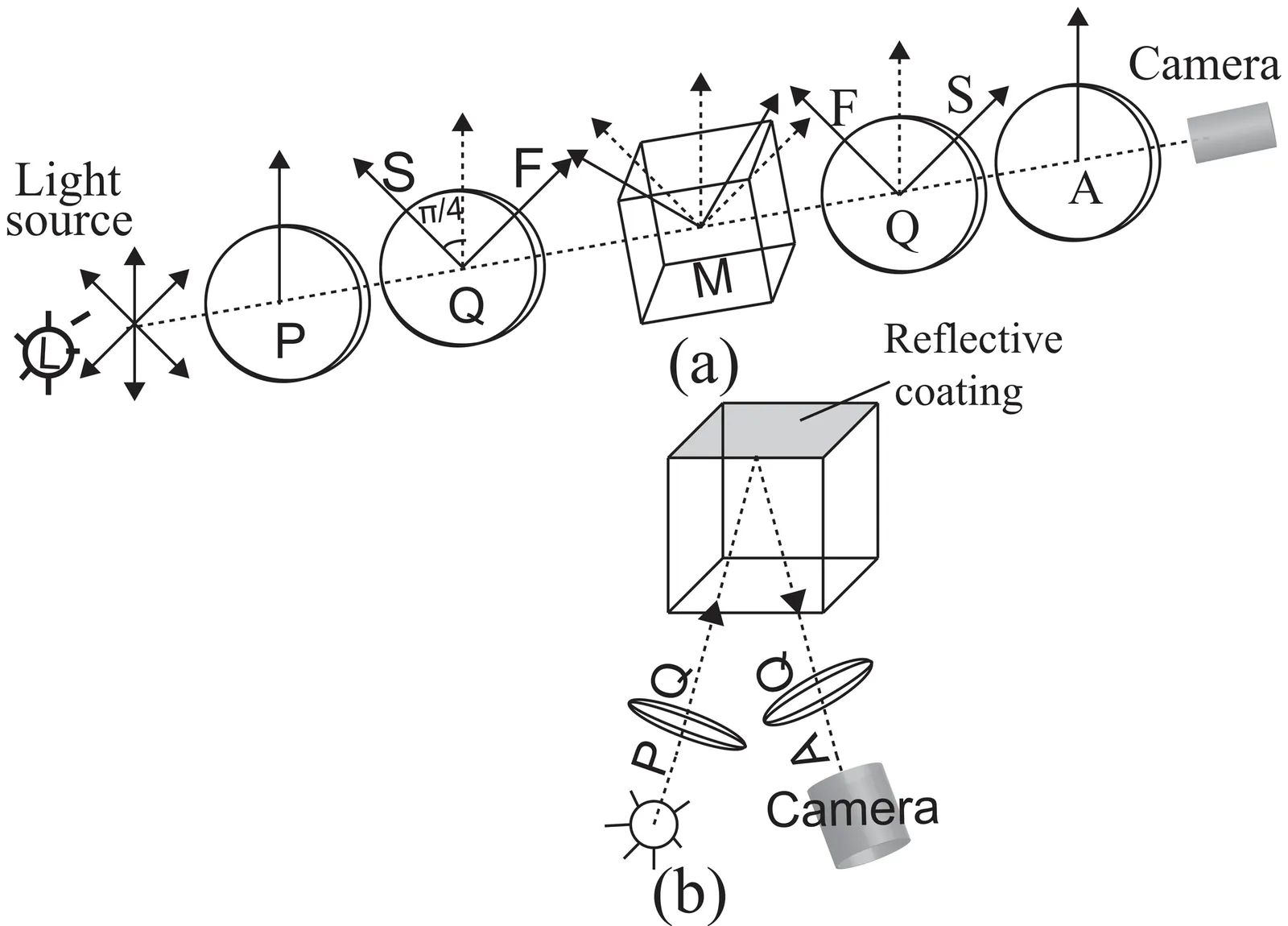
Conventional photoelastic methods are largely limited to two-dimensional stress visualization, leaving a gap in techniques that can capture three-dimensional force interactions with high sensitivity at low stress levels, a capability that is critical for biomechanics and dynamic force analysis. This study develops and demonstrates a cubic photoelastic model that enables accurate fringe-order estimation from three orthogonal views, providing a foundation for reconstructing full three-dimensional stress states. A transparent, low-elasticity epoxy cube, free of prestress, was fabricated and examined using combined transmission and reflection photoelastic imaging. Three mutually orthogonal isochromatic fringe fields were recorded simultaneously under a single applied load. Image analysis employed a peak-valley intensity method to extract sub-fringe orders and to resolve low-stress cases with minimal noise. The cubic block produced high-quality fringe patterns in all directions, enabling separation of tangential and normal stress components. Independent orthogonal views confirmed directional sensitivity and yielded consistent fringe-order estimates under low loading, with response times on the order of tens of microseconds. These results establish a practical approach for three-dimensional photoelastic stress measurement from orthogonal views and create a pathway toward full vector force reconstruction with strong potential for biomedical applications and studies of dynamic loading.
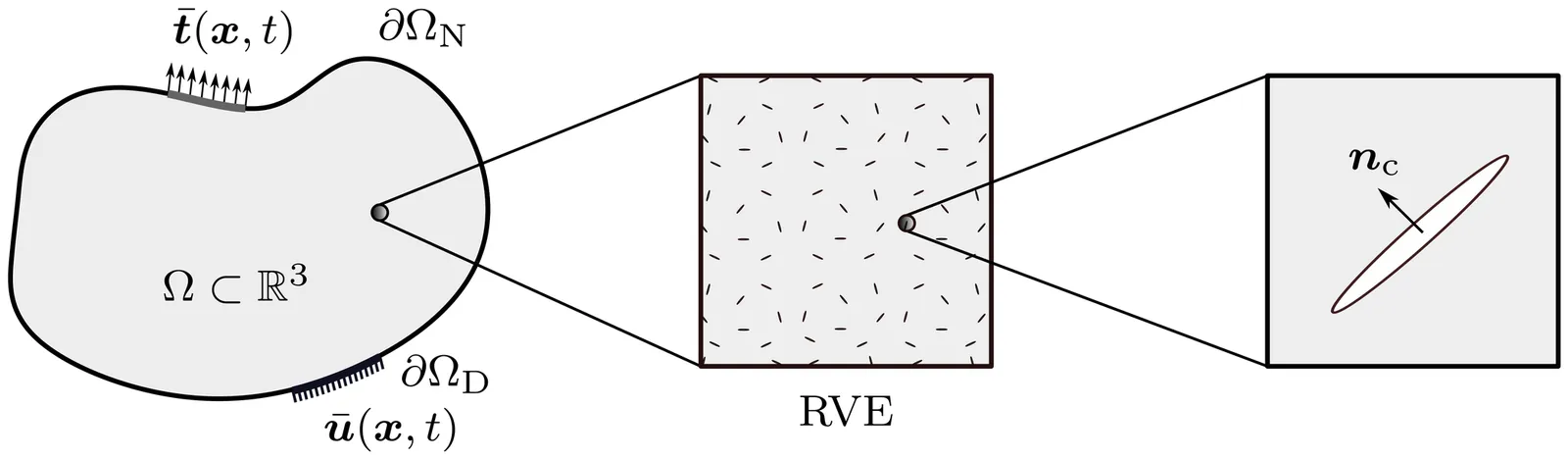
In this paper, we extend the micromechanics-based phase-field modeling of fatigue fracture to capture cyclic plasticity with ratcheting. This mechanism is particularly important for low-cycle fatigue, where the accumulation of inelastic strains plays an important role in the progression to final failure. The ratcheting contribution is formulated through the evolution of ratcheting strain, which accumulates over loading cycles and captures the inelastic strain growth characteristic of cyclic plasticity in a thermodynamically consistent manner. The extended plastic potential allows independent control over deviatoric and volumetric ratcheting components. Numerical simulations are performed to evaluate the model under both monotonic and cyclic loading and to assess the influence of ratcheting on material response.
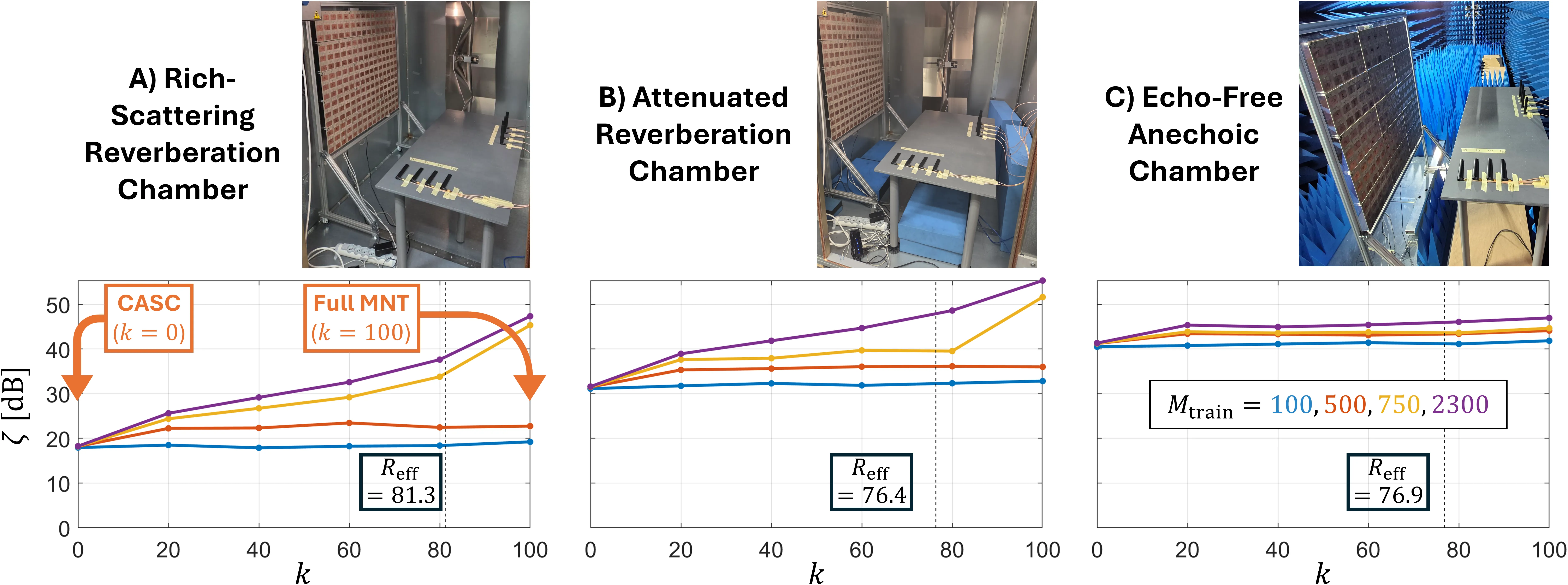
Physics-consistent optimization of reconfigurable intelligent surfaces (RISs) is thwarted in practice by the difficulty of experimentally estimating the mutual coupling (MC) between RIS elements. For large RISs, experimental MC estimation is fundamentally challenging because of the quadratic scaling of the number of unknowns with the number of RIS elements. In this Letter, we present a generic and flexible reduced-rank MC representation that allows wireless practitioners to choose a trade-off between model complexity and accuracy. We experimentally validate the direct reduced-rank MC estimation for a 100-element RIS in three radio environments (rich scattering, attenuated scattering, free space). We observe a strong environmental dependence of the influence of rank reduction on accuracy. Model-based performance evaluations highlight that the importance of MC awareness in optimization depends strongly on the radio environment and the performance indicator.
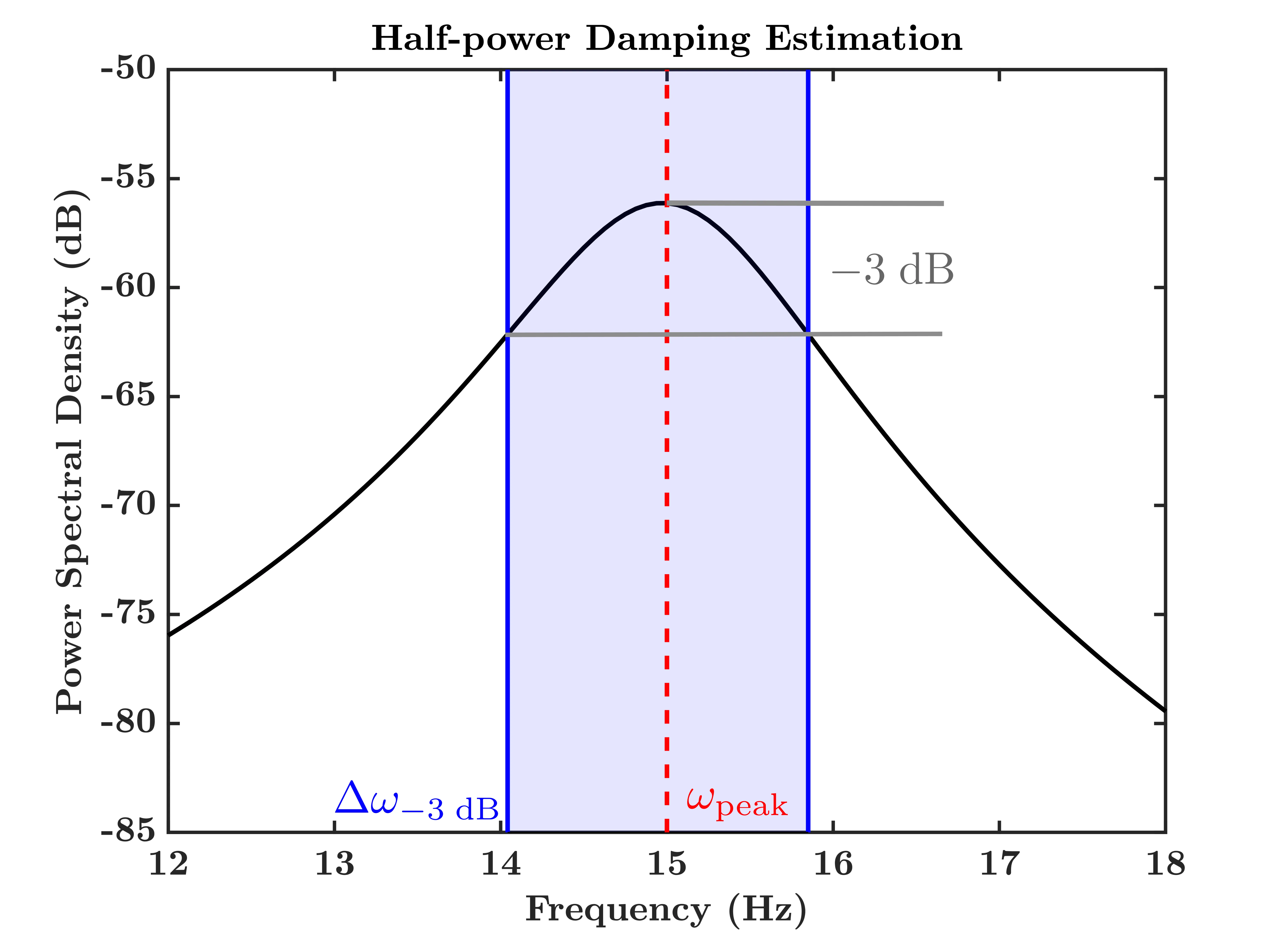
Bandwidth is a widely known concept and tool used in structural dynamics to measure an oscillator's capacity to dissipate energy over time, for example when used in half-power damping estimation of structural modes. Root Mean Square (RMS) Bandwidth is a generalization of bandwidth that overcomes some of the limitations encountered with conventional bandwidth, including the prerequisite of linearity, single-mode response, and light damping. However, its mathematical form does not reveal much about the physics behind it. In this paper, we extend RMS Bandwidth to multiple degree-of-freedom, linear, time-invariant, classically damped systems by deriving an Analytical Root Mean Square (ARMS) Bandwidth in terms of a system's modal parameters and initial modal energy distribution. We demonstrate that ARMS Bandwidth reliably and accurately computes a single measure for a practical structure's dissipative capacity. Also, a purely data-driven methodology for assessing the modal energy distribution is developed. We apply ARMS Bandwidth to single and multiple degree-of-freedom systems and an experimental model aircraft to demonstrate its broad applicability. Future work will address the effects of non-classical damping distribution, time-varying parameters, and nonlinearities.
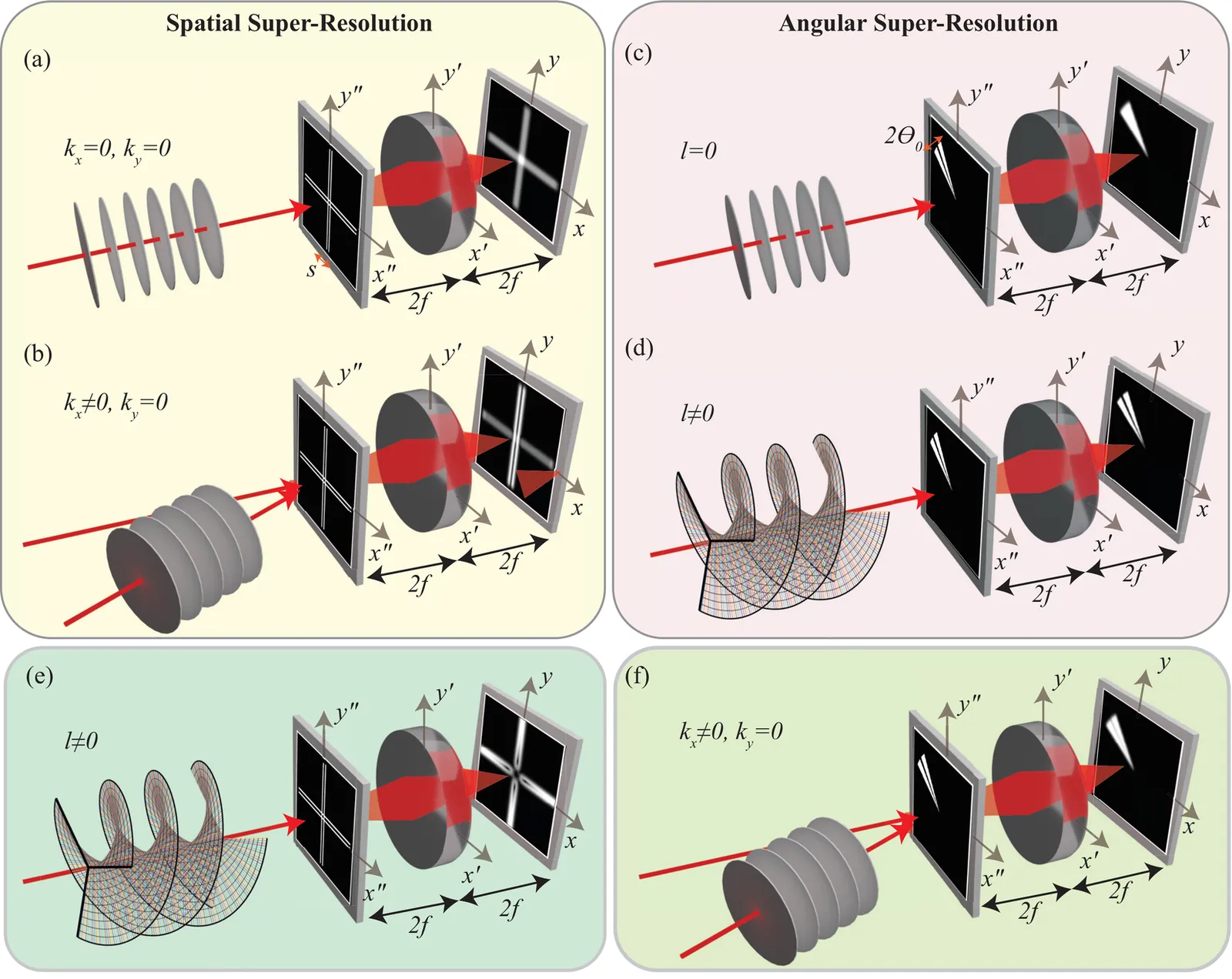
Super-resolution imaging refers to imaging techniques that surpass the Rayleigh resolution limit. One standard way to achieve super-resolution is by structuring the phase of the field illuminating the object. Although super-resolution techniques are already employed in commercial imaging devices, intense research efforts continue to enhance the resolution even further. In this work, we show that if the field illuminating the object is structured in the azimuthal coordinate--such as a field carrying orbital angular momentum (OAM)--the azimuthal features of the object can be imaged with enhanced imaging resolution. We experimentally demonstrate it with two objects, namely, an azimuthal double-slit and a Siemens star. We find that for a given azimuthal feature, there is an optimum OAM mode index of the illumination that gives the best imaging resolution. Super-resolution imaging of azimuthal feature can have important implications, especially for some biological objects that are known to have predominantly azimuthal features.
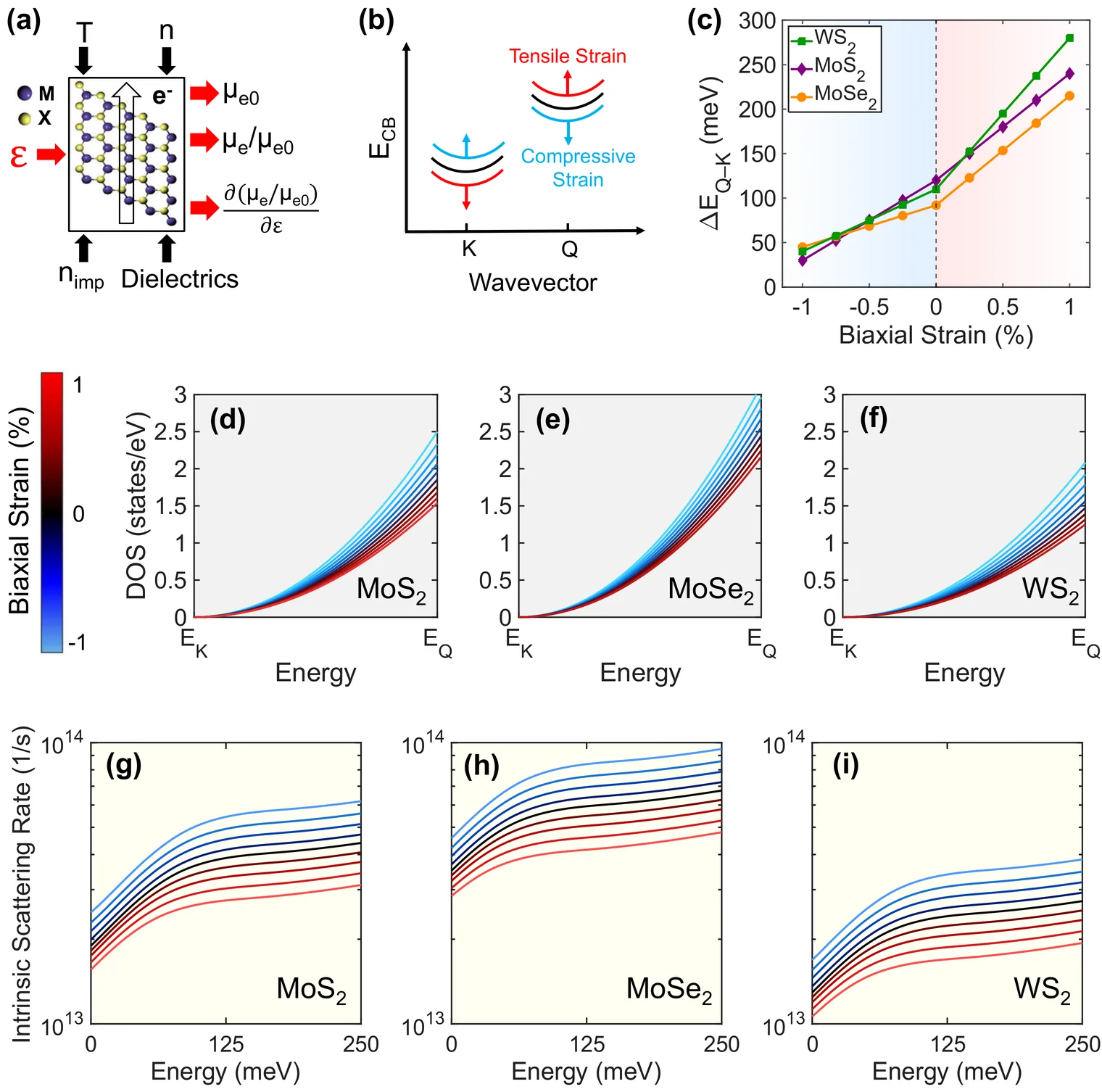
Strain fundamentally alters carrier transport in semiconductors by modifying their band structure and scattering pathways. In transition-metal dichalcogenides (TMDs), an emerging class of 2D semiconductors, we show that mobility modulation under biaxial strain is dictated by changes in inter-valley scattering rather than effective mass renormalization as in bulk silicon. Using a multiscale full-band transport framework that incorporates both intrinsic phonon, extrinsic impurity, and dielectric scattering, we find that tensile strain enhances n-type mobility through K-Q valley separation, while compressive strain improves p-type mobility via Γ-K decoupling. The tuning rates calculated from our full-band model far exceed those achieved by strain engineering in silicon. Both relaxed and strain-modulated carrier mobilities align quantitatively with experimentally verified measurements and are valid across a wide range of practical FET configurations. The enhancement remains robust across variations in temperature, carrier density, impurity level, and dielectric environment. Our results highlight the pivotal role of strain in improving the reliability and performance of 2D TMD-based electronics.
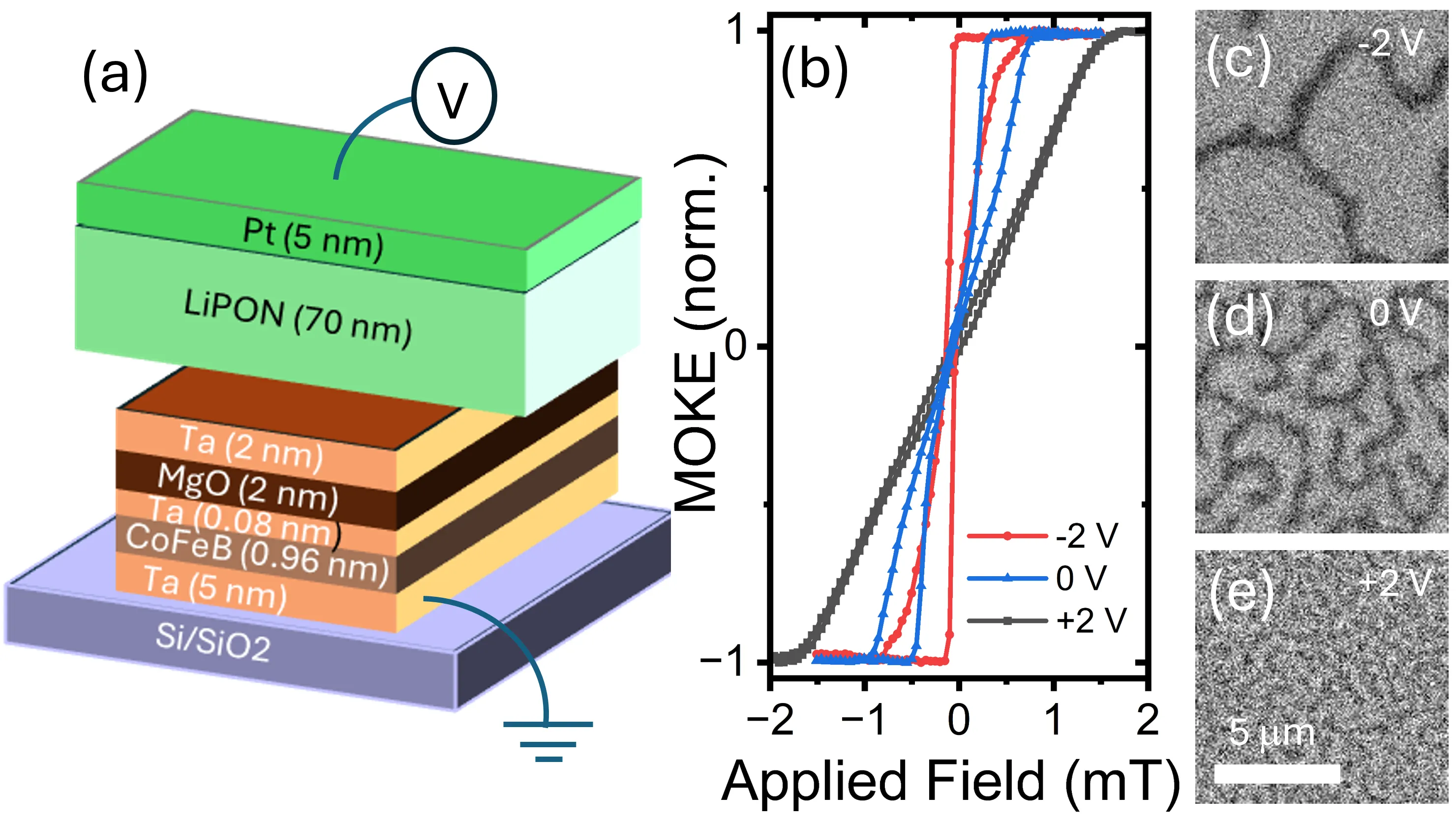
In-materio computing exploits the intrinsic physical dynamics of materials to perform complex computations, enabling low-power, real-time data processing by embedding computation directly within physical layers. Here, we demonstrate a voltage-controlled magneto-ionic device that functions as a reservoir computer capable of forecasting chaotic time series. The device consists of a crossbar structure with a Ta/CoFeB/Ta/MgO/Ta bottom electrode and a LiPON/Pt top electrode. A chaotic Mackey-Glass time series is encoded into a voltage signal applied to the device, while 2D Fourier transforms of voltage-dependent magnetic domain patterns form the output. Performance is influenced by the input rate, smoothing of the output, the number of elements in the reservoir state vector, and the training duration. We identify two distinct computational regimes: short-term prediction is optimized using smoothed, low-dimensional states with minimal training, whereas prediction around the Mackey-Glass delay time benefits from unsmoothed, high-dimensional states and extended training. Reservoir computing metrics reveal that slower input rates are more tolerant to output smoothing, while faster input rates degrade both memory capacity and nonlinear processing. These findings demonstrate the potential of magneto-ionic systems for neuromorphic computing and offer design principles for tuning performance in response to input signal characteristics.
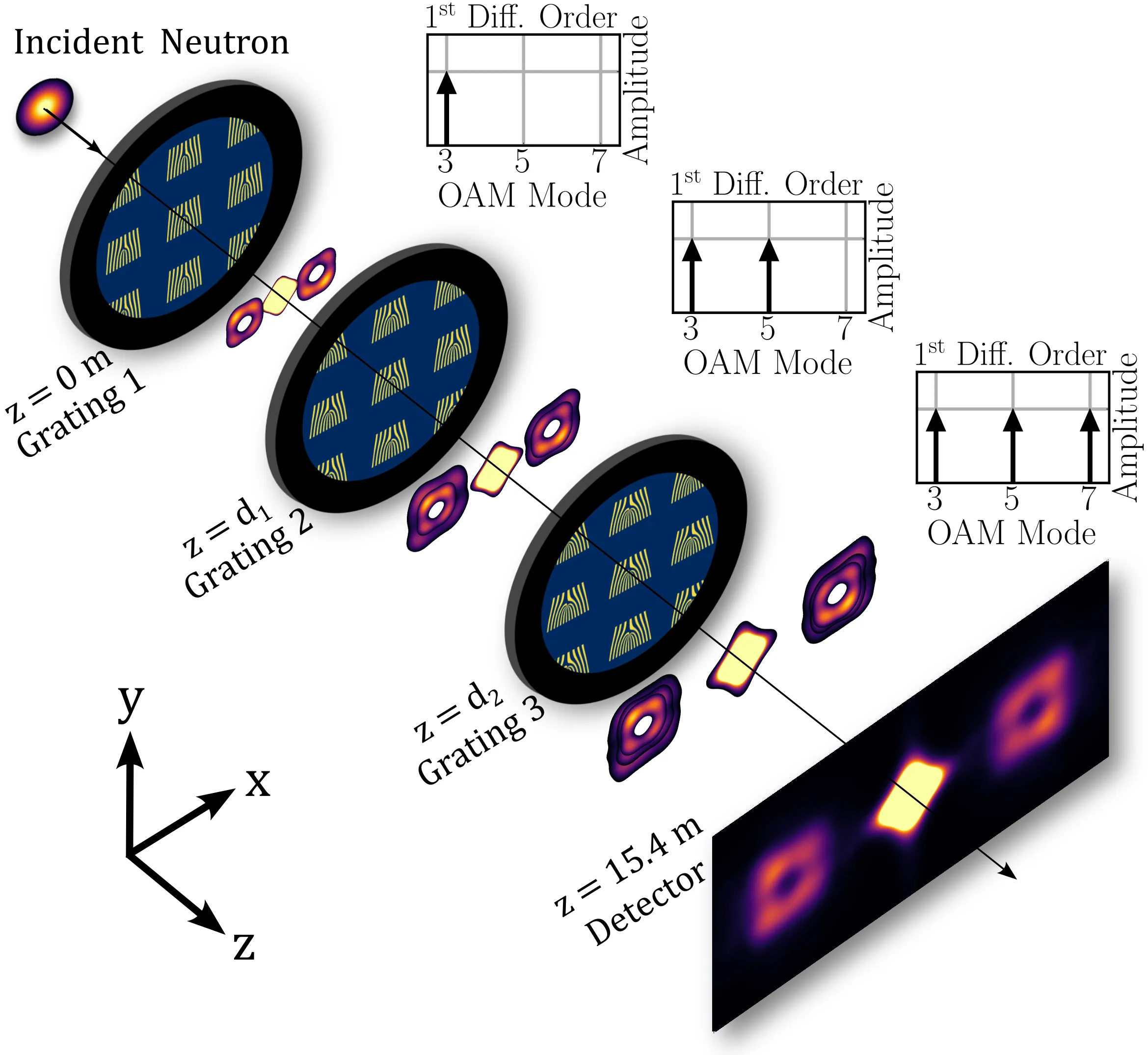
The experimental realization of neutron orbital angular momentum (OAM) states and neutron Airy beams has opened new avenues for structured neutron science in both materials characterization and fundamental physics. These additional degrees of freedom in scattering experiments enable the exploration of selection rules for neutrons, the analysis of scattering properties in topological materials, and the generation of auto-focusing neutron beams. In the effort to enhance the amount of spatial and angular-momentum information retrievable from a single measurement, and to overcome current phase-grating efficiency limits, here we demonstrate multimode structured neutron beams that enable simultaneous access to multiple, well-defined OAM modes, and to hybrid combinations of OAM and Airy states. This multimode approach, analogous to wavelength- or OAM-multiplexing in optics, facilitates the efficient investigation of material scattering properties and nuclear interactions with a neutron source composed of a discretized OAM spectrum.
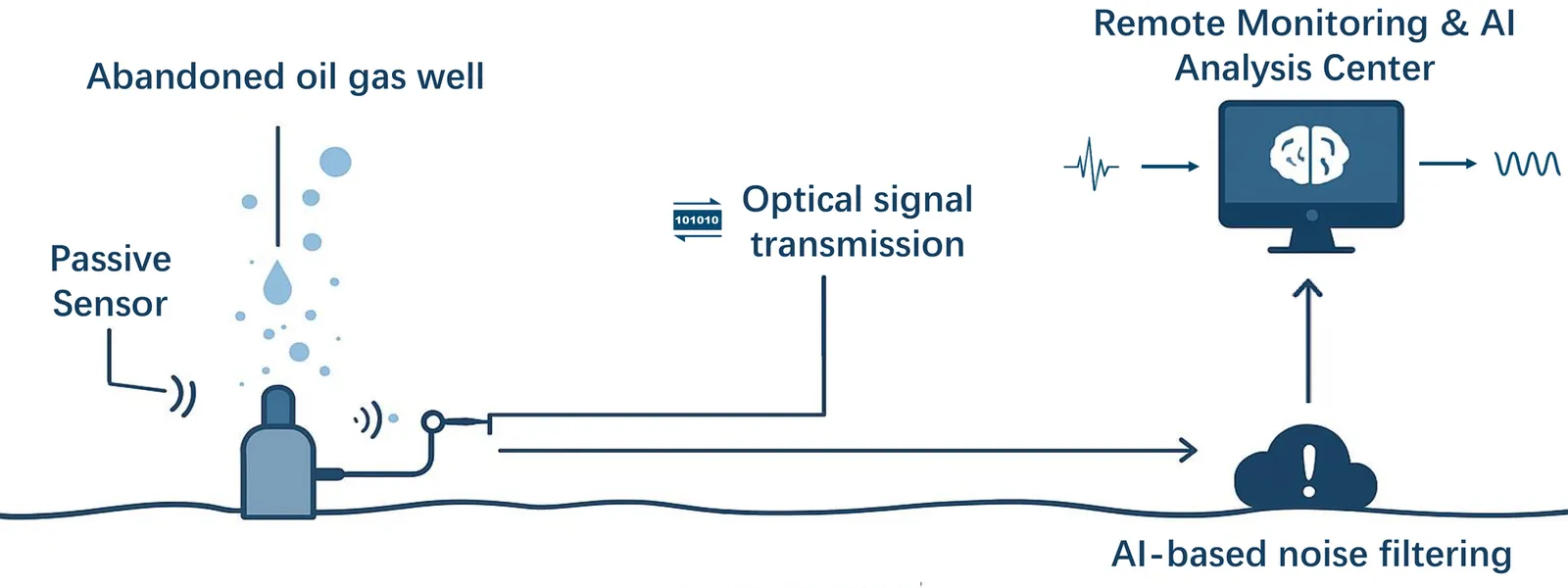
Abandoned oil and gas wells pose significant environmental risks due to the potential leakage of hydrocarbons, brine and chemical pollutants. Detecting such leaks remains extremely challenging due to the weak acoustic emission and high ambient noise in the deep sea. This paper reviews the application of passive sonar systems combined with artificial intelligence (AI) in underwater oil and gas leak detection. The advantages and limitations of traditional monitoring methods, including fibre optic, capacitive and pH sensors, are compared with those of passive sonar systems. Advanced AI methods that enhance signal discrimination, noise suppression and data interpretation capabilities are explored for leak detection. Emerging solutions such as embedded AI analogue-to-digital converters (ADCs), deep learning-based denoising networks and semantically aware underwater optical communication (UOC) frameworks are also discussed to overcome issues such as low signal-to-noise ratio (SNR) and transmission instability. Furthermore, a hybrid approach combining non-negative matrix factorisation (NMF), convolutional neural networks (CNN) and temporal models (GRU, TCN) is proposed to improve the classification and quantification accuracy of leak events. Despite challenges such as data scarcity and environmental change, AI-assisted passive sonar has shown great potential in real-time, energy-efficient and non-invasive underwater monitoring, contributing to sustainable environmental protection and maritime safety management.
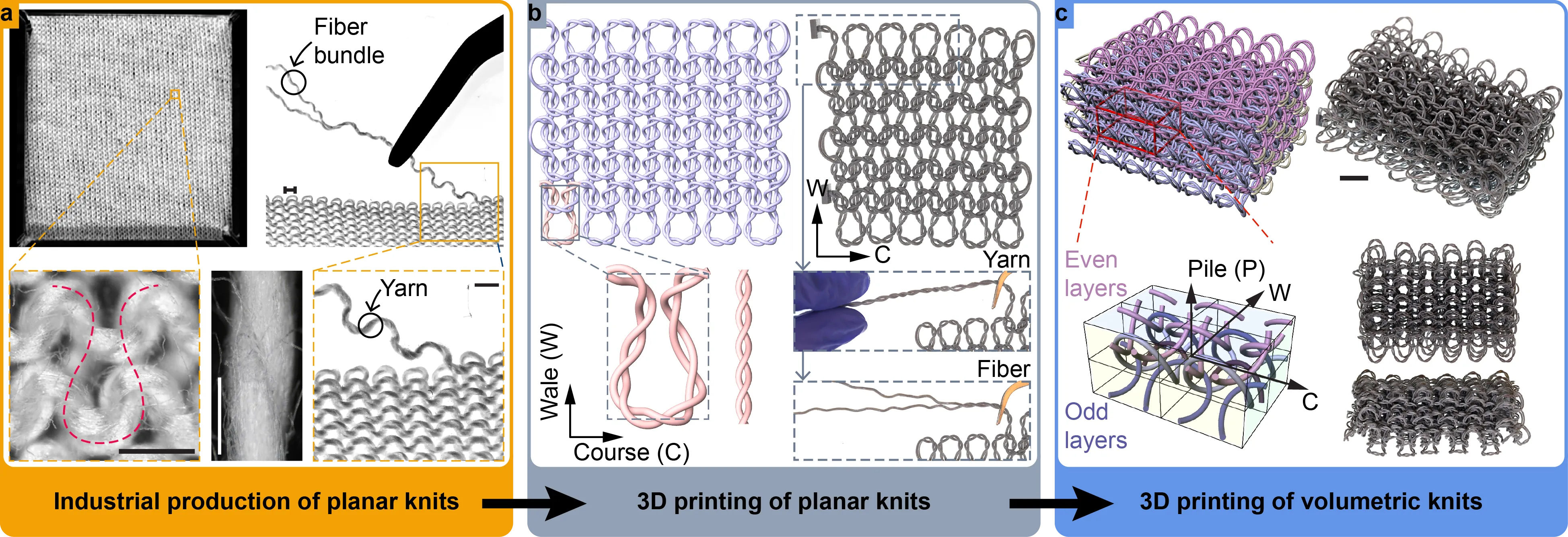
For their resilience and toughness, filamentous entanglements are ubiquitous in both natural and engineered systems across length scales, from polymer-chain- to collagen-networks and from cable-net structures to forest canopies. Textiles are an everyday manifestation of filamentous entanglement: the remarkable resilience and toughness in knitted fabrics arise predominately from the topology of interlooped yarns. Yet most architected materials do not exploit entanglement as a design primitive, and industrial knitting fixes a narrow set of patterns for manufacturability. Additive manufacturing has recently enabled interlocking structures such as chainmail, knot and woven assemblies, hinting at broader possibilities for entangled architectures. The general challenge is to treat knitting itself as a three-dimensional architected material with predictable and tunable mechanics across scales. Here, we show that knitted architectures fabricated additively can be recast as periodic entangled solids whose responses are both fabric-like and programmable. We reproduce the characteristic behavior of conventional planar knits and extend knitting into the third dimension by interlooping along three orthogonal directions, yielding volumetric knits whose stiffness and dissipation are tuned by prescribed pre-strain. We propose a simple scaling that unifies the responses across stitch geometries and constituent materials. Further, we realize the same topology from centimeter to micrometer scales, culminating in the fabrication of what is, to our knowledge, the smallest knitted structure ever made. By demonstrating 3D-printed knits can be interpreted both as a traditional fabric, as well as a novel architected material with defined periodicity, this work establishes the dual nature of entangled filaments and paves the way towards a new form of material architectures with high degrees of entanglement.
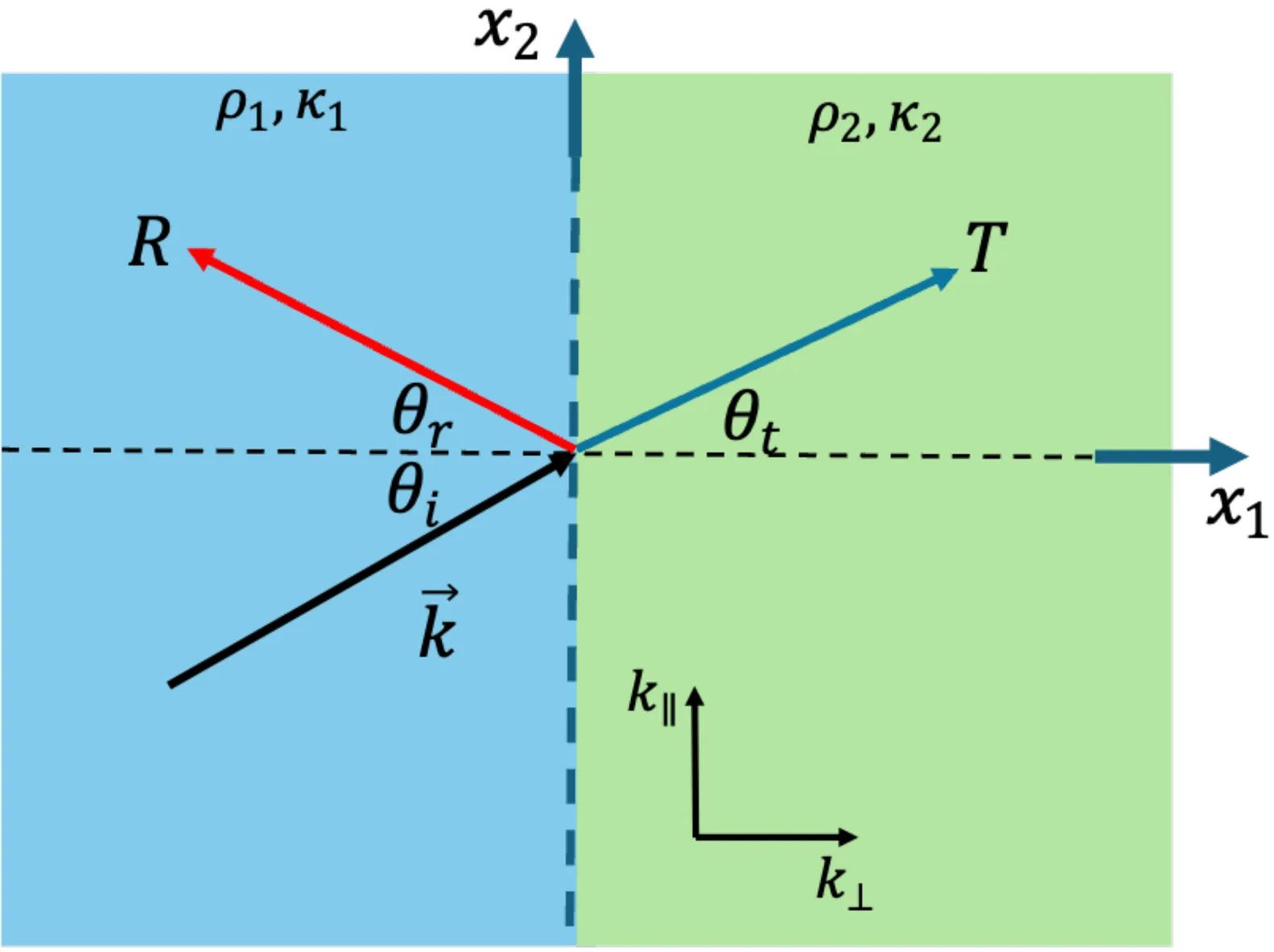
In this paper, we elucidate the concept of local acoustic metamaterials. These are composites which exhibit equi-frequency contours (EFC) which correspond to those expected of homogeneous local acoustic media. We show that EFCs for local acoustic media are conics in 2-dimension and quadrics in 3-dimension. In 2-D, the sure signature of negative properties is if the conic is a hyperbola and in 3-D, the sure signature is the presence of hyperboloids. We note that metamaterial coupling (Willis coupling) has the potential of translating these conics and quadrics in the wave-vector plane but that it does not fundamentally change the shape of these geometries. The local effective properties assigned to a composite in such cases are dispersive (frequency dependent) and they satisfy causality considerations. We finally also show that such properties truly characterize the composite in the sense that they can be used to solve scattering problems involving different samples of the composite. We show that this is made possible through the consideration of transition layers. While the sharp-interface model incurs scattering errors exceeding 20\% at oblique angles, the Drude-layer model restores agreement to within 2\% without requiring integral-equation or multi-mode expansions, thereby offering a simple yet highly efficient route to accurate scattering predictions in resonant local acoustic metamaterials.
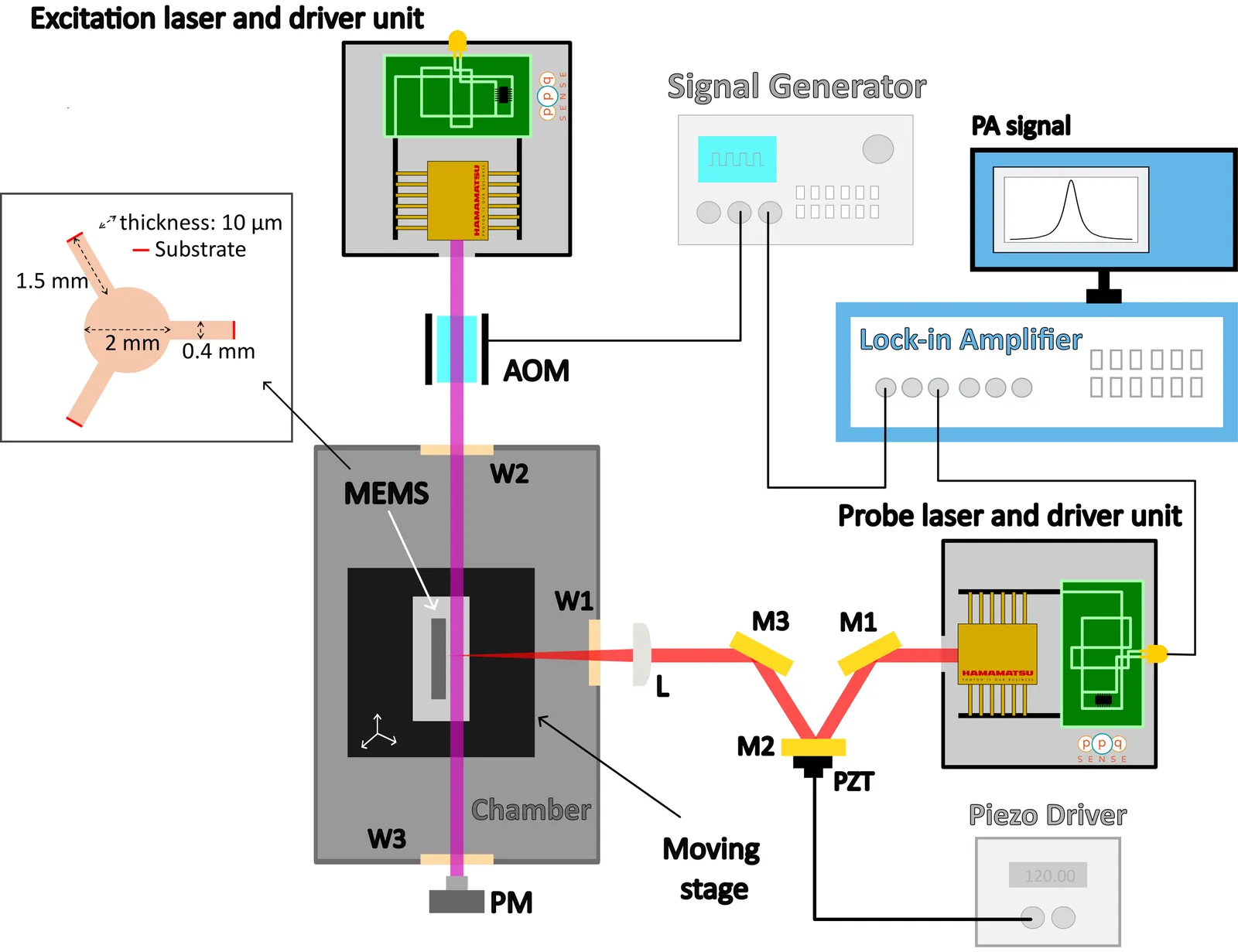
Versatile, ultracompact, easy-to-handle, high-sensitivity sensors are compelling tools for in situ pivotal applications, such as medical diagnostics, security and safety assessments, and environmental control. In this work, we combine photoacoustic spectroscopy and feedback interferometry, proposing a novel trace-gas sensor equipped with a self-mixing readout. This scheme demonstrates a readout sensitivity comparable to that of bulkier state-of-the-art balanced Michelson-interferometric schemes, achieving the same spectroscopic performance in terms of signal-to-noise ratio (SNR) and minimum detection limit (MDL). At the same time, the self-mixing readout benefits from a reduced size and a lower baseline, paving the way for future system downsizing and integration while offering a higher detectability for lower gas concentrations. Moreover, the intrinsic wavelength independence of both self-mixing and photoacoustic techniques allows the applicability and tailorability of the sensor to any desired spectral range.
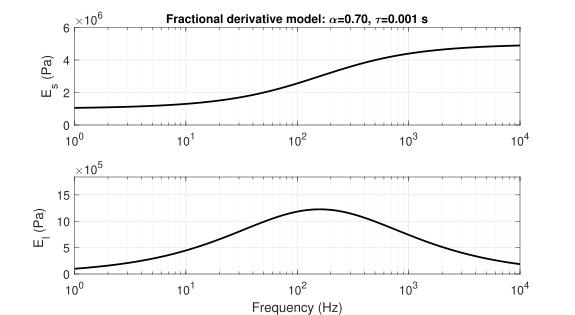
3D-printed materials are used in many different industries (automotive, aviation, medicine, etc.). Most of these 3D-printed materials are based on ceramics or polymers whose mechanical properties vary with frequency. For numerical modeling, it is crucial to characterize this frequency dependency accurately to enable realistic finite-element simulations. At the same time, the damping behavior plays a key role in product development, since it governs a component's response at resonance and thus impacts both performance and longevity. In current research, inverse material characterization methods are getting more and more popular. However, their practical validation and applicability on real measurement data have not yet been discussed widely. In this work, we show the identification of two different materials, POM and additively manufactured sintered ceramics, and validate it with experimental data of a well-established measurement technique (dynamic mechanical analysis). The material identification process considers state-of-the-art reduced-order modeling and constrained particle swarm optimization, which are used to fit the frequency response functions of point measurements obtained by a laser Doppler vibrometer. This work shows the quality of the method in identifying the parameters defining the viscoelastic fractional derivative model, including their uncertainty. It also illustrates the applicability of this identification method in the presence of practical difficulties that come along with experimental data such as boundary conditions and noise.
 2511.03564
The ENDF/B-VIII.1 library is the newest recommended evaluated nuclear data file by the Cross Section Evaluation Working Group (CSEWG) for use in nuclear science and technology applications, and incorporates advances made in the six years since the release of ENDF/B-VIII.0. Among key advances made are that the $^{239}$Pu file was reevaluated by a joint international effort and that updated $^{16,18}$O, $^{19}$F, $^{28-30}$Si, $^{50-54}$Cr, $^{55}$Mn, $^{54,56,57}$Fe, $^{63,65}$Cu, $^{139}$La, $^{233,235,238}$U, and $^{240,241}$Pu neutron nuclear data from the IAEA coordinated INDEN collaboration were adopted. Over 60 neutron dosimetry cross sections were adopted from the IAEA's IRDFF-II library. In addition, the new library includes significant changes for $^3$He, $^6$Li,$^9$Be, $^{51}$V, $^{88}$Sr, $^{103}$Rh, $^{140,142}$Ce, Dy, $^{181}$Ta, Pt, $^{206-208}$Pb, and $^{234,236}$U neutron data, and new nuclear data for the photonuclear, charged-particle and atomic sublibraries. Numerous thermal neutron scattering kernels were reevaluated or provided for the very first time. On the covariance side, work was undertaken to introduce better uncertainty quantification standards and testing for nuclear data covariances. The significant effort to reevaluate important nuclides has reduced bias in the simulations of many integral experiments with particular progress noted for fluorine, copper, and stainless steel containing benchmarks. Data issues hindered the successful deployment of the previous ENDF/B-VIII.0 for commercial nuclear power applications in high burnup situations. These issues were addressed by improving the $^{238}$U and $^{239,240,241}$Pu evaluated data in the resonance region. The new library performance as a function of burnup is similar to the reference ENDF/B-VII.1 library. The ENDF/B-VIII.1 data are available in ENDF-6 and GNDS format at https://doi.org/10.11578/endf/2571019.
2511.03564The ENDF/B-VIII.1 library is the newest recommended evaluated nuclear data file by the Cross Section Evaluation Working Group (CSEWG) for use in nuclear science and technology applications, and incorporates advances made in the six years since the release of ENDF/B-VIII.0. Among key advances made are that the $^{239}$Pu file was reevaluated by a joint international effort and that updated $^{16,18}$O, $^{19}$F, $^{28-30}$Si, $^{50-54}$Cr, $^{55}$Mn, $^{54,56,57}$Fe, $^{63,65}$Cu, $^{139}$La, $^{233,235,238}$U, and $^{240,241}$Pu neutron nuclear data from the IAEA coordinated INDEN collaboration were adopted. Over 60 neutron dosimetry cross sections were adopted from the IAEA's IRDFF-II library. In addition, the new library includes significant changes for $^3$He, $^6$Li,$^9$Be, $^{51}$V, $^{88}$Sr, $^{103}$Rh, $^{140,142}$Ce, Dy, $^{181}$Ta, Pt, $^{206-208}$Pb, and $^{234,236}$U neutron data, and new nuclear data for the photonuclear, charged-particle and atomic sublibraries. Numerous thermal neutron scattering kernels were reevaluated or provided for the very first time. On the covariance side, work was undertaken to introduce better uncertainty quantification standards and testing for nuclear data covariances. The significant effort to reevaluate important nuclides has reduced bias in the simulations of many integral experiments with particular progress noted for fluorine, copper, and stainless steel containing benchmarks. Data issues hindered the successful deployment of the previous ENDF/B-VIII.0 for commercial nuclear power applications in high burnup situations. These issues were addressed by improving the $^{238}$U and $^{239,240,241}$Pu evaluated data in the resonance region. The new library performance as a function of burnup is similar to the reference ENDF/B-VII.1 library. The ENDF/B-VIII.1 data are available in ENDF-6 and GNDS format at https://doi.org/10.11578/endf/2571019.
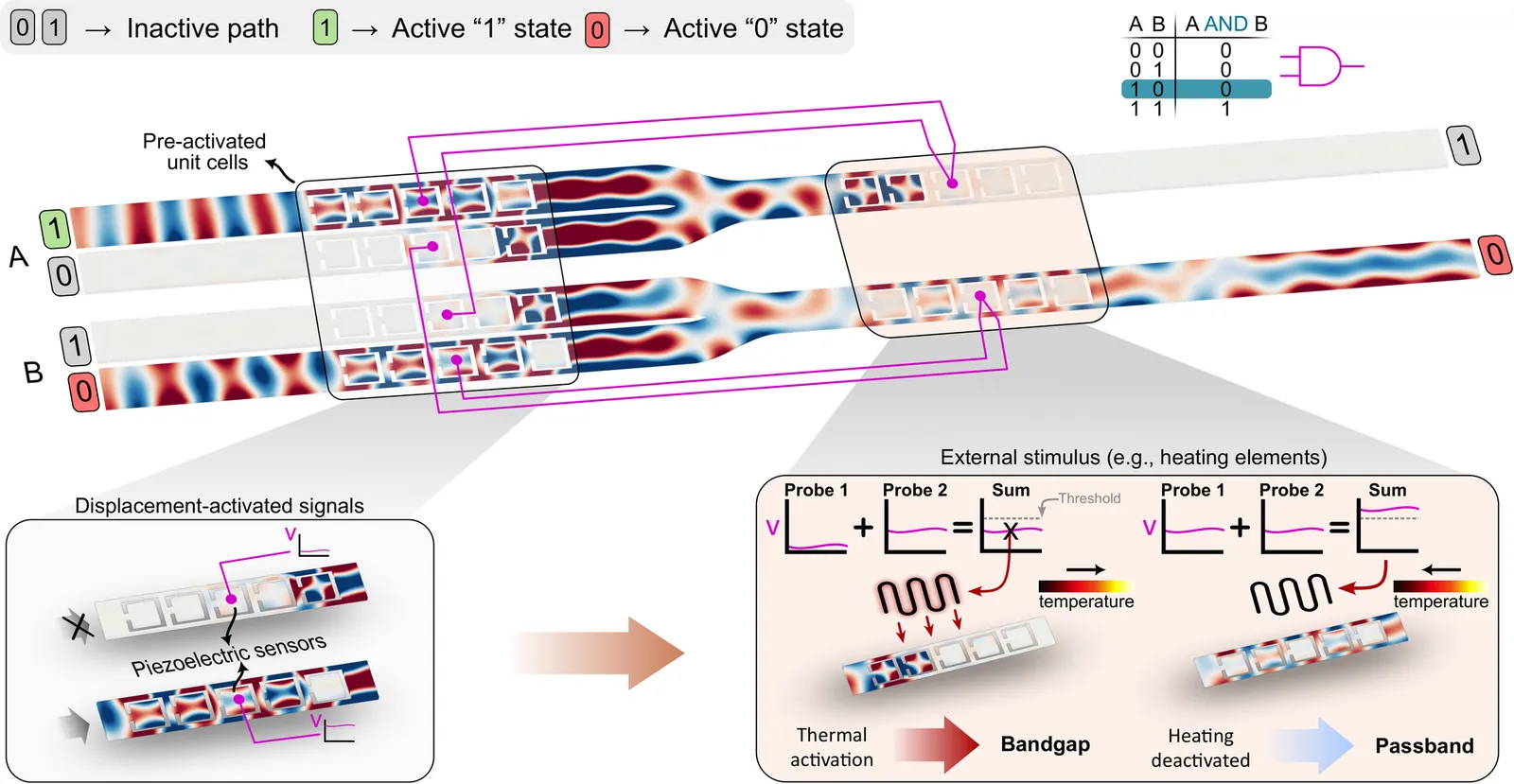
Recent advances in metamaterials and fabrication techniques have revived interest in mechanical computing. Contrary to techniques relying on static deformations of buckling beams or origami-based lattices, the integration of wave scattering and mechanical memory presents a promising path toward efficient, low-latency elastoacoustic computing. This work introduces a novel class of multifunctional mechanical computing circuits that leverage the rich dynamics of phononic and locally resonant materials. These circuits incorporate memory-integrated components, realized here via metamaterial cells infused with shape memory alloys which recall stored elastic profiles and trigger specific actions upon thermal activation. A critical advantage of this realization is its synergistic interaction with incident vibroacoustic loads and the inherited high speed of waves, giving it a notable performance edge over recent adaptations of mechanically intelligent systems that employ innately slower mechanisms such as elastomeric shape changes and snap-through bistabilities. Through a proof-of-concept physical implementation, the efficacy and reconfigurability of the wave-based gates are demonstrated via output probes and measured wavefields. Furthermore, the modular design of the fundamental gates can be used as building blocks to construct complex combinational logic circuits, paving the way for sequential logic in wave-based analog computing systems.
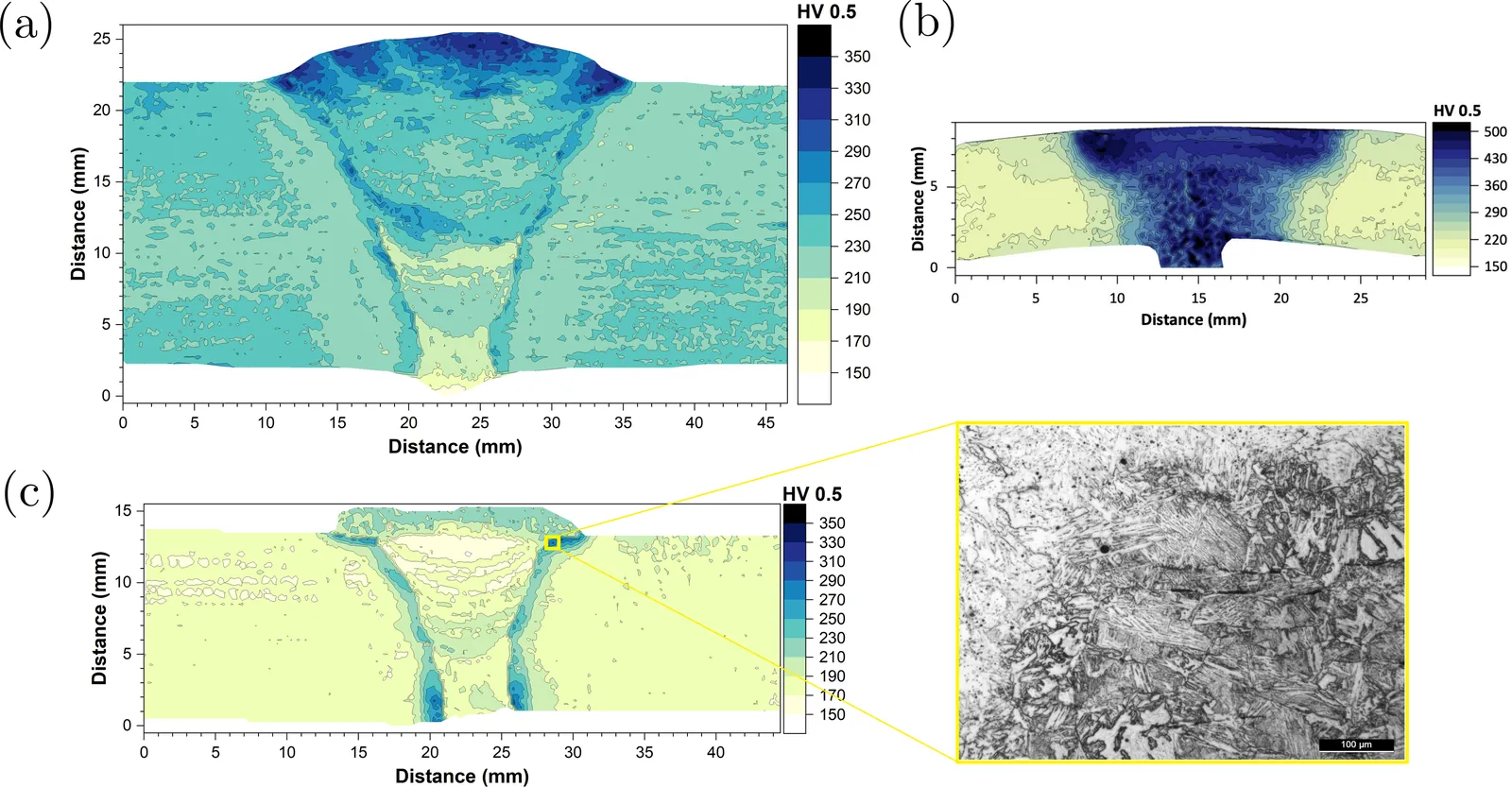
A new protocol is presented to directly characterise the toughness of microstructural regions present within the weld heat-affected zone (HAZ), the most vulnerable location governing the structural integrity of hydrogen transport pipelines. Heat treatments are tailored to obtain bulk specimens that replicate predominantly ferritic-bainitic, bainitic, and martensitic microstructures present in the HAZ. These are applied to a range of pipeline steels to investigate the role of manufacturing era (vintage versus modern), chemical composition, and grade. The heat treatments successfully reproduce the hardness levels and microstructures observed in the HAZ of existing natural gas pipelines. Subsequently, fracture experiments are conducted in air and pure H2 at 100 bar, revealing a reduced fracture resistance and higher hydrogen embrittlement susceptibility of the HAZ microstructures, with initiation toughness values as low as 32 MPa$\sqrt{\text{m}}$. The findings emphasise the need to adequately consider the influence of microstructure and hard, brittle zones within the HAZ.
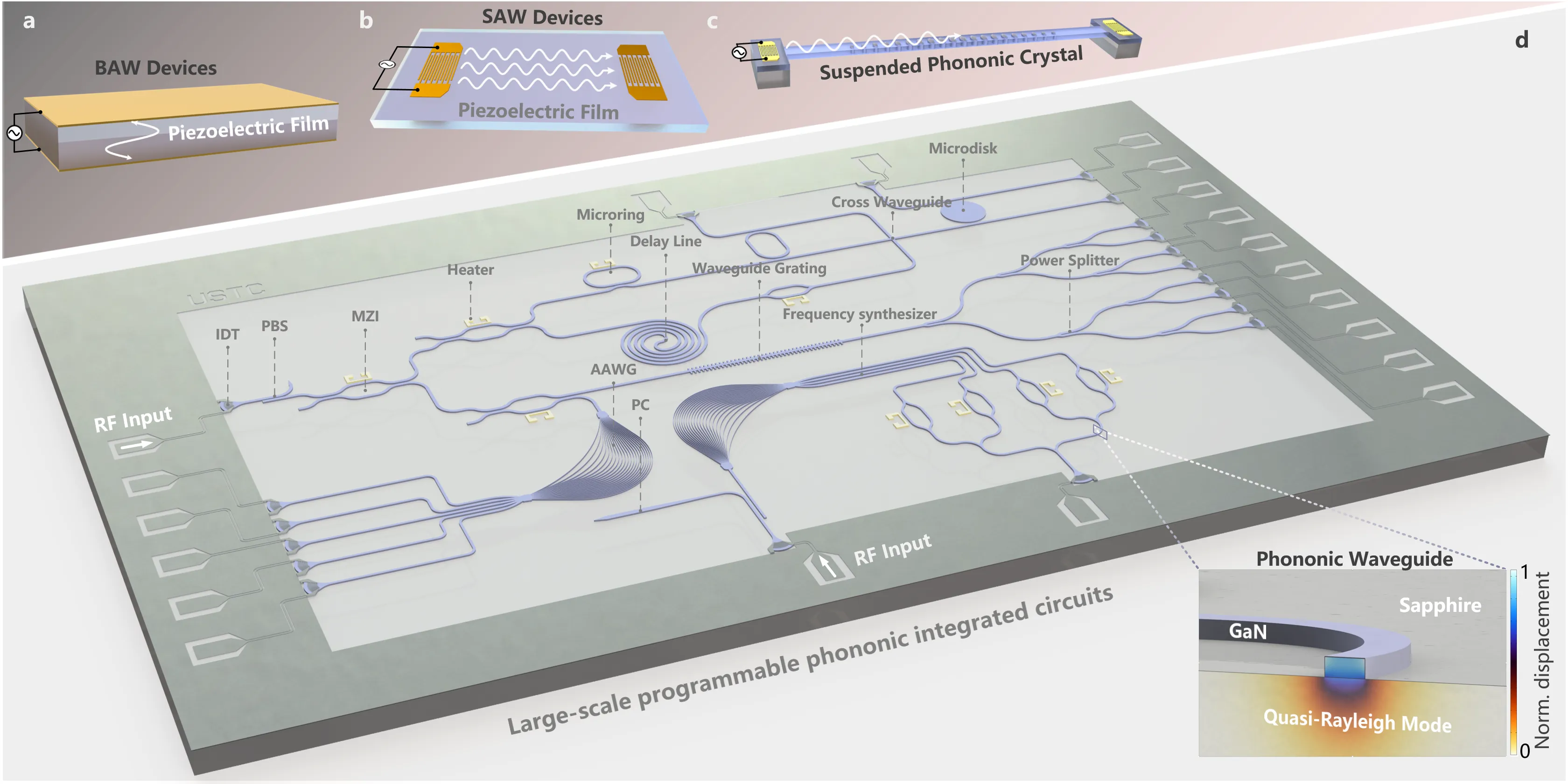
Electronic and photonic chips revolutionized information technology through massive integration of functional elements, yet phonons as fundamental information carriers in solids remain underestimated. Here, we demonstrate large-scale programmable phononic integrated circuits (PnICs) for complex signal processing. We developed a comprehensive library of gigahertz-frequency phononic building blocks that control acoustic wave propagation, polarization, and dispersion. Combining these elements, we demonstrate an ultra-compact 1$\times$128 on-chip acoustic power splitter with unprecedented integration density of 3,000/cm$^2$, a 21-port acoustic frequency demultiplexer with 3.8~MHz resolution, and a four-channel reconfigurable frequency synthesizer. This work establishes scalable phononic integration as the third pillar of information processing alongside electronics and photonics, enabling hybrid chips that combine all three domains for advanced signal processing and quantum information applications.
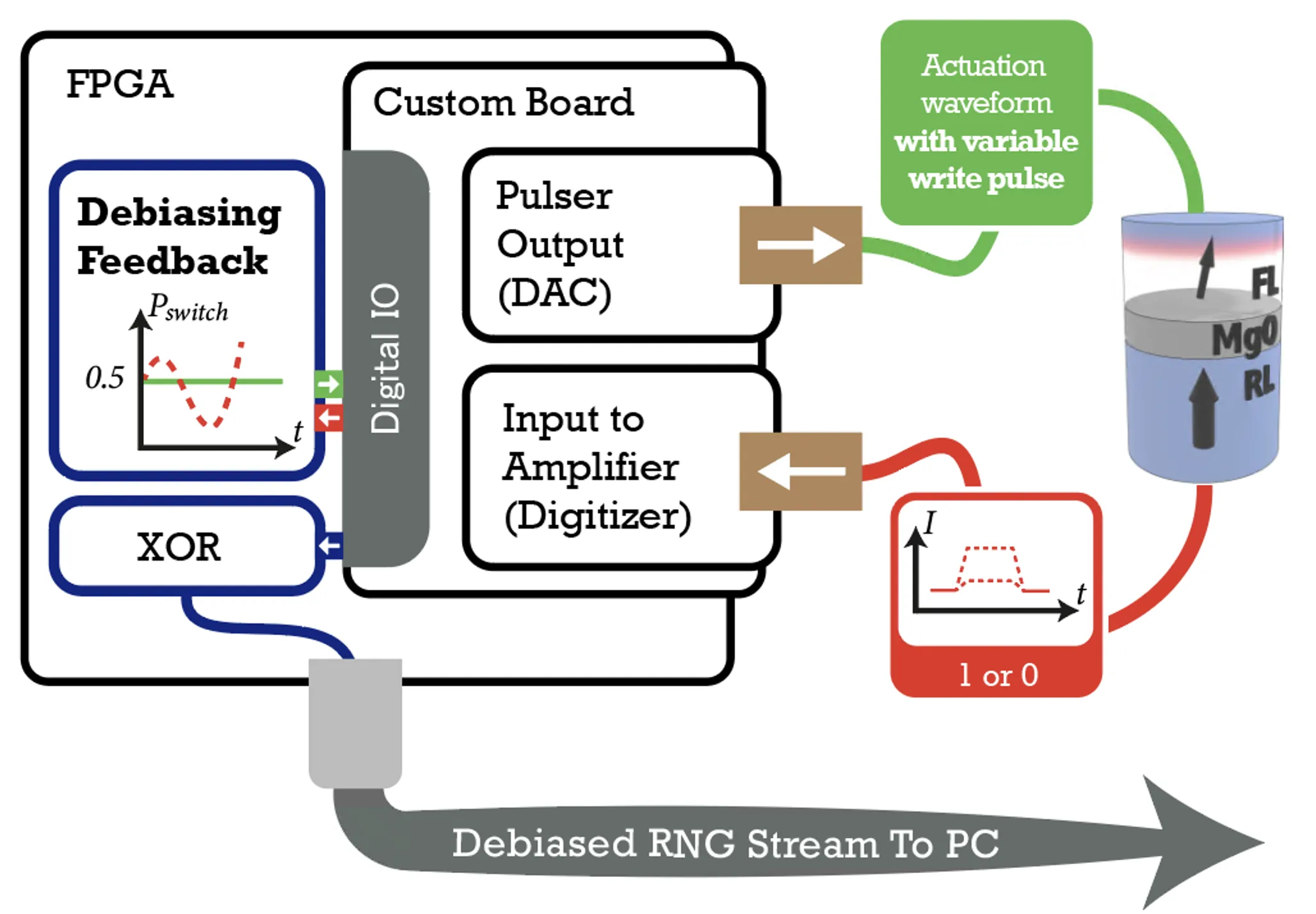
We demonstrate a method to generate application-ready truly random bits from a magnetic tunnel junction driven by a Field-Programmable Gate Array (FPGA). We implement a real-time feedback loop that stabilizes the switching probability near 50\% and apply an XOR operation, both on the FPGA, to suppress short-term correlations, together mitigating long-term drift and bias in the bitstream. This combined approach enables NIST-compliant random bit generation at 5~Mb/s without post-processing, providing a practical hardware solution for fast and reliable true random number generation. Beyond cryptographic applications, these capabilities open opportunities for stochastic hardware accelerators, probabilistic computing, and large-scale modeling where real-time access to unbiased randomness is essential.
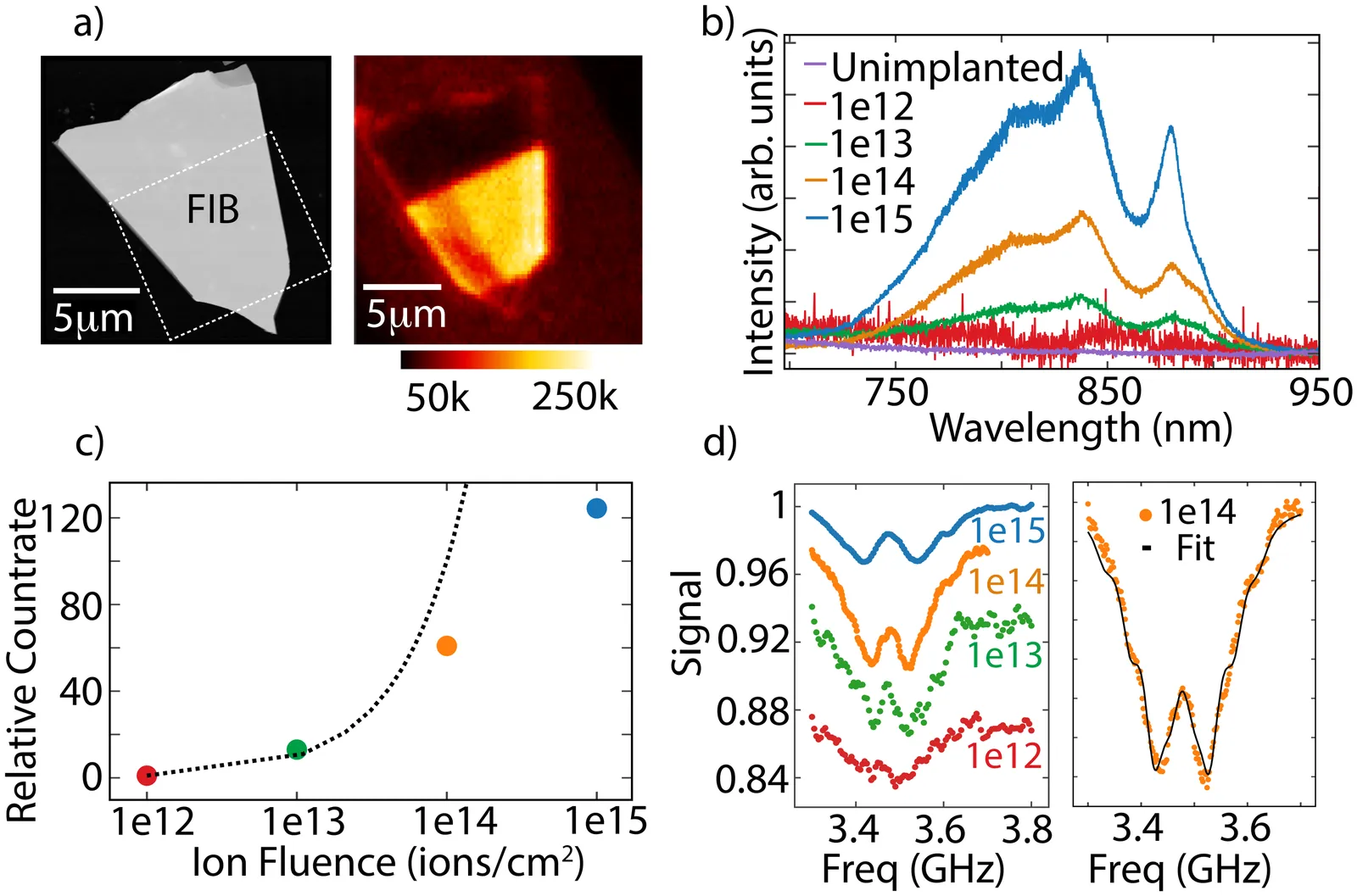
We study $V_{\mathrm{B}}^-$ centres generated by helium focused ion beam (FIB) irradiation in thin ($\sim$70 nm) hBN nanoflakes, in order to investigate the effect of implantation conditions on the key parameters that influence the magnetic field sensitivity of $V_{\mathrm{B}}^-$ quantum sensors. Using a combination of photoluminescence, optically detected magnetic resonance, and Raman spectroscopy, we examine the competing factors of maximising signal intensity through larger $V_{\mathrm{B}}^-$ concentration against the degradation in spin coherence and lattice quality observed at high ion fluences. Our results indicate that both the $V_{\mathrm{B}}^-$ spin properties and hBN lattice parameters are largely preserved up to an ion fluence of $10^{14}$ ions/cm$^2$, and beyond this significant degradation occurs in both. At the optimal implantation dose, an AC magnetic sensitivity of $\sim 1\,μ\mathrm{T}/\sqrt{\mathrm{Hz}}$ is achieved. Using the patterned implantation enabled by the FIB, we find that $V_{\mathrm{B}}^-$ centres and the associated lattice damage are well localised to the implanted regions. This work demonstrates how careful selection of fabrication parameters can be used to optimise the properties of $V_{\mathrm{B}}^-$ centres in hBN, supporting their application as quantum sensors based on 2D materials.
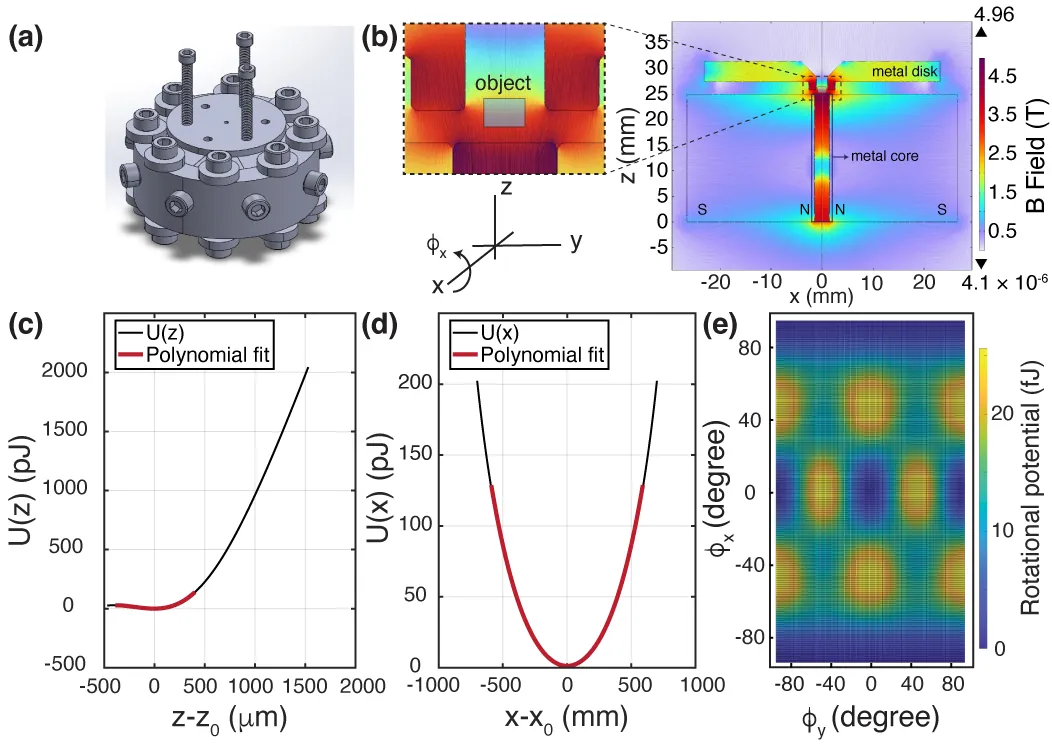
Macroscopic systems, when governed by nonlinear interactions, can display rich behavior from persistent oscillations to signatures of ergodicity breaking. Nonlinearity, long regarded as a nuisance in precision systems, is increasingly recognized as a gateway to new physical regimes. While such dynamics have been extensively studied in optics and atomic physics, macroscopic systems are rarely associated with long-lived coherence and nonlinear control and remain an untapped platform for probing the fundamental nonlinear processes. Here, we report the observation of long-lived oscillatory dynamics in millimeter-scale levitated dielectric quartz particles exhibiting clear signatures of nonlinear mode coupling, a positive largest Lyapunov exponent of 0.0095 s^-1, and partial energy recurrences-phenomena strongly reminiscent of the Fermi-Pasta-Ulam-Tsingou physics. We observe dissipation rates below 4*10E-6 Hz, limited by our ability to measure dissipation in presence of nonlinear dynamics. We estimate an intrinsic acceleration sensitivity of 62*10E-12 g/sqrt(Hz), at room temperature. The magnetic trap is constructed from a static arrangement of permanent magnets, requiring no external power or active feedback. Our findings open a path toward leveraging nonlinear dynamics for novel applications in sensing, signal processing, and statistical mechanics.
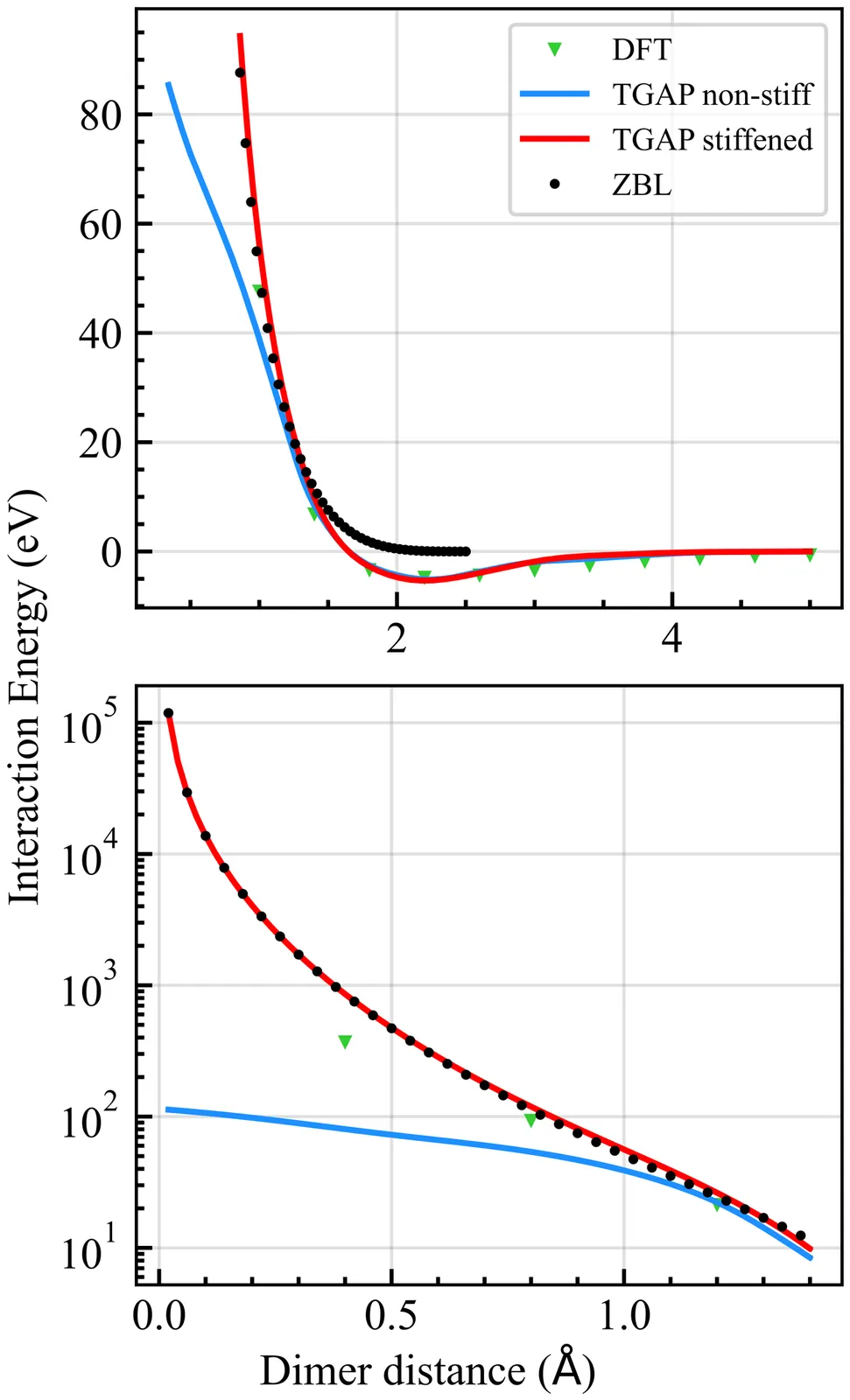
TurboGAP is a software package designed for efficient molecular dynamics simulations using Gaussian Approximation Potential (GAP) machine-learning interatomic potentials (MLIP). In this work, we enhance the capabilities of TurboGAP for radiation damage simulations by implementing a two-temperature molecular dynamics model, based on electron density-dependent coupling of electronic and atomic subsystems. Additionally, we implement adaptive calculation of the timestep and grouping of atoms for cell-border cooling. Our implementation incorporates electronic stopping power either through a traditional friction-based model or a more realistic first-principles-derived model. By combining the computational efficiency of TurboGAP with the accuracy of GAP MLIP, we perform cascade simulations in silicon with primary knock-on atom (PKA) energies up to 10 keV. Our simulations scale to systems containing up to 1 million atoms. We study the generation and clustering of radiation-induced defects. We also calculate ion-beam mixing and compare our results with the experimental data, discussing how the GAP-MLIP along with the inclusion of a realistic electronic stopping model improves the prediction of experimental mixing values.
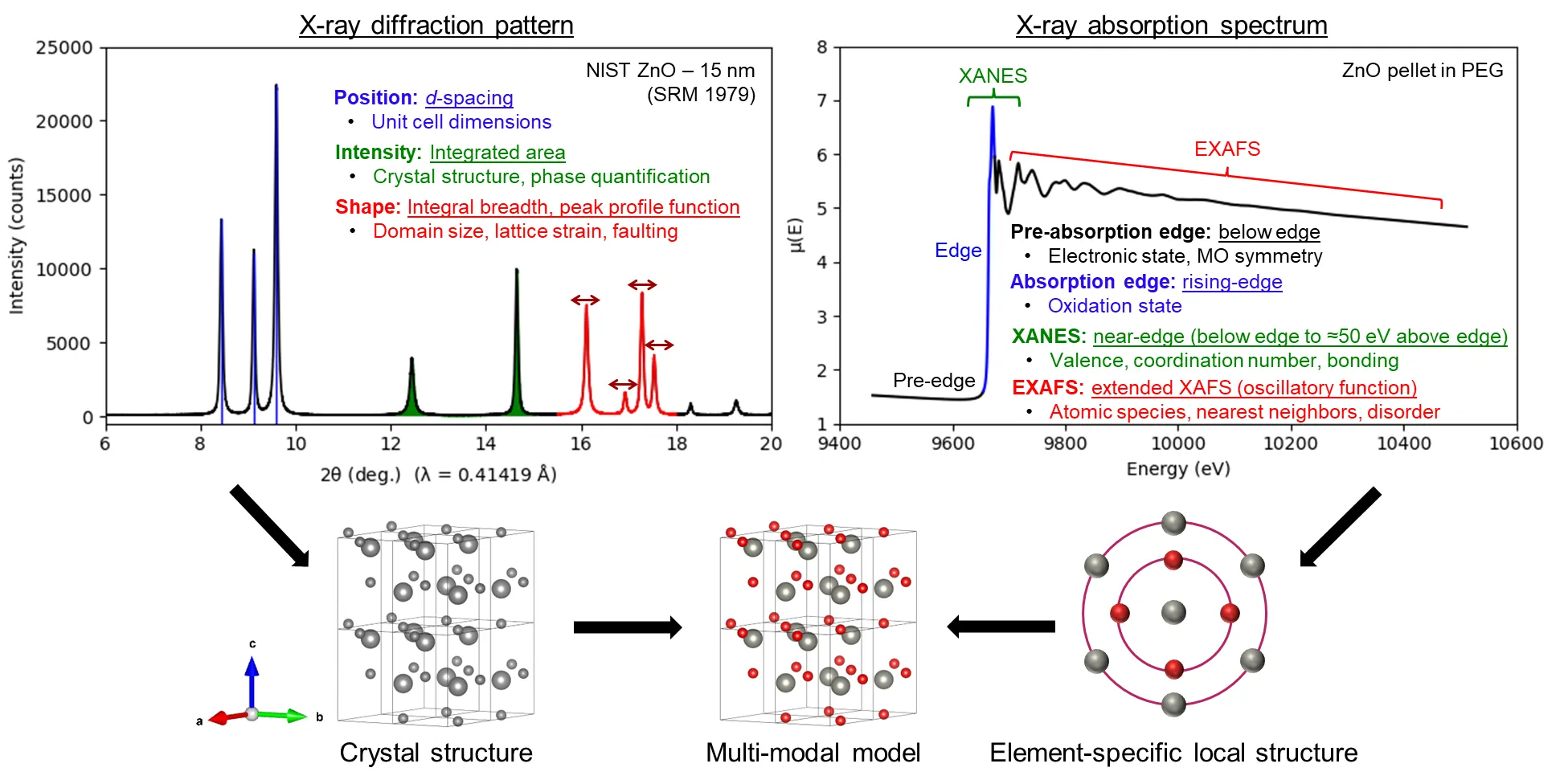
High-throughput materials discovery and studies of complex functional materials increasingly rely on multi-modal characterization performed at synchrotron light sources. However, measurements are typically done with no use of data until after an experiment, neglecting opportunities for data-driven insights to guide measurements. We developed a modular, open-source framework that incorporates artificial intelligence within the Bluesky control and data streaming infrastructure at NSLS-II, enabling real-time orchestration of multi-beamline, multi-modal experiments. AI agents perform on-the-fly reduction, clustering, Gaussian process modelling, and Bayesian optimization driven data acquisition, while users monitor agent behavior and visualize results live. Combinatorial libraries of the ternary Al-Ni-Pt system were spatially mapped by X-ray diffraction and X-ray absorption fine structure measurements at the PDF and BMM beamlines, respectively. Dynamic switching between AI-driven and conventional grid mapping strategies was achieved, demonstrating the flexible workflows possible through this framework. A digital twin constructed from a simulated Al-Li-Fe oxide dataset shows that AI-driven mapping strategies outperform conventional mapping as well as random sampling by prioritizing measurements that better resolve both phase boundaries and localized minority phases. This framework supports plug-and-play capabilities, and establishes a foundation for routine multi-modal, AI-assisted large-scale user-facility operations.
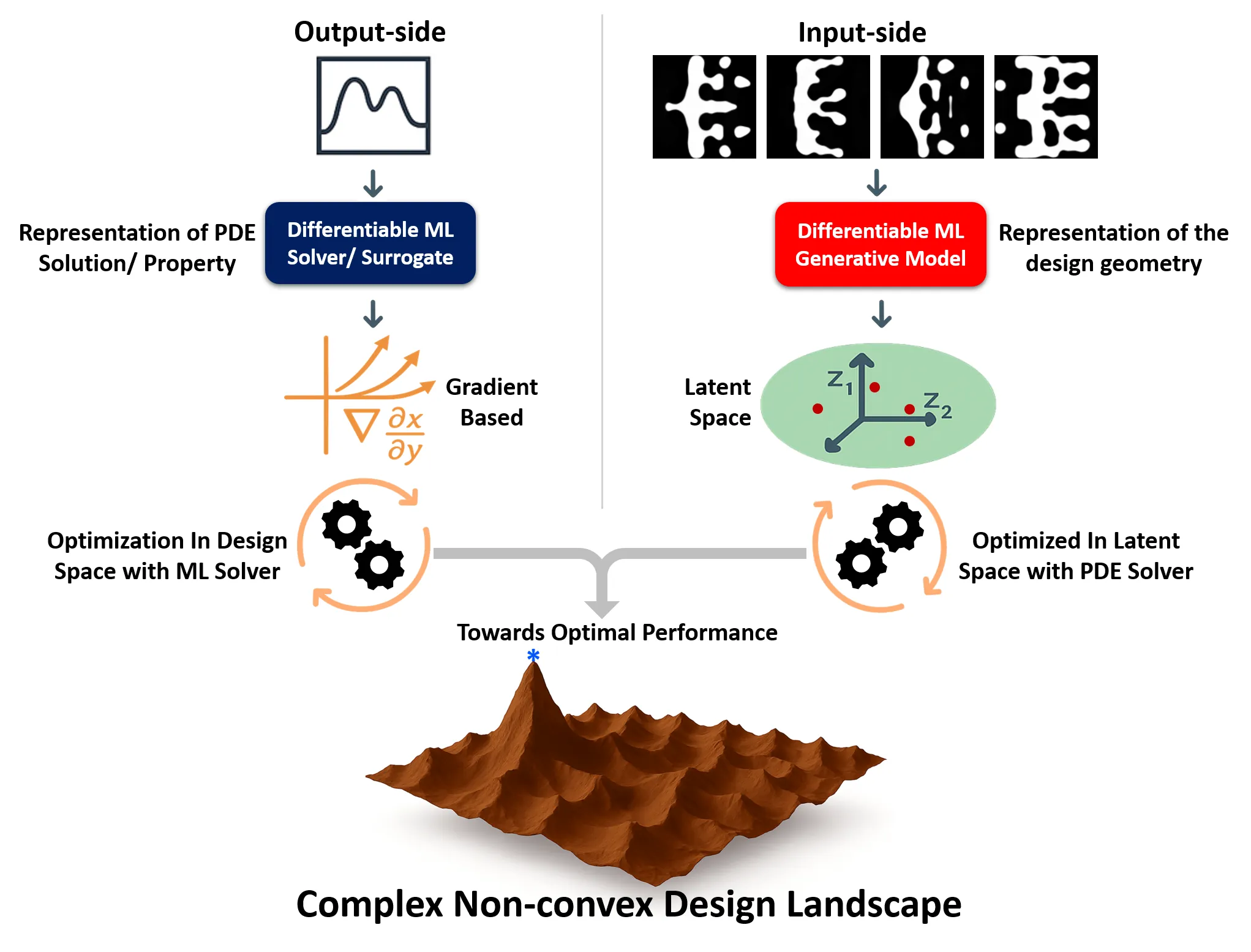
Inverse design in nanophotonics, the computational discovery of structures achieving targeted electromagnetic (EM) responses, has become a key tool for recent optical advances. Traditional intuition-driven or iterative optimization methods struggle with the inherently high-dimensional, non-convex design spaces and the substantial computational demands of EM simulations. Recently, machine learning (ML) has emerged to address these bottlenecks effectively. This review frames ML-enhanced inverse design methodologies through the lens of representation learning, classifying them into two categories: output-side and input-side approaches. Output-side methods use ML to learn a representation in the solution space to create a differentiable solver that accelerates optimization. Conversely, input-side techniques employ ML to learn compact, latent-space representations of feasible device geometries, enabling efficient global exploration through generative models. Each strategy presents unique trade-offs in data requirements, generalization capacity, and novel design discovery potentials. Hybrid frameworks that combine physics-based optimization with data-driven representations help escape poor local optima, improve scalability, and facilitate knowledge transfer. We conclude by highlighting open challenges and opportunities, emphasizing complexity management, geometry-independent representations, integration of fabrication constraints, and advancements in multiphysics co-designs.
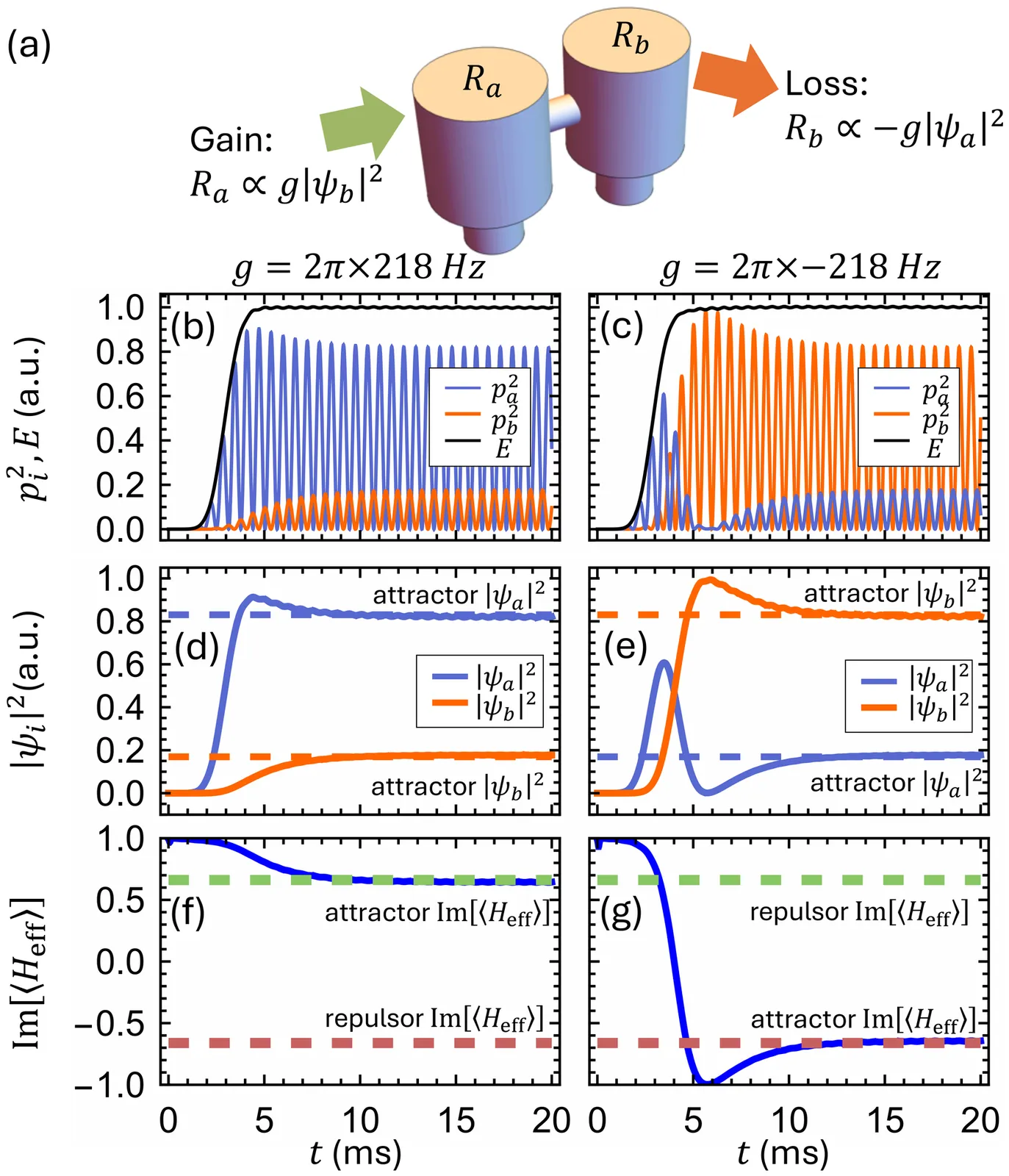
We present a spatiotemporal gain-loss framework for eigenmode steering in coupled acoustic resonators. A cross-coupled gain-loss coefficient links the gain of one resonator to the intensity of its partner, creating nonlinear feedback that conserves total energy while driving the system toward the eigenmode associated with the eigenvalue having the largest imaginary part-a deterministic eigenmode collapse. Spatial gain-loss profiles shape the eigenvalue spectrum and attractor landscape, while temporal modulation governs the transition dynamics. When symmetry prevents direct access to a target eigenmode, controlled spatiotemporal perturbations enable otherwise symmetry-forbidden transitions and accelerate convergence. Within this framework, parity-time (PT) symmetry appears as a special case, allowing tunable switching between collapse and Rabi-like oscillations near the exceptional point. Full-wave simulations of coupled Helmholtz resonators confirm precise and programmable acoustic energy routing, establishing spatiotemporal gain-loss engineering as a route to reconfigurable wave control and analog information processing.
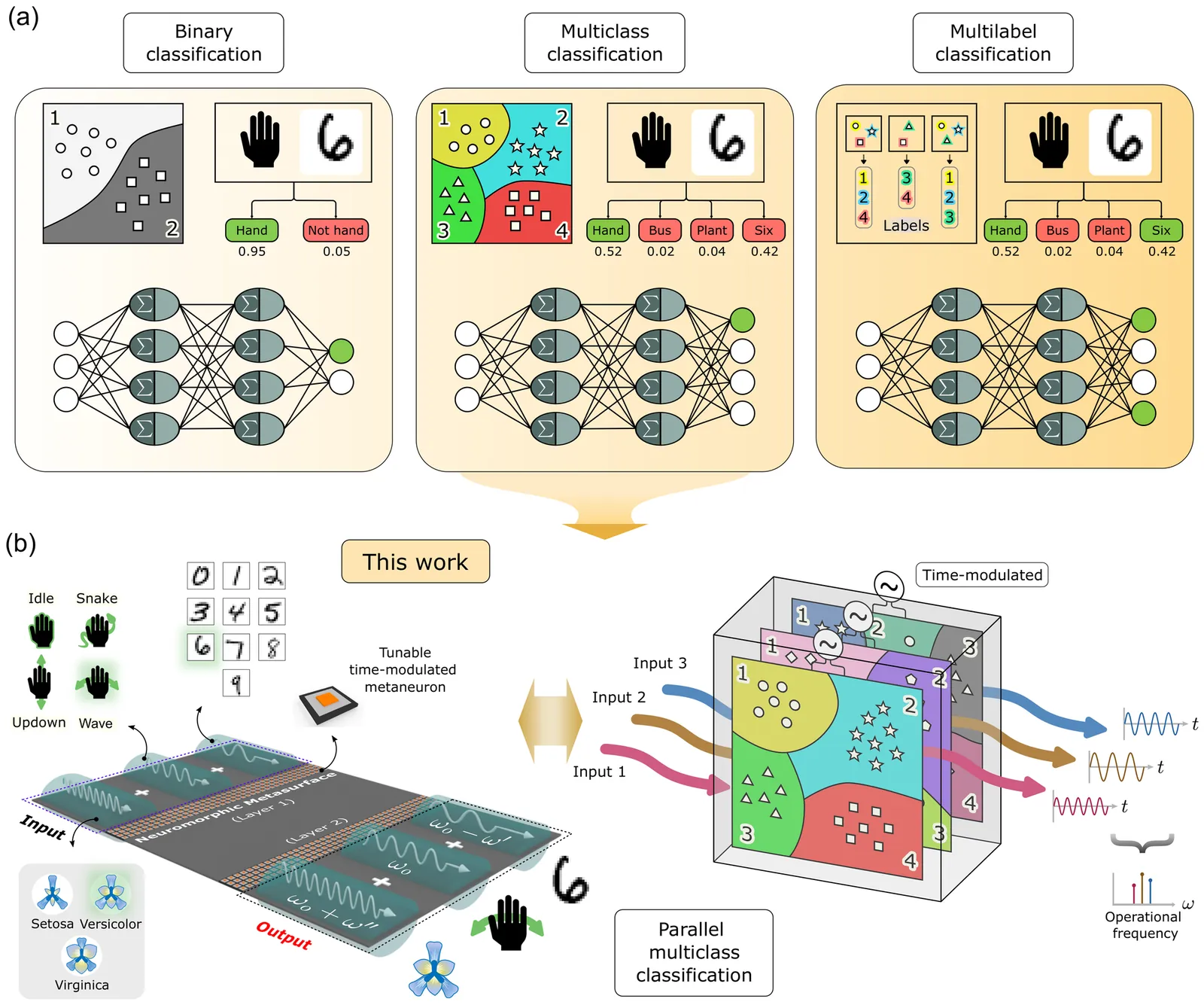
A neuromorphic metasurface embodies mechanical intelligence by realizing physical neural architectures. It exploits guided wave scattering to conduct computations in an analog manner. Through multiple tuned waveguides, the neuromorphic system recognizes the features of an input signal and self-identifies its classification label. The computational input is introduced to the system through mechanical excitations at one edge, generating elastic waves that traverse multiple layers of resonant metasurfaces. These metasurfaces possess a tunable phase akin to trainable parameters in deep learning algorithms. While early efforts have been promising, the well-established constraints on wave propagation in finite media limit such systems to single-task realizations. In this work, we devise a dual classifier neuromorphic metasurface and demonstrate its effectiveness in carrying out two completely independent classification problems that are concurrently carried out in parallel, thus addressing a major bottleneck in physical computing systems. Parallelization is achieved through smart multiplexing of the carrier computational frequency, enabled by prescribed temporal modulations of the embedded waveguides. The presented theory and results pave the way for new paradigms in wave-based computing systems, which have been elusive thus far.
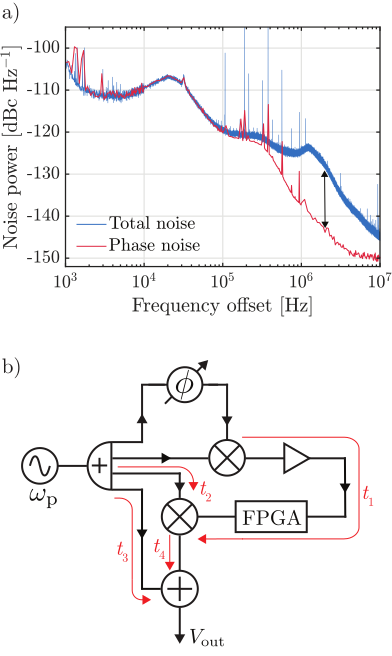
Carrier noise in coherent tones limits sensitivity and causes heating in many experimental systems, such as force sensors, time-keeping, and studies of macroscopic quantum phenomena. Much progress has been made to reduce carrier noise using phase noise cancellation techniques, however, in systems where amplitude noise dominates, these methods are ineffective. Here, we present a technique to reduce amplitude noise from microwave generators using feedback cancellation. The method uses a field-programmable gate array (FPGA) to reproduce noise with a tunable gain and time delay, resulting in destructive interference when combined with the original tone. The FPGA additionally allows for tuning of the frequency offset and bandwidth in which the noise is canceled. By employing the cancellation we observe 13 dB of noise power reduction at a 2 MHz offset from a 4 GHz microwave tone, lowering the total noise to the phase noise level. To verify its applicability we utilize the setup in a microwave optomechanics experiment to investigate the effect of generator noise on the sideband cooling of a 0.5 mm silicon nitride membrane resonator. We observe that with our technique the rate of externally induced cavity heating is reduced by a factor of 3.5 and the minimum oscillator occupation is lowered by a factor of 2. This method broadens the field of noise cancellation techniques, where amplitude noise is becoming an increasingly important consideration in microwave systems as phase noise performances improve over time.
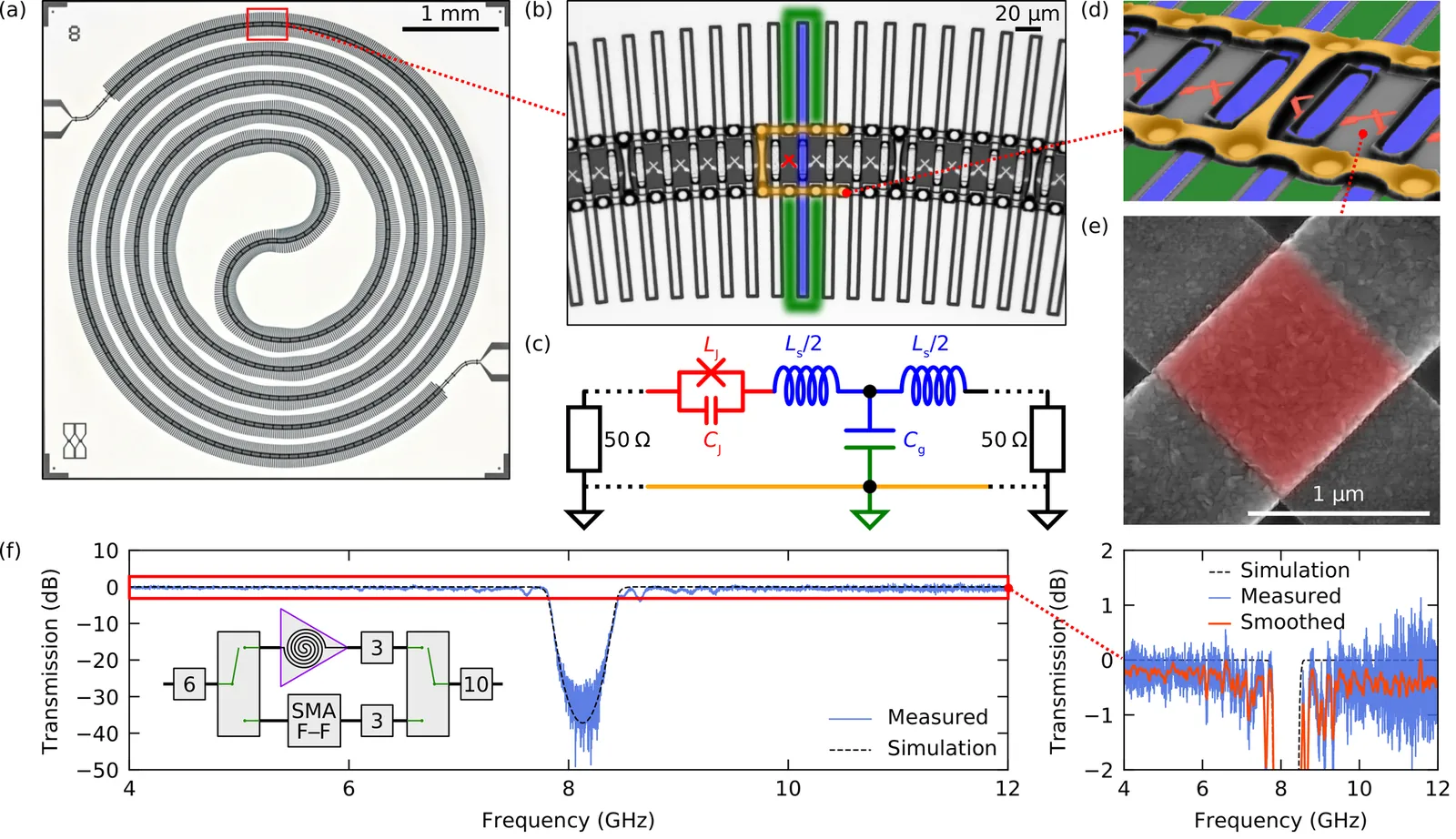
We present a Josephson traveling-wave parametric amplifier (JTWPA) based on a low-loss coplanar lumped-element waveguide architecture. By employing open-stub capacitors and Manhattan-pattern junctions, our device achieves an insertion loss below 1~dB up to 12~GHz. We introduce windowed sinusoidal modulation for phase matching, demonstrating that a smooth transition in the impedance-modulation strength effectively suppresses intrinsic gain ripples. Using Tukey-windowed modulation with 8\% impedance variation, we achieve 20\text{--}23-dB~gain over 5-GHz bandwidth under ideal matching conditions. In a more practical circuit having impedance mismatches, the device maintains 17\text{--}20-dB gain over 4.8-GHz bandwidth with an added noise of 0.18~quanta above standard quantum limit at 20-dB gain and $-99$-dBm saturation power, while featuring zero to negative backward gain below the band-gap frequency.
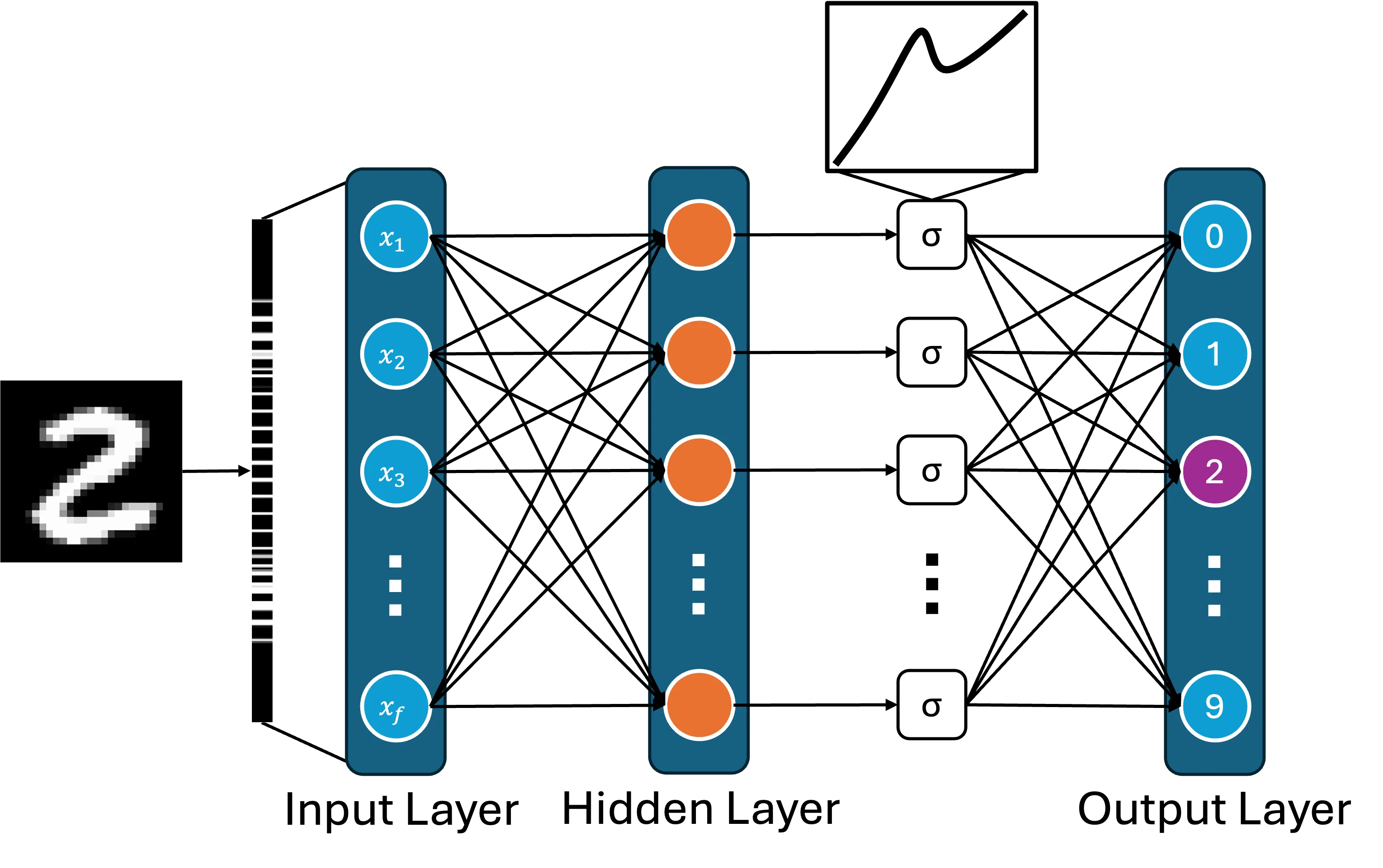
The mathematical complexity and high dimensionality of neural networks slow both training and deployment, demanding heavy computational resources. This has driven the search for alternative architectures built from novel components, including new activation functions. Taking a different approach from state-of-the-art neural and neuromorphic computational systems, we employ the current-voltage characteristic of a tunnel diode as a quantum physics-based activation function for deep networks. This tunnel-diode activation function (TDAF) outperforms standard activations in deep architectures, delivering lower loss and higher accuracy in both training and evaluation. We also highlight its promise for implementation in electronic hardware aimed at neuromorphic, ternarised and energy efficient AI systems. Speaking broadly, our work lays a solid foundation for a new bridge between machine learning, semiconductor electronics and quantum physics -- bringing together quantum tunnelling, a phenomenon recognised in six Nobel Prizes (including the 2025 award), and contemporary AI research.
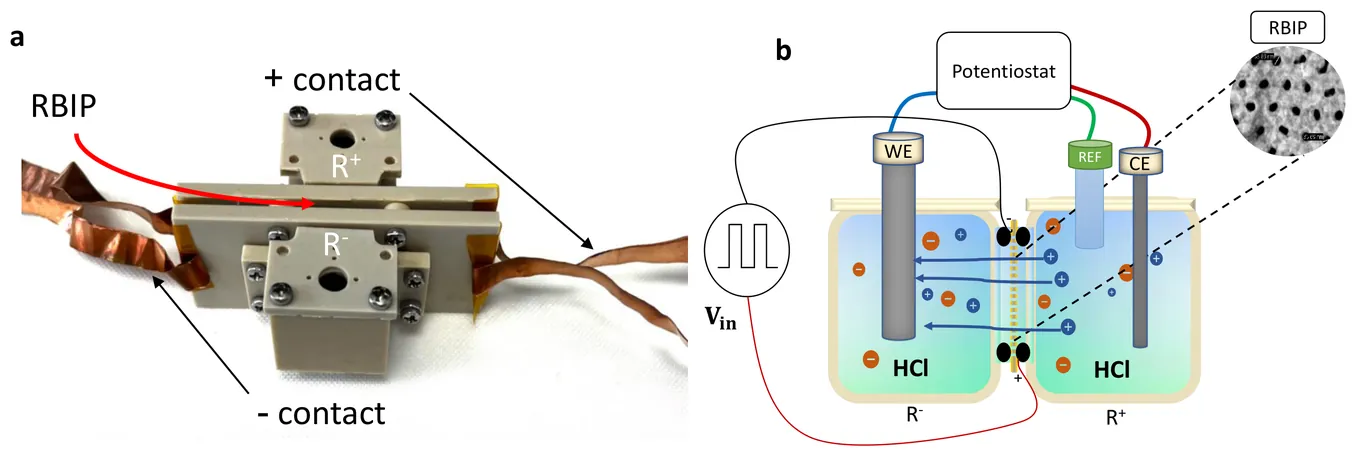
Electrochemical reactions are highly sensitive to the physical and chemical environment near the electrodes. Thus, controlling the electrolyte ionic composition and the electrochemical potential of specific ions can modify the overpotential of electrochemical reactions and enhance their selectivity toward the desired products. Ratchet-based ion pumps (RBIPs) are membrane-like devices that utilize temporal potential modulation to drive a net ionic flux with no associated electrochemical reactions. RBIPs were fabricated by coating the surfaces of nanoporous alumina wafers with metals, forming nanoporous capacitors. Placing the RBIP between two electrolyte compartments and applying an alternating signal between the metal layers resulted in a voltage buildup across the membrane, leading to ion pumping. Here, we demonstrate that by modifying the electrochemical potential of ions, RBIPs can accelerate or inhibit electrochemical reactions on the surface of adjacent water-splitting electrodes according to the RBIP input signal. Proton pumping towards a water-splitting cathode prevented proton depletion due to the hydrogen evolution reaction and maintained the pH in the cathode compartment. The combination of ion pumping and ion selectivity can enable the electrolyte composition to be tuned near the electrodes, providing greater control over the electrochemical process.
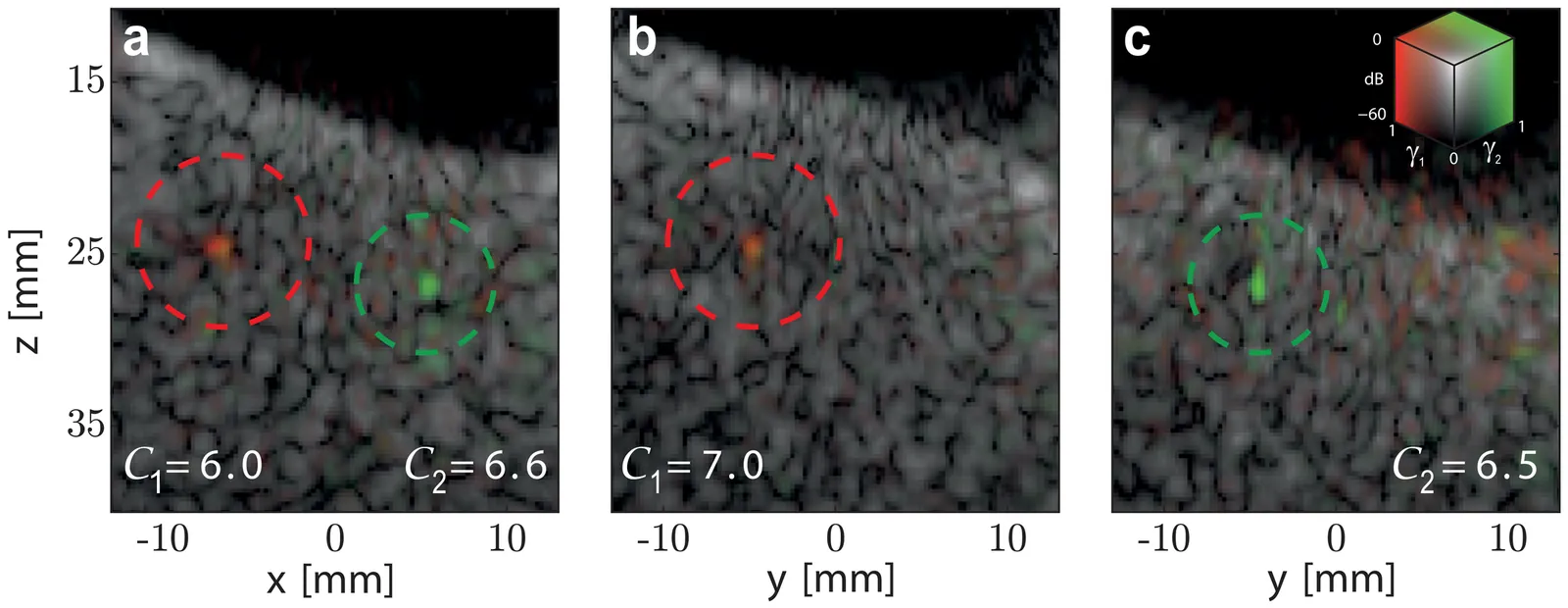
When waves propagate through a complex medium, they undergo several scattering events. This phenomenon is detrimental to imaging, as it causes full blurring of the image. Here we describe a method for detecting, localizing and characterizing any scattering target embedded in a complex medium. We introduce a fingerprint operator that contains the specific signature of the target with respect to its environment. When applied to the recorded reflection matrix, it provides a likelihood index of the target state. This state can be the position of the target for localization purposes, its shape for characterization or any other parameter that influences its response. We demonstrate the versatility of our method by performing proof-of-concept ultrasound experiments on elastic spheres buried inside a strongly scattering granular suspension and on lesion markers, which are commonly used to monitor breast tumours, embedded in a foam mimicking soft tissue. Furthermore, we show how the fingerprint operator can be leveraged to characterize the complex medium itself by mapping the fibre architecture within muscle tissue. Our method is broadly applicable to different types of waves beyond ultrasound for which multi-element technology allows a reflection matrix to be measured.
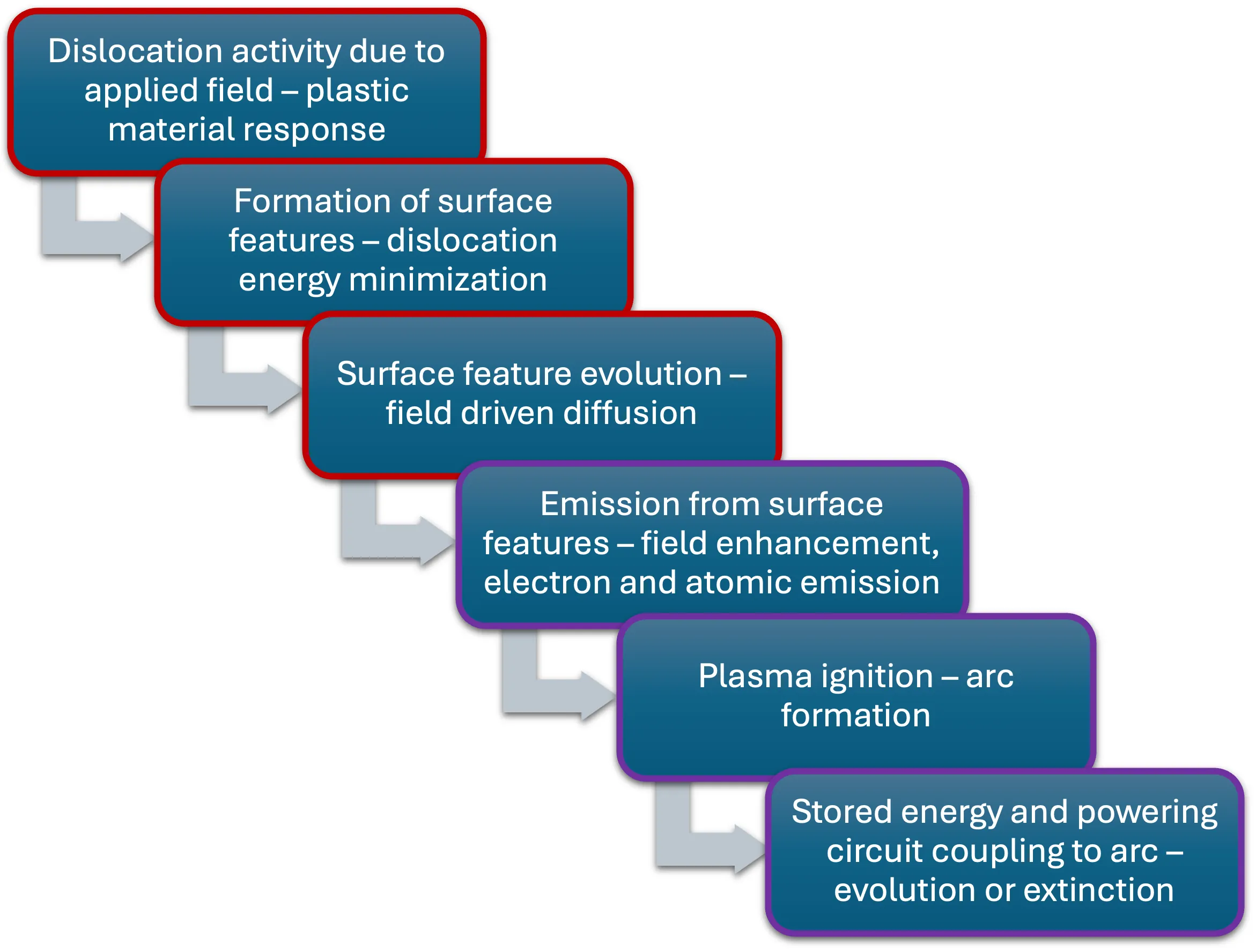
This review consolidates experimental, theoretical, and simulation work examining the behavior of high-field devices and the fundamental process of vacuum arc initiation, commonly referred to as breakdown. Detailed experimental observations and results relating to a wide range of aspects of high-field devices, including conditioning, field and temperature dependence of breakdown rate, and the ability to sustain high electric fields as a function of device geometry and materials, are presented. The different observations are then addressed theoretically, and with simulation, capturing the sequence of processes that lead to vacuum breakdown and explaining the major observed experimental dependencies. The core of the work described in this review was carried out by a broad multi-disciplinary collaboration in an over a decade-long program to develop high-gradient, 100 MV/m-range, accelerating structures for the CLIC project, a possible future linear-collider high-energy physics facility. Connections are made to the broader linear collider, high-field, and breakdown communities.
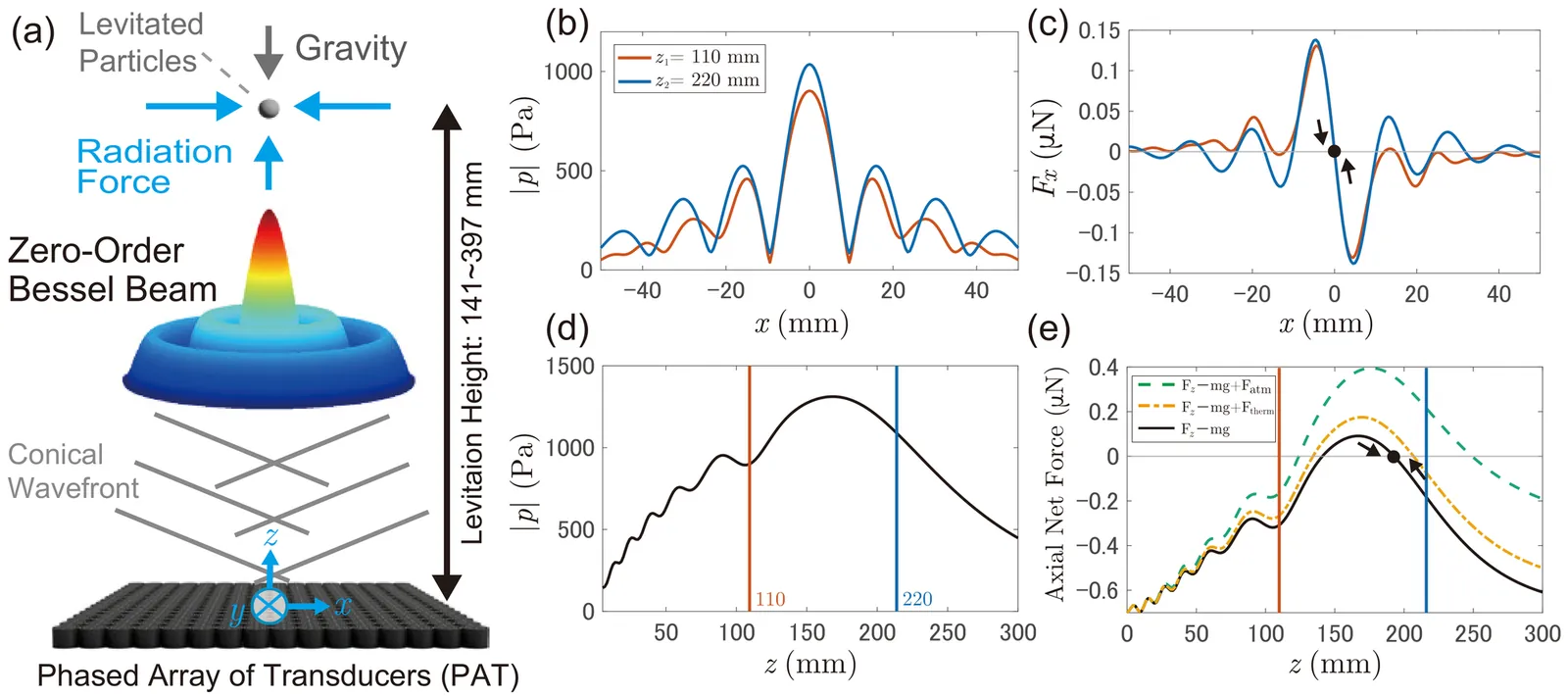
Acoustic levitation enables non-contact manipulation using sound waves. While conventional methods entrap particles at pressure nodes (zero-pressure region surrounded by high-pressure), we demonstrate stable acoustic levitation and translation in mid-air within a high-pressure axial core of a single-sided zero-order Bessel beam for the first time. The trap operates at a long working distance, up to 397 mm ($46.6 λ$), supports simultaneous multi-particle levitation, and maintains stability over obstacles. Our work establishes a new paradigm for single-sided acoustic manipulation in mid-air.
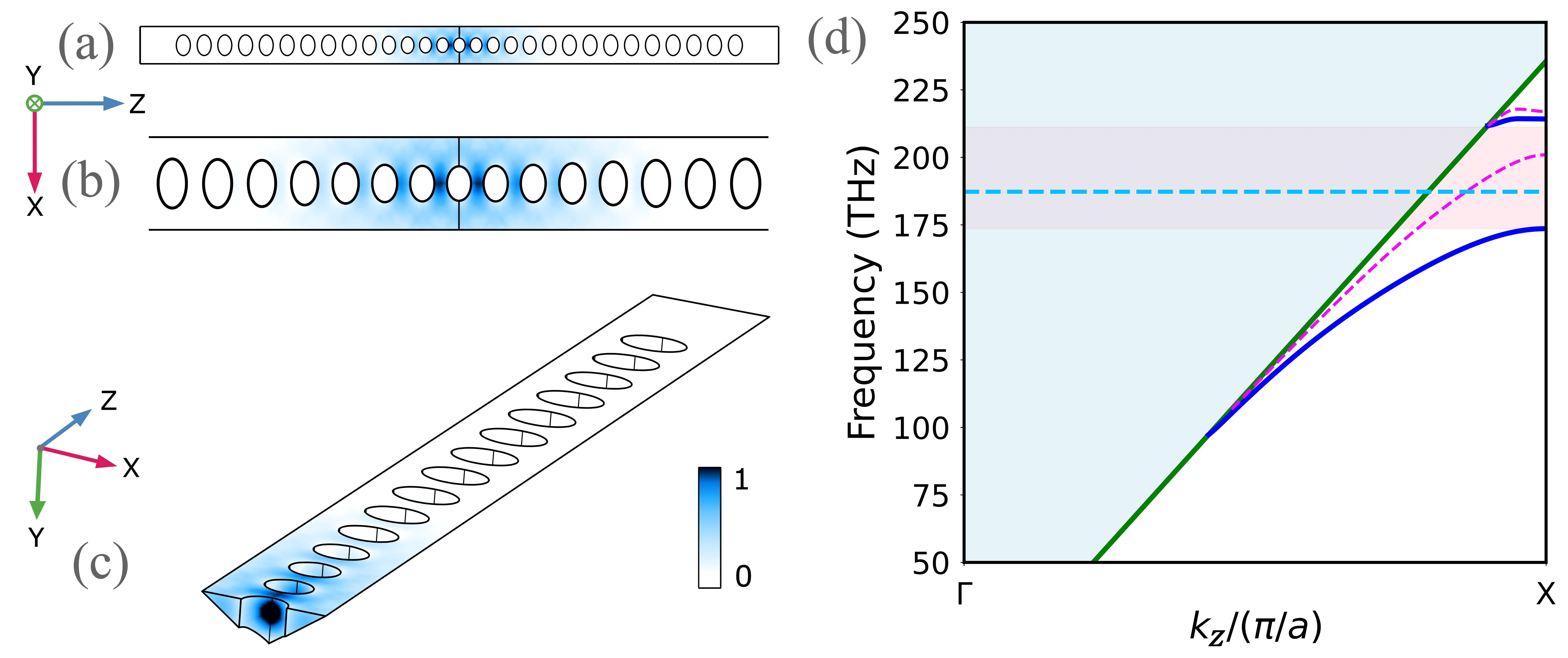
We report the fabrication and optical characterization of an air-suspended photonic crystal nanobeam cavity in yttrium-iron-garnet (YIG) realized by focused-ion-beam milling. YIG's combination of low optical loss and ferrimagnetism makes it highly attractive for quantum technologies, yet prior work has largely been focused on millimeter-scale spheres and simple microstructures, hindering true on-chip integration. Demonstrating nanometer-scale patterning in a suspended geometry therefore represents an important advance. Finite-element simulations predict that the same structure supports a flapping-type mechanical mode at $Ω/ 2π\approx 1.52 \,\text{GHz}$ and a backward-volume spin-wave mode at $Ω/ 2π= 11.59 \,\text{GHz}$ under an in-plane bias field. Although we measure only the photonic resonance (intrinsic $Q \sim 2 \times 10^{3}$) in this study, the device lays the groundwork for future exploration of coupled photon-phonon-magnon dynamics once higher optical quality factors are achieved.