Superconductivity
arXiv:cond-mat.supr-con
Superconductivity: theory, models, experiment. Cross-linked with physics.supr-con.
Looking for a broader view? This category is part of:
Superconductivity: theory, models, experiment. Cross-linked with physics.supr-con.
Looking for a broader view? This category is part of:
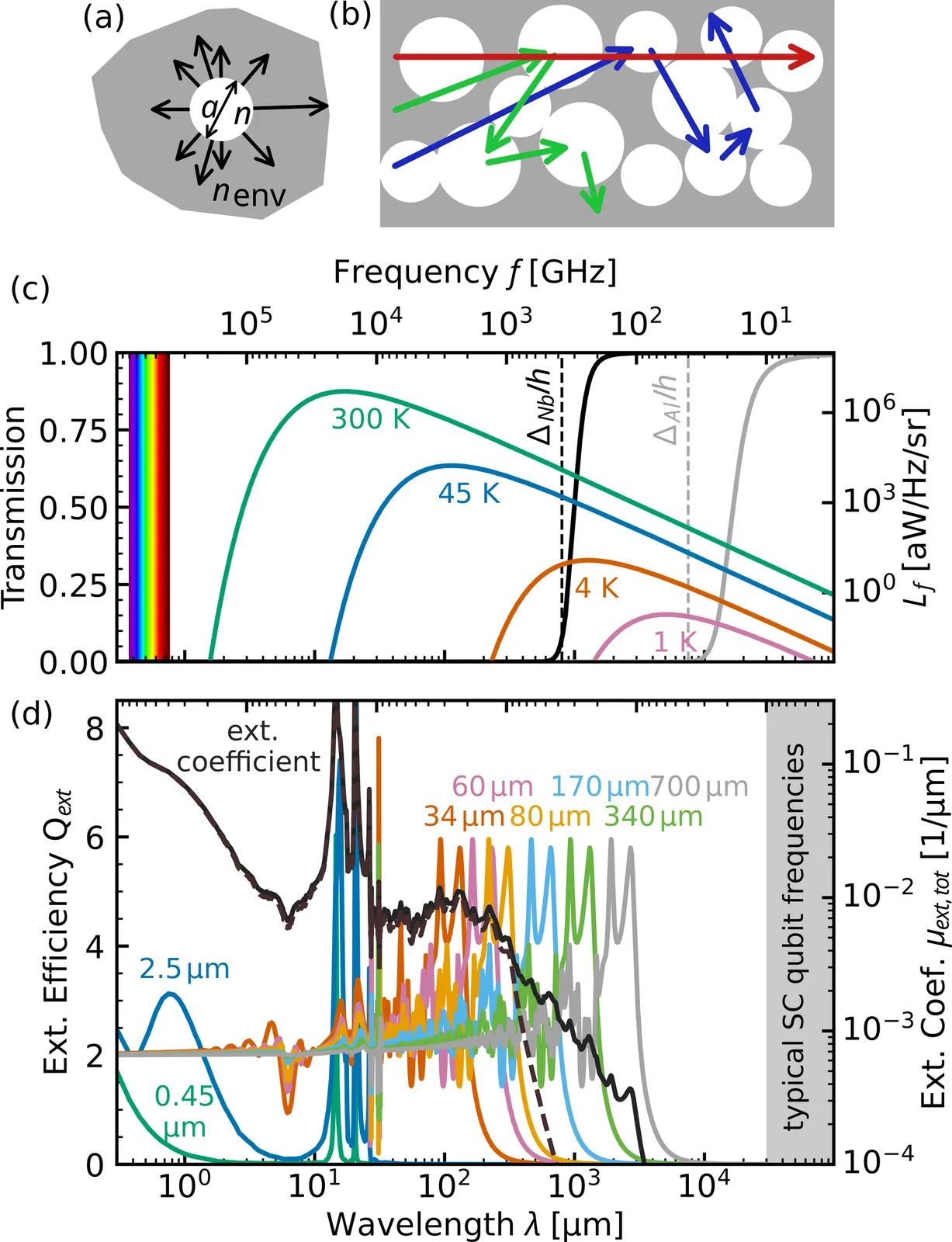
The fragile quantum states of low-temperature quantum applications require protection from infrared radiation caused by higher-temperature stages or other sources. We propose a material system that can efficiently block radiation up to the optical range while transmitting photons at low gigahertz frequencies. It is based on the effect that incident photons are strongly scattered when their wavelength is comparable to the size of particles embedded in a weakly absorbing medium (Mie-scattering). The goal of this work is to tailor the absorption and transmission spectrum of an non-magnetic epoxy resin containing sapphire spheres by simulating its dependence on the size distribution. Additionally, we fabricate several material compositions, characterize them, as well as other materials, at optical, infrared, and gigahertz frequencies. In the infrared region (stop band) the attenuation of the Mie-scattering optimized material is high and comparable to that of other commonly used filter materials. At gigahertz frequencies (pass-band), the prototype filter exhibits a high transmission at millikelvin temperatures, with an insertion loss of less than $0.4\,$dB below $10\,$GHz.
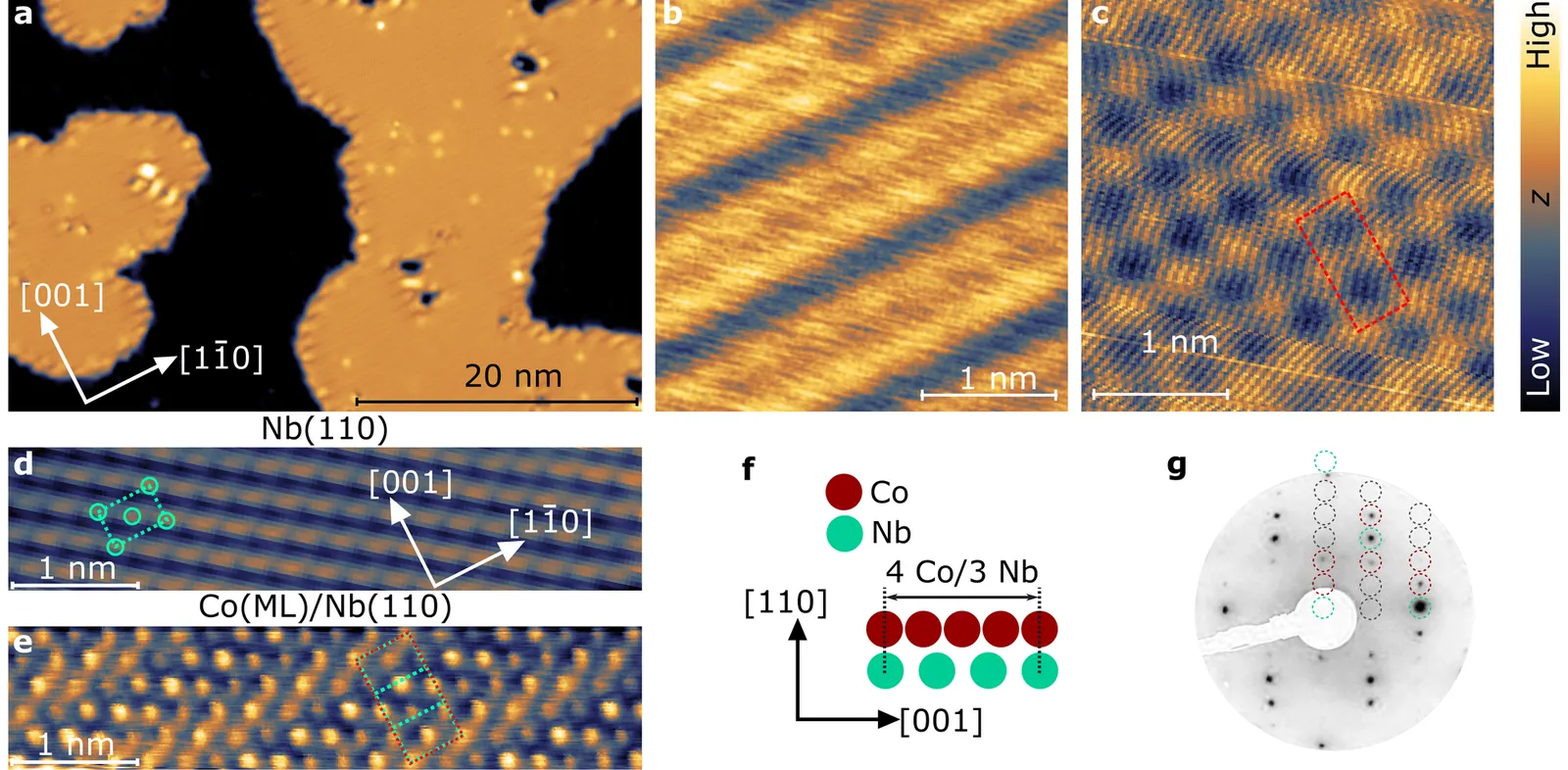
The potential application of topological superconductivity in quantum transport and quantum information has fueled an intense investigation of hybrid materials with emergent electronic properties, including magnet-superconductor heterostructures. Here, we report evidence of a topological nodal-point superconducting phase in a one-atom-thick in-plane ferromagnet in direct proximity to a conventional $s$-wave superconductor. Low-temperature scanning tunneling spectroscopy data reveal the presence of a double-peak low-energy feature in the local density of states of the hybrid system, which is rationalized via model calculations to be an emergent topological nodal-point superconducting phase with tilted Weyl cones. Our results further establish the combination of in-plane ferromagnetism and conventional superconductivity as a route to design two-dimensional topological quantum phases.
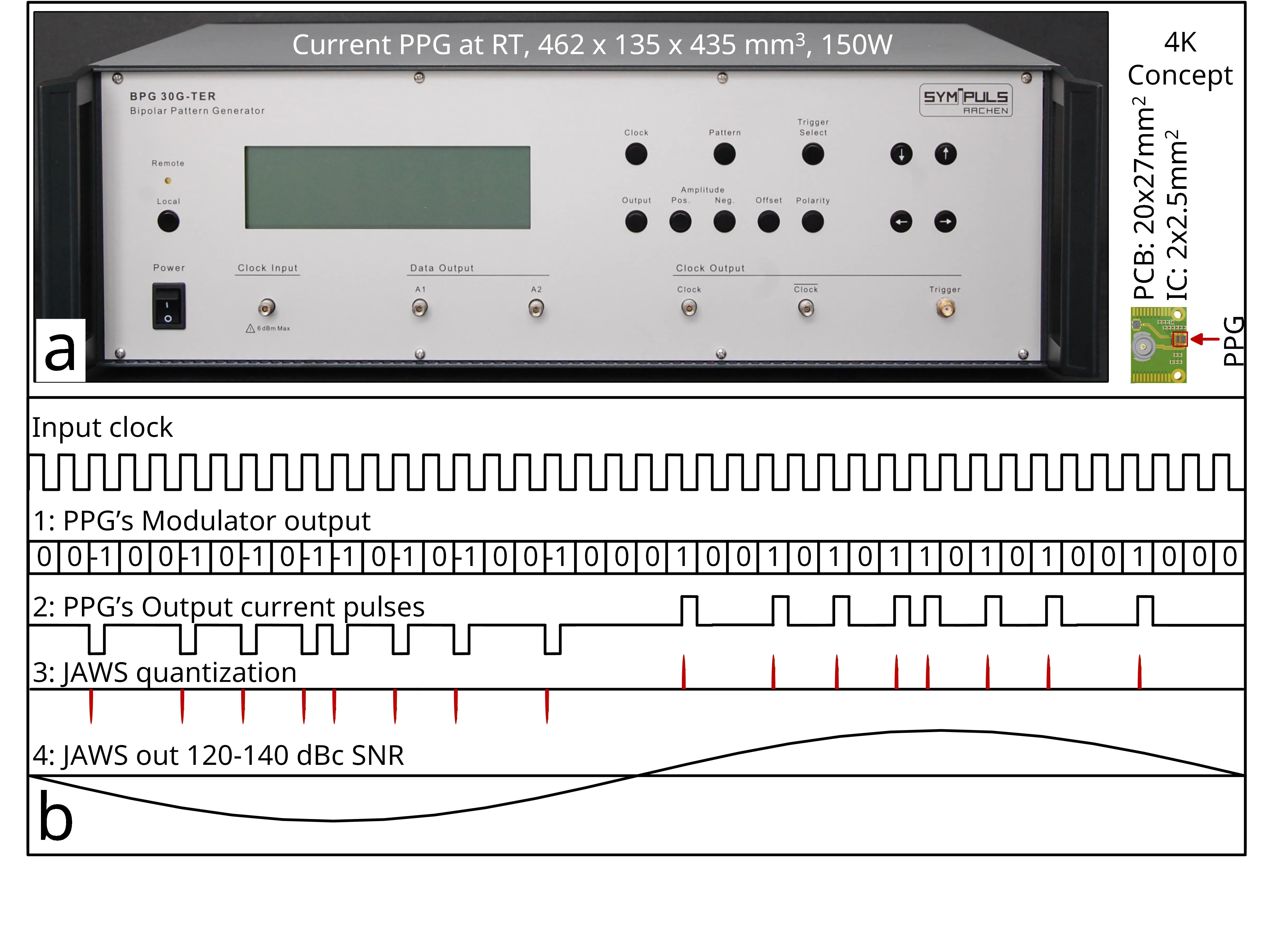
We combine a cryogenic BiCMOS integrated circuit, which generates high-speed return-to-zero (RTZ) pulses, with a superconducting Josephson junction array. The BiCMOS circuit acts as a cryogenic pulse pattern generator, delivering data rates of 30 Gb/s, while consuming 302 mW at 4 K. Each electrical pulse of the serializer effectively transfers one magnetic flux quantum through every Josephson junction, so that the average output voltage of the array produces well-defined plateaus (Shapiro steps) in its current-to-voltage characteristic. To the best of our knowledge, this is the first integration of a Josephson junction array with a cryogenic BiCMOS chip. The presented results pave the way toward a hybrid and fully integrated Josephson arbitrary waveform synthesizer (JAWS) that can generate ultra-low-noise signals for quantum voltage metrology and quantum information systems.
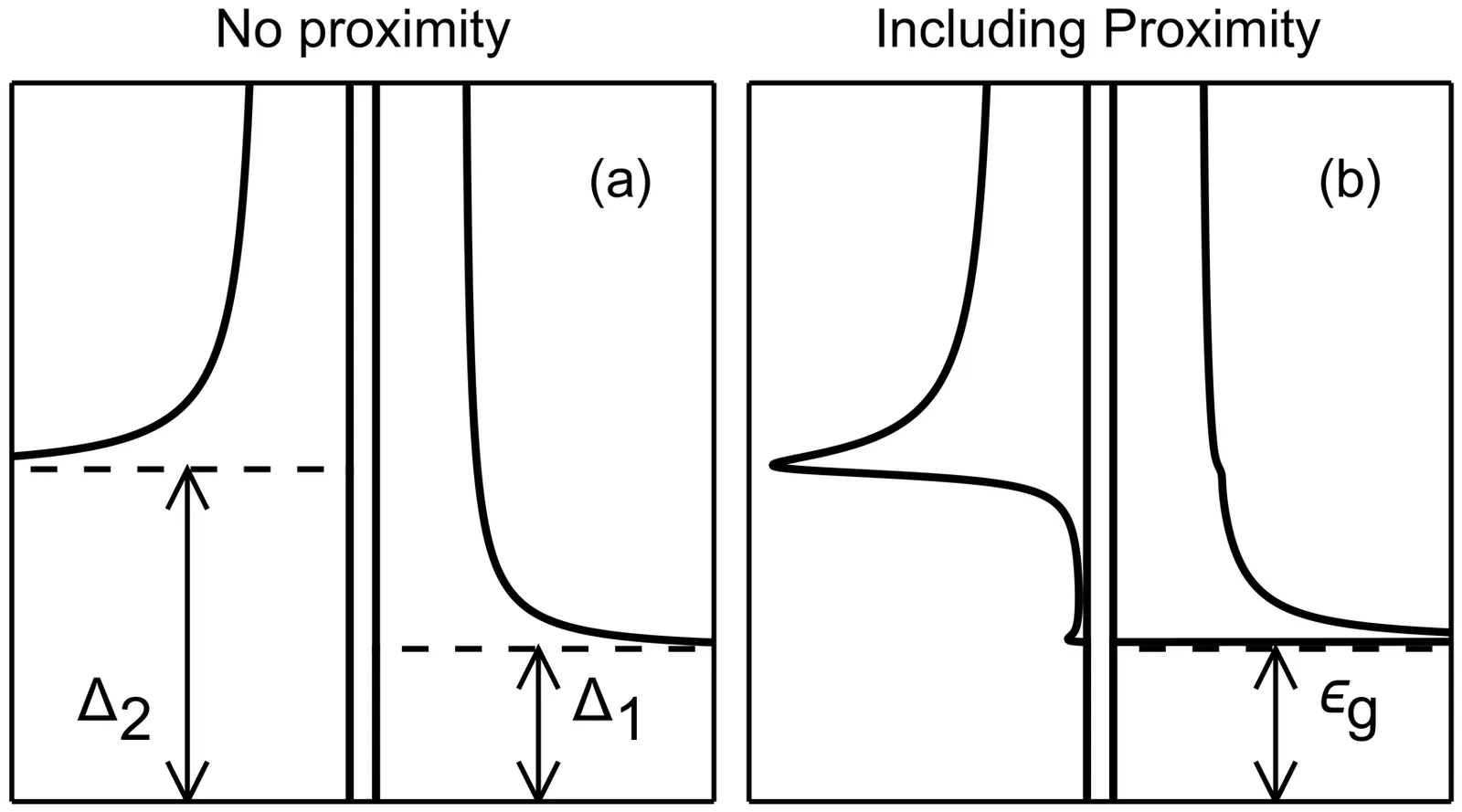
The standard mean-field treatment of low-temperature superconductors leads to a square-root divergent density of states at the gap value. This feature can lead to unphysical logarithmic divergences in various quantities, such as currents and qubit transition rates. We revisit their possible regularization based on the proximity effect between two superconducting films with different gaps. We derive analytical approximations for the density of states in each superconducting film. We find that the smearing of the density of states grows with the gap asymmetry. As a concrete example, we discuss the regularization of transition rates in qubits with frequency close to resonance with the gap asymmetry between the two films, and the consequent smoothening of the jump discontinuity in the qubit frequency shift.
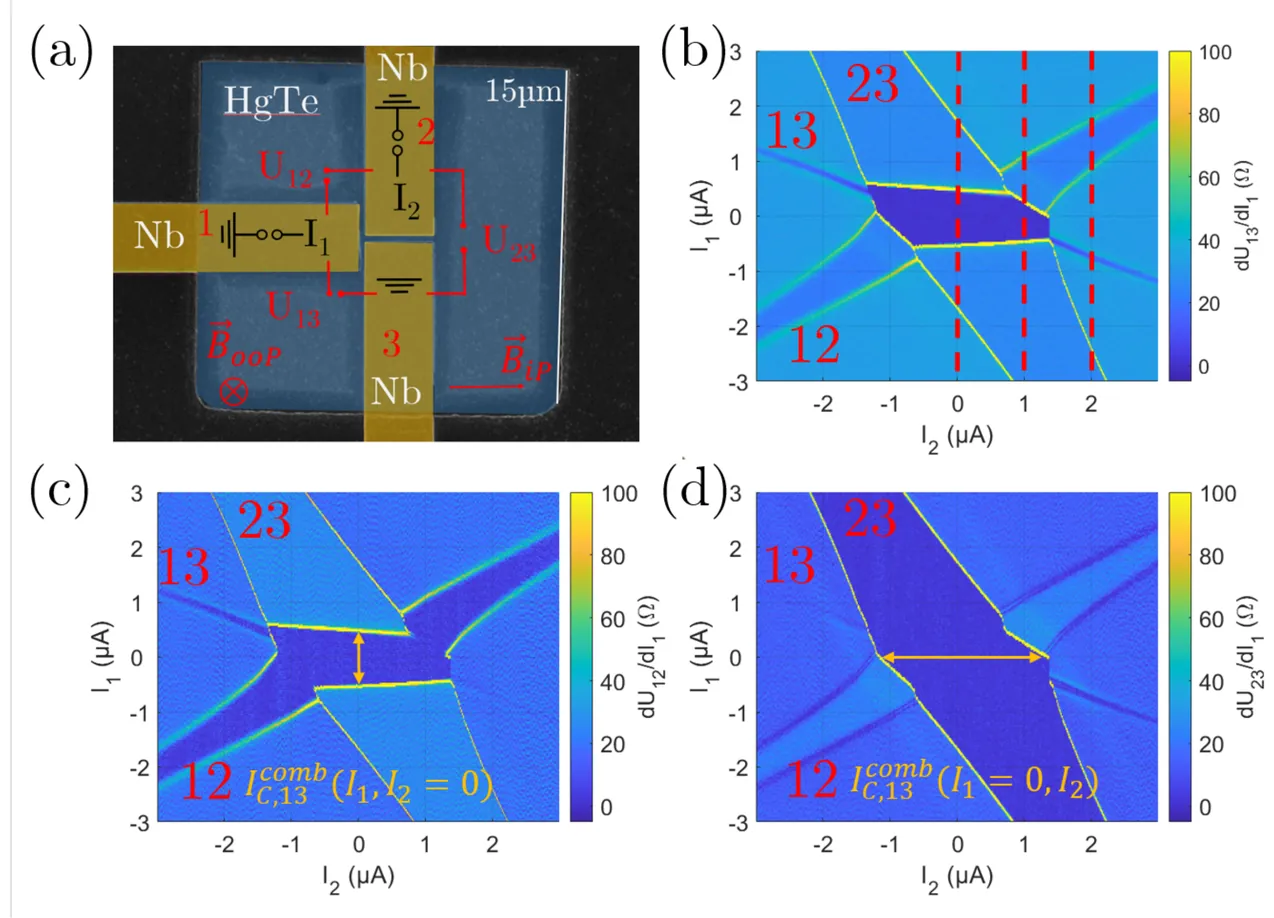
We investigate HgTe/Nb-based three-terminal Josephson junctions in T-shaped and X-shaped geometries and their critical current contours (CCCs). By decomposing the CCCs into the contributions from individual junctions, we uncover how bias current and magnetic field jointly determine the collective Josephson behavior. A perpendicular magnetic field induces a tunable crossover between SQUID-like and Fraunhofer-like interference patterns, controlled by the applied bias. Moreover, magnetic flux produces pronounced deformations of the CCC, enabling symmetry control in the $(I_1,I_2)$ plane. Remarkably, we identify a regime of strongly enhanced Josephson diode efficiency, reaching values up to $η\approx 0.8$ at low bias and magnetic field. The experimental results are quantitatively reproduced by resistively shunted junction (RSJ) simulations, which capture the coupled dynamics of current and flux in these multi-terminal superconducting systems.
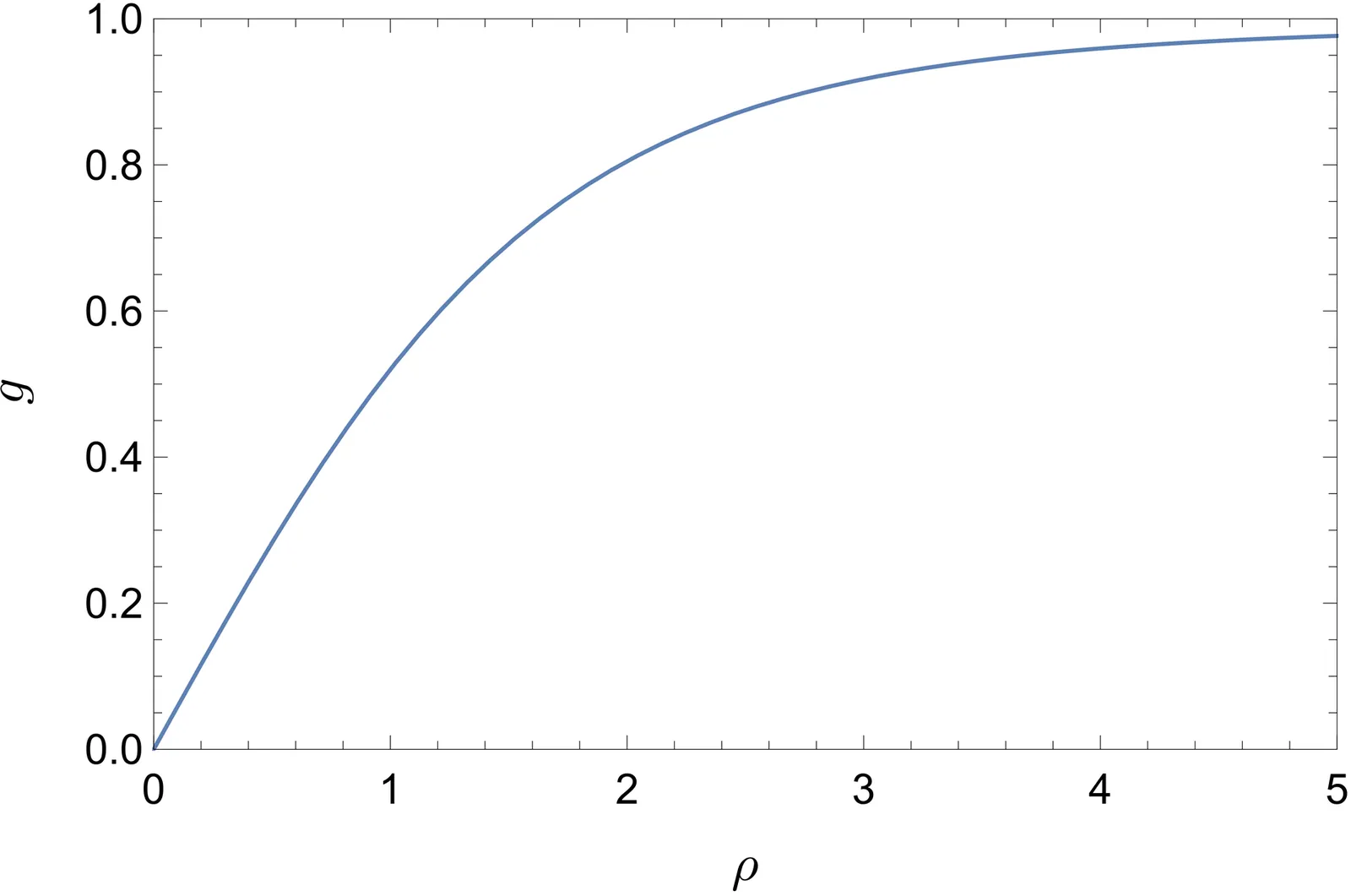
We investigate the statistical properties of the vortex pinning potential in a thin superconducting film. Modeling intrinsic inhomogeneities by a random-temperature Ginzburg-Landau functional with short-range Gaussian disorder, we derive the pinning landscape $E(\mathbf{R})$ by determining how the vortex core adapts to randomness. Within the hard-core approximation, applicable for weak disorder, the energy landscape exhibits Gaussian statistics. In this regime, the mean areal density of its minima is given by $n_\text{min}\approx(6ξ)^{-2}$, indicating that the typical spacing between neighboring minima is significantly larger than the vortex core size $ξ$. Going beyond the hard-core approximation, we allow the vortex order parameter to relax in response to the inhomogeneities. As a result, the pinning potential statistics become non-Gaussian. We calculate the leading correction due to the core deformation, which reduces the density of minima with a relative magnitude scaling as $(T_c-T)^{-1/2}$.
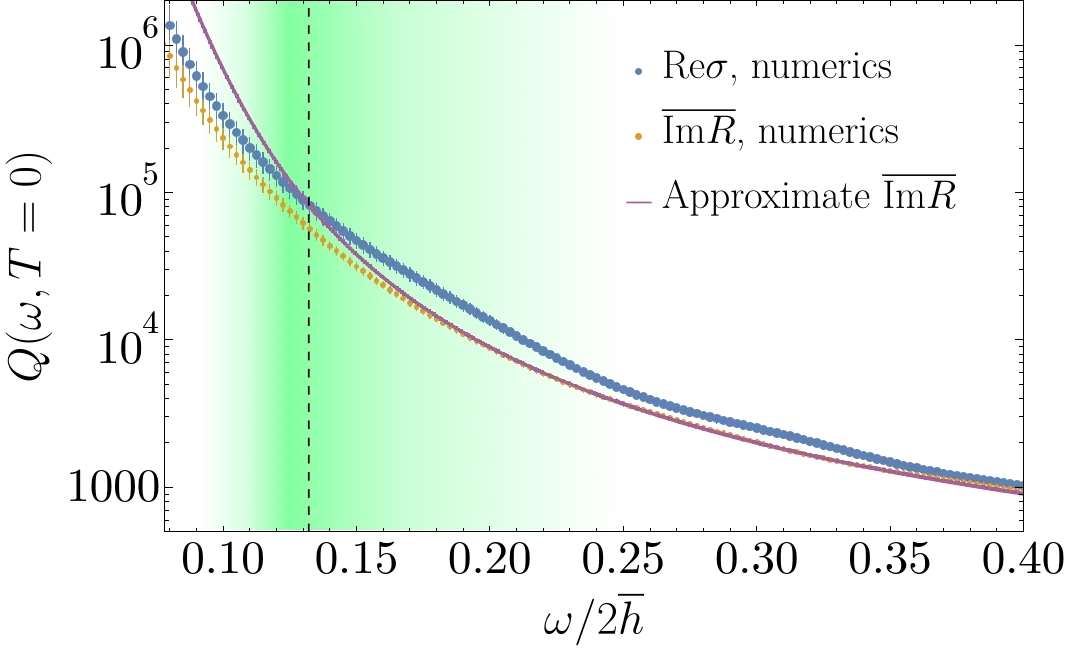
We develop a theory of the temperature $T$ and frequency $ω$ dependence of ac dissipation in strongly disordered superconductors featuring a pseudogap $Δ_{P}$ in the single-particle spectrum. Our theory applies to the regime $T,\,\hbarω\llΔ_{\text{typ}}\llΔ_{P}$, where $Δ_{\text{typ}}$ is the typical superconducting gap. The dissipation is expressed in terms of the quality factor $Q(T,ω)$ of microwave resonators made of these materials. We show that low-$ω$ dissipation is dominated by a new type of bulk localized collective modes. Due to the strongly nonuniform spectral density of these modes, $Q$ decreases sharply with frequency, while its temperature dependence exhibits a two-level-system-like growth as a function of $T$ for $T\ll T_{c}$. Our theory is applicable to InO$_x$, TiN, NbN, and similar strongly disordered materials. We further argue that the experimentally observed behavior of disordered films of granular Aluminum is explained by similar physics, although this case requires a separate theoretical analysis.
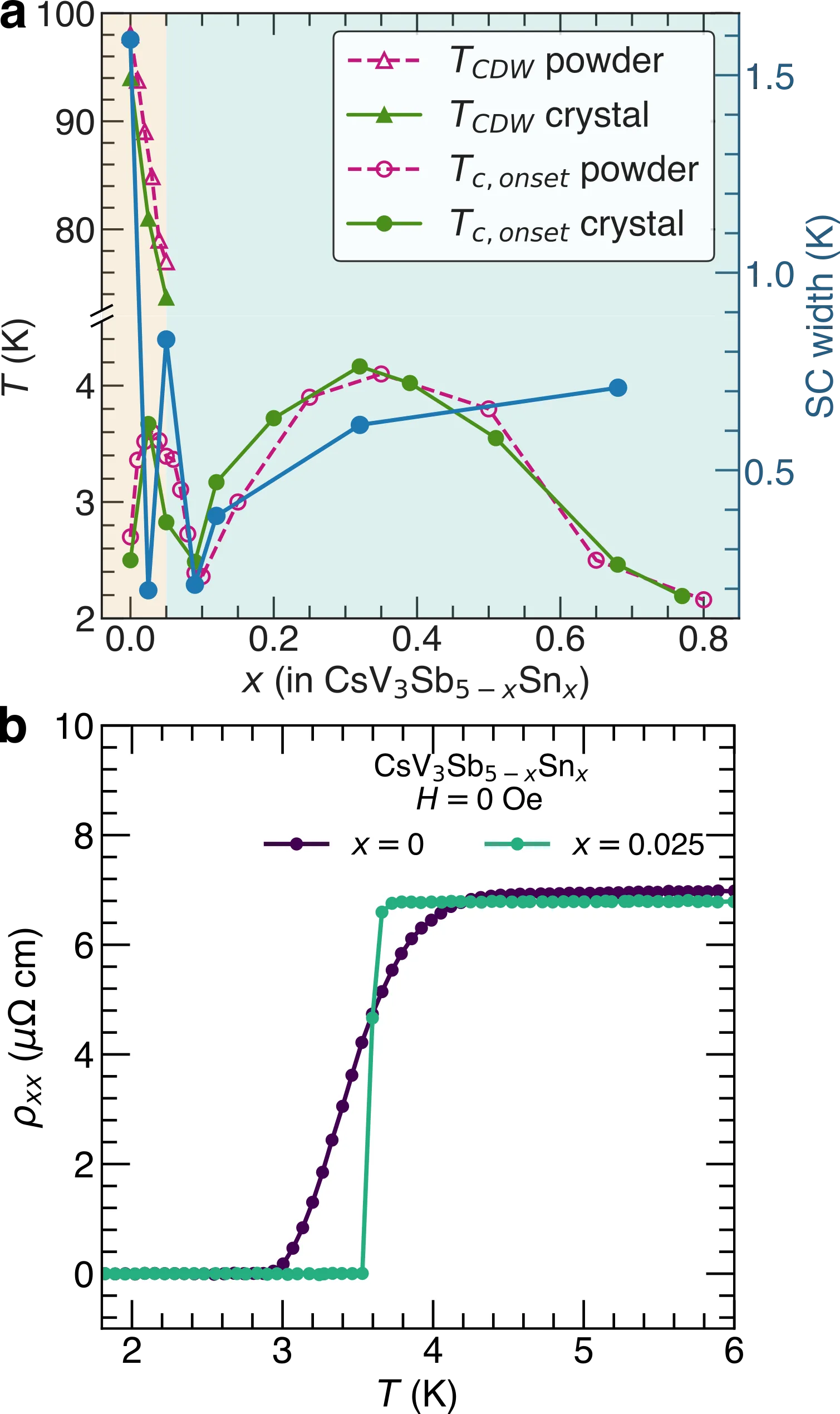
The kagome metal CsV$_3$Sb$_5$ shows an unconventional interplay between charge density wave (CDW) order and superconductivity. Tuning the band filling is known to rapidly suppress long-range CDW order and drive the formation of two superconducting ``domes" upon increasing hole concentration. Here we determine the detailed evolution of charge correlations across this phase diagram and resolve their interplay with the superconducting state. Upon light hole-doping, the suppression of a metastable $2\times 2\times 4$ CDW state coincides with the suppression of superconducting fluctuations present in the parent CsV$_3$Sb$_5$ compound. Continued doping suppresses long-range $2\times 2\times 2$ CDW order, leaving remnant short-range, quasi-1D correlations that persist across the second superconducting dome. These higher temperature charge correlations are seemingly essential to the lower temperature superconducting state, as charge correlations vanish coincident with superconductivity as a function of hole-doping. A multidomain model of short-range V-V dimer formation within the kagome plane is proposed in the second superconducting dome, where rotational and translational symmetry remain locally broken even in the absence of long-range CDW order.
 2512.11073
We develop a systematic theoretical approach to incorporate the effects of a static white-noise disorder into the BCS-BEC crossover near the critical temperature ($T_c$) of the superfluid transition. Starting from a functional-integral formulation in momentum-frequency space, we derive an effective thermodynamic potential that fully accounts for Gaussian fluctuations of the order-parameter field and its coupling to the disorder potential. The effective action, expanded to second order in both the disorder potential and the bosonic field, naturally involves third- and fourth-order terms arising from the logarithmic expansion near $T_c$. This formalism, valid across the entire BCS-BEC crossover, reproduces the well-established BCS and BEC limits and yields self-energy expressions consistent with previous analyses for non-interacting point bosons and tightly bound fermion pairs. The approach applies equally to continuum and lattice systems and provides a natural framework for generalizations to multiband models.
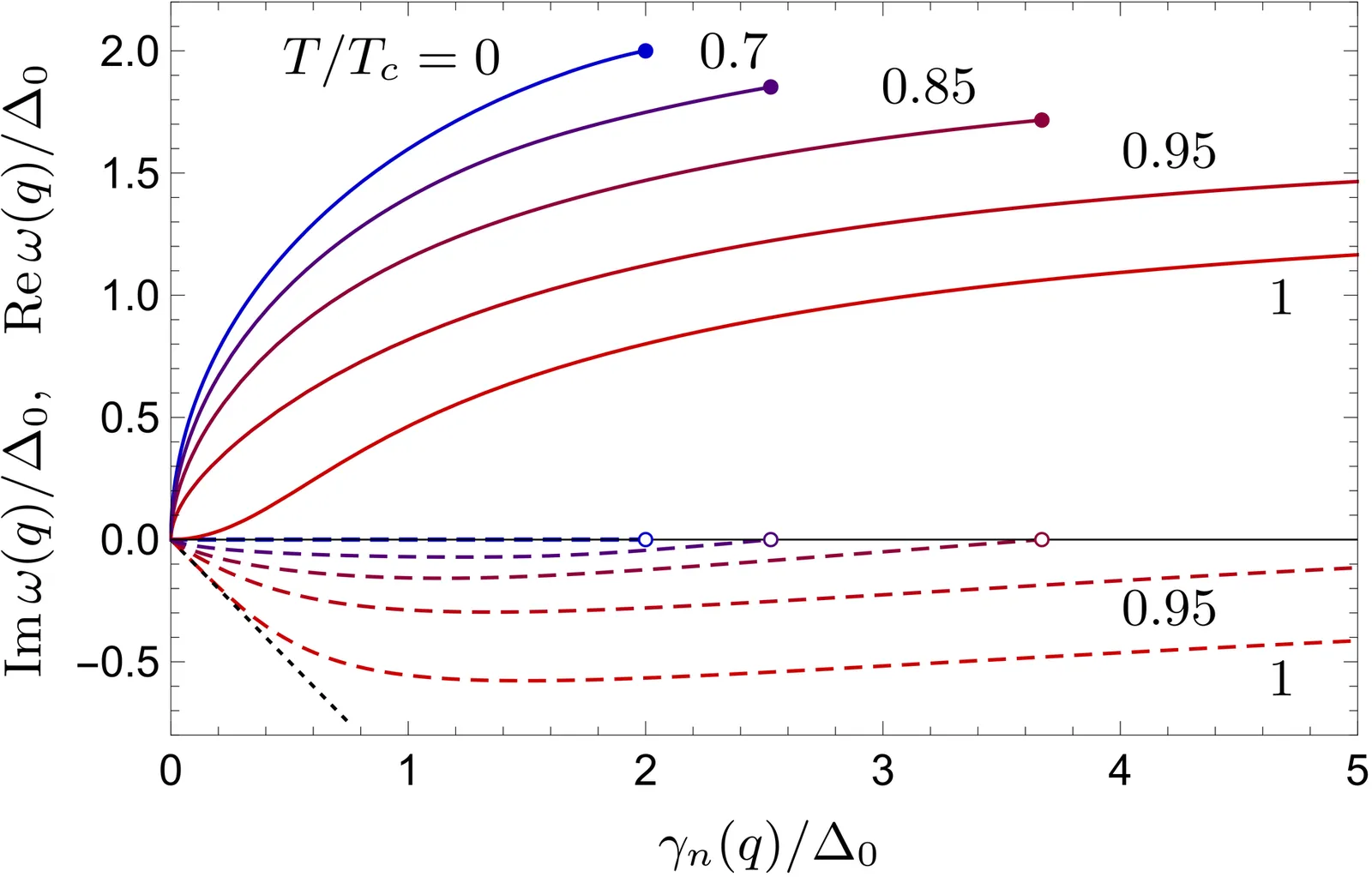
We develop a theory for the plasmon spectrum in dirty superconductors across the entire temperature range. Starting with the microscopic Keldysh sigma model description, we link the plasmon dispersion $ω(q)$ to the optical conductivity $σ(ω,T)$ of a superconductor, which requires analytical continuation to the lower half-plane of complex frequency. This approach reveals a discontinuity at the superconducting transition: a jump in both the real and imaginary parts of $ω(q)$ at $T_c$. For any temperature below $T_c$, the plasmon dispersion terminates at a critical wave vector $q_c(T)$ where plasmons remains undamped, with weakly $T$-dependent $ω[q_c(T)] \approx 2Δ(0)$. Plasmons significantly attenuate only within a narrow 5% temperature window near $T_c$, with the propagating mode recovering at large $q$.
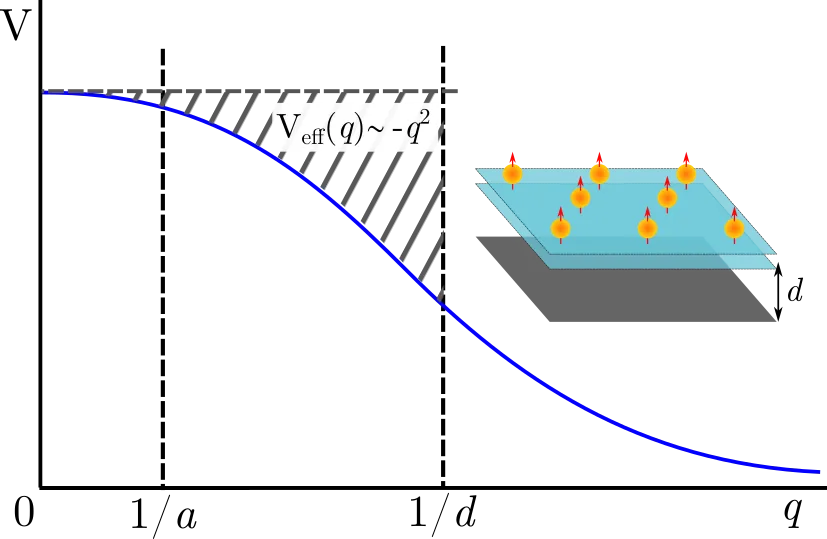
We consider a two dimensional metal that is spin polarized and with strongly repulsive interaction. The interaction is short-ranged and controlled by a screening plane located a distance $d$ away. We consider the case where $d$ is less than the unit cell spacing $a$. We show that due to Pauli exclusion, a controlled expansion is possible despite the strong repulsion, and in many cases results in pairing. We demonstrate this for a tight-binding model on a triangular lattice with nearest neighbor repulsion. We also treat a second model on the triangular lattice with Wannier orbitals with size comparable to $a$. In this case we find $f$-wave pairing with order unity pairing strength, potentially leading to high $T_c$.
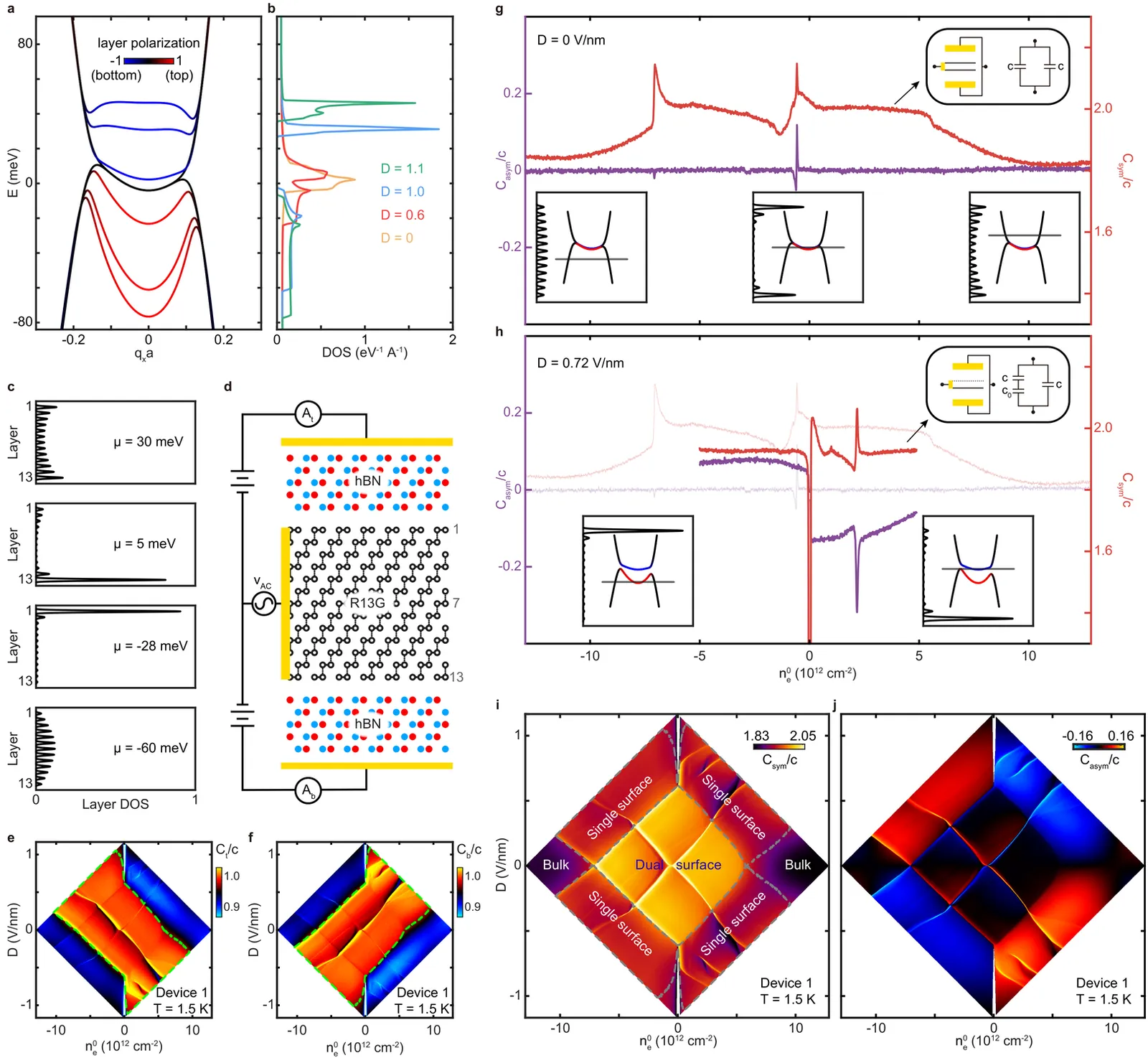
Rhombohedral multilayer graphene has recently emerged as a rich platform for studying correlation driven magnetic, topological and superconducting states. While most experimental efforts have focused on devices with N$\leq 9$ layers, the electronic structure of thick rhombohedral graphene features flat-band surface states even in the infinite layer limit. Here, we use layer resolved capacitance measurements to directly detect these surface states for $N\approx 13$ layer rhombohedral graphene devices. Using electronic transport and local magnetometry, we find that the surface states host a variety of ferromagnetic phases, including both valley imbalanced quarter metals and broad regimes of density in which the system spontaneously spin polarizes. We observe several superconducting states localized to a single surface state. These superconductors appear on the unpolarized side of the density-tuned spin transitions, and show strong violations of the Pauli limit consistent with a dominant attractive interaction in the spin-triplet, valley-singlet pairing channel. In contrast to previous studies of rhombohedral multilayers, however, we find that superconductivity can persist to zero displacement field where the system is inversion symmetric. Energetic considerations suggest that superconductivity in this regime is described by the existence of two independent surface superconductors coupled via tunneling through the insulating single crystal graphite bulk.
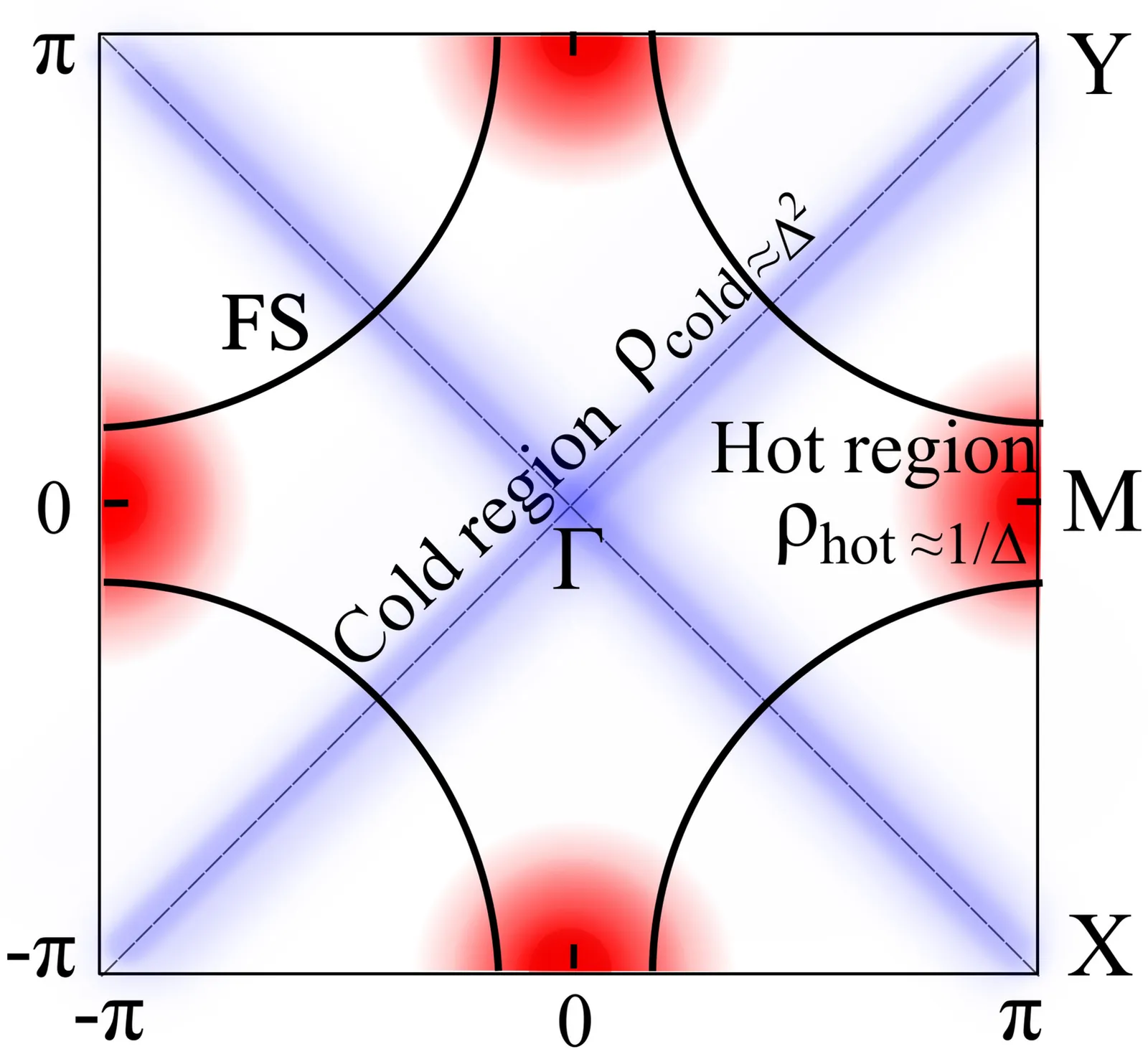
We reveal the key role of the $d$-wave symmetry of the superconducting gap in strongly coupled two-dimensional superconductors in determining the properties of the Berezinskii-Kosterlitz-Thouless (BKT) transition, associated with a sizable enhancement of the phase stiffness compared to nodeless-gap superconductors. The enhanced stiffness originates from extended regions of vanishing gap around the nodal lines of the Brillouin zone (BZ). Our study, based on mean-field and BKT theory, presents a comparative analysis of $s$-wave and $d$-wave scenarios, highlighting the features of the latter that boost the stiffness and the BKT transition temperature (T$_{BKT}$). The comparison focuses on two quantities: the mean-field critical temperature and the maximum superconducting gap related to the pairing strengths. We present a phase diagram showing the scaling of T$_{BKT}$ with respect to the mean-field critical temperature across the BCS-BEC crossover and the evolution of the pseudogap. We also present a zero-temperature phase-stiffness intensity map over the Brillouin zone, displaying a two-component structure consisting of low- and high-stiffness regions whose extent depends on microscopic parameters. These results identify the nodal gap structure of strongly coupled two-dimensional superconductors as a key mechanism enabling enhanced stiffness and elevated T$_{BKT}$ compared to their $s$-wave counterparts.

Controlled fabrication of twisted van der Waals heterostructures is essential to unlock the full potential of moire materials. However, achieving reproducibility remains a major challenge, particularly for air-sensitive materials such as $Bi_{2}Sr_{2}CaCu_{2}O_{8+δ}$ (BSCCO), where it is crucial to preserve the intrinsic and delicate superconducting properties of the interface throughout the entire fabrication process. Here, we present a dry, inert and cryogenic assembly method that combines silicon nitride nanomembranes (NMBs) with pre-patterned electrodes and the cryogenic stacking technique (CST) to fabricate high-quality twisted BSCCO Josephson junctions (JJs). This protocol prevents thermal and chemical degradation during both interface formation and electrical contact integration. We also find that asymmetric membrane designs, such as a double cantilever, effectively suppress vibration-induced disorder due to wire bonding, resulting in sharp and hysteretic current-voltage characteristics. The junctions exhibit a twist-angle-dependent Josephson coupling with magnitudes comparable to the highest-performing devices reported to date, but achieved through a straightforward and versatile contact method, offering a scalable and adaptable platform for future applications. These findings highlight the importance of both interface and contact engineering in addressing reproducibility in superconducting van der Waals heterostructures.
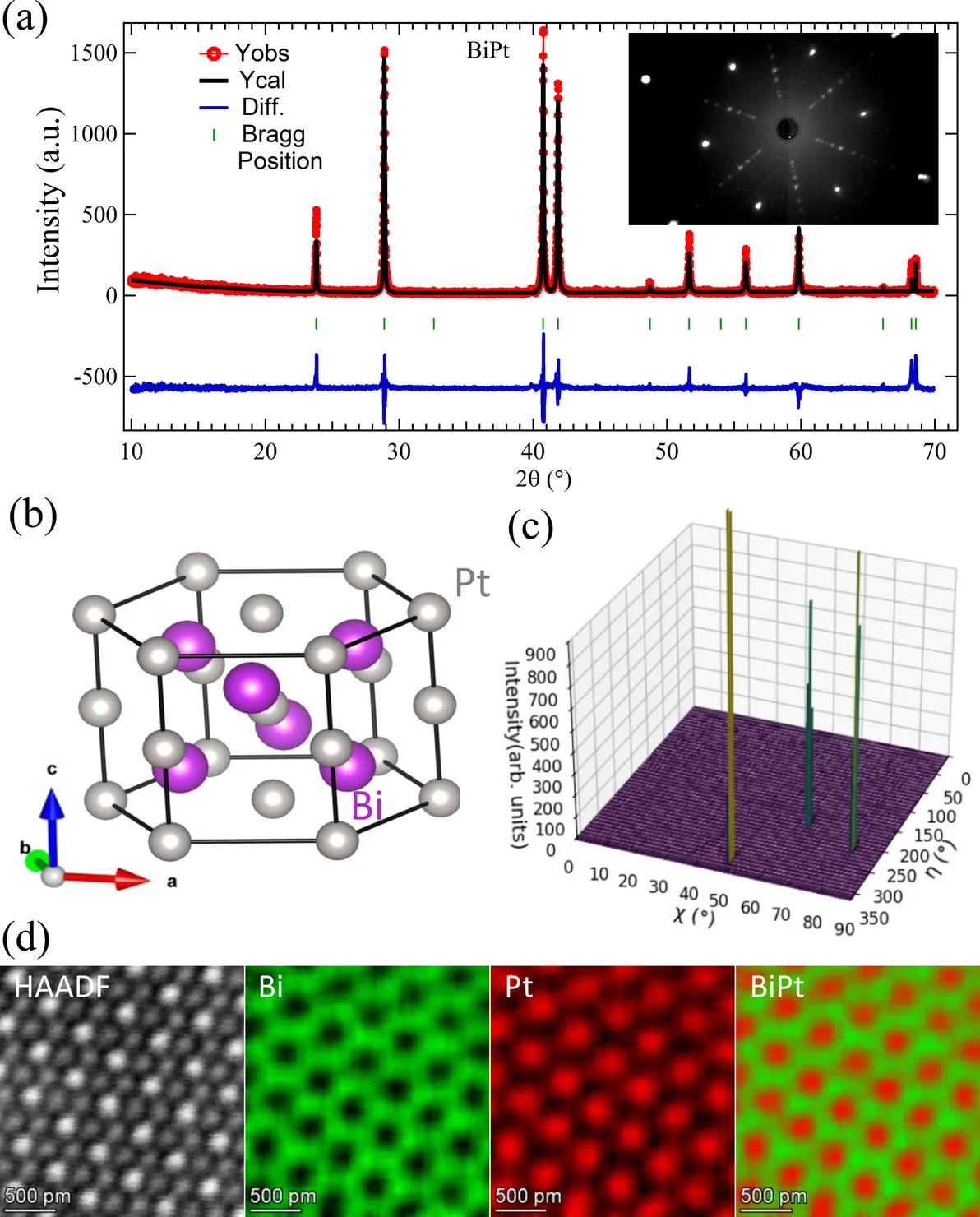
Binary Bi-Pd/Pt systems have attracted a lot of interest because of their topologically non-trivial nature along with superconductivity. We report the structural and superconducting properties of high-quality single-crystalline BiPt using a comprehensive range of experimental techniques, including X-ray diffraction, electron microscopy, muon spin rotation/relaxation (μSR), magnetization, resistivity, and heat capacity. Our findings establish that BiPt is a weak type-II superconductor with a transition temperature (Tc) of 1.2 K which exhibits pronounced anisotropic superconducting characteristics attributed to its hexagonal crystal structure. Magnetization and electronic transport studies reveal that BiPt lies within the dirty limit, while μSR and heat capacity data indicate conventional s-wave superconductivity that maintains time-reversal symmetry. This work provides valuable insights into the pairing symmetry and superconducting mechanism of topologically trivial BiPt, a sound comparison system for other Bi-based topologically nontrivial superconductors.
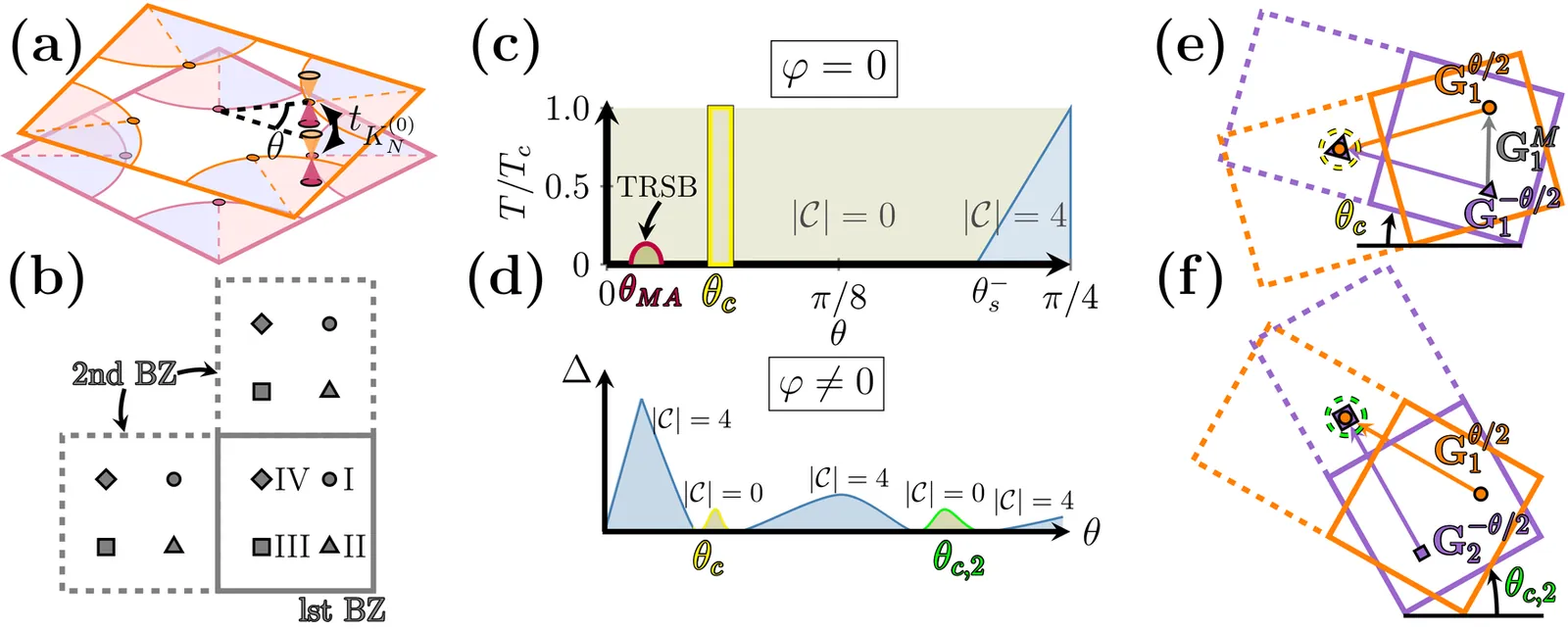
We demonstrate the emergence of gapped phases driven by the moiré superlattice that trivialize the topological states in twisted nodal superconductors. The effect arises from umklapp tunneling between non-adjacent Dirac points in momentum space close to specific twist angles or chemical potentials, determined by the Fermi surface geometry. We confirm the robustness of the non-topological phase against interactions with self-consistent calculations and show that this gap competes with the previously predicted topological gapped phases, leading to topological phase transitions. These transitions were overlooked in prior literature, signifying the necessity of modifying the phase diagrams of topological phases exhibited in twisted nodal superconductors with and without an interlayer current. We also estimate the relevant twist angles and discuss experimental signatures, focusing on twisted Bi$_2$Sr$_2$CaCu$_2$O$_{8+x}$
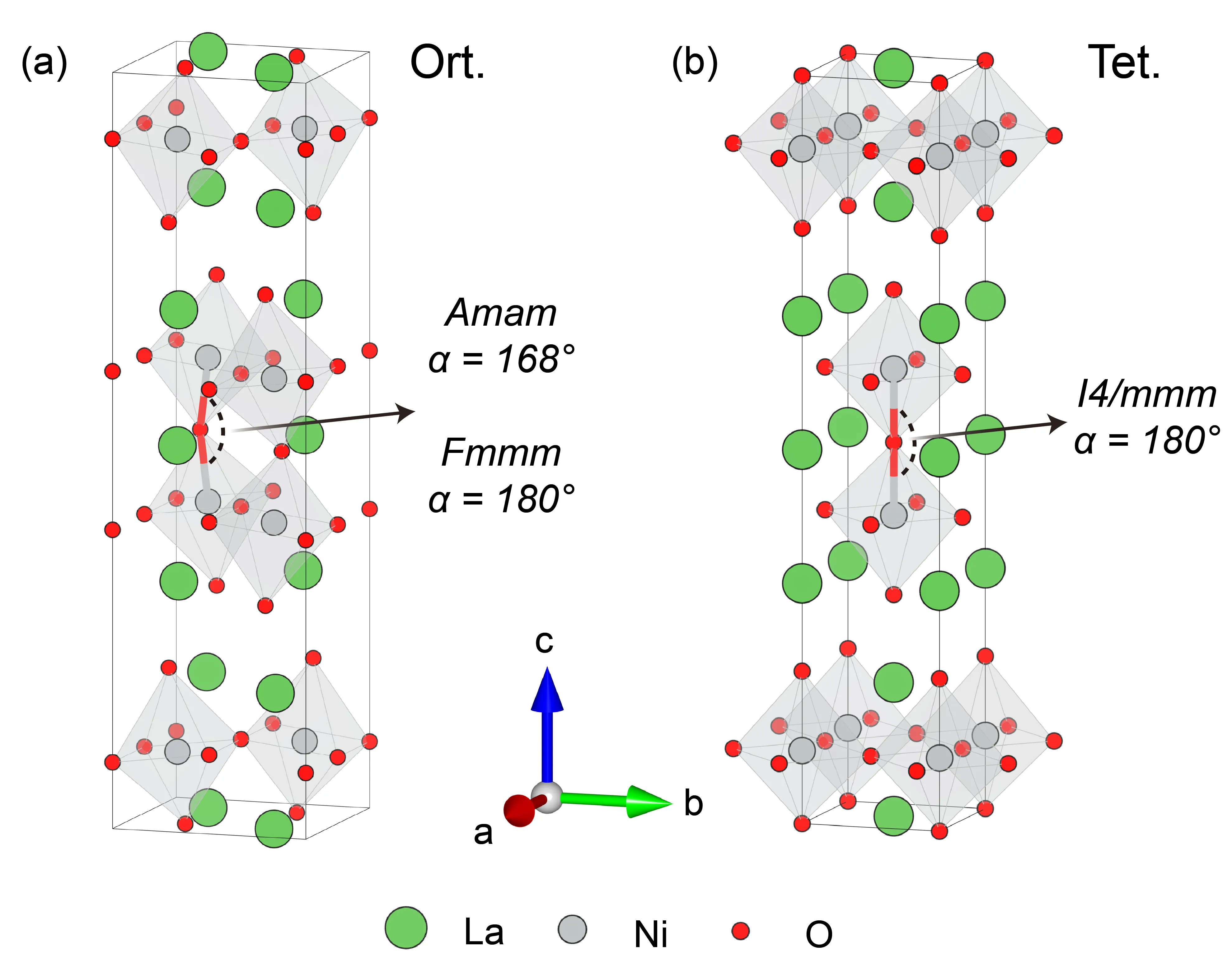
The precise crystal structure of La3Ni2O7 in its high-pressure superconducting state has been a subject of intense debate, with proposed models including both orthorhombic and tetragonal symmetries. Using high-pressure Raman spectroscopy combined with frst-principles calculations, we unravel the structural evolution of La3Ni2O7 under pressure up to 32.7 GPa. We identify a clear structural transition sequence: from the orthorhombic Amam phase to a mixed Amam+Fmmm phase at 4 GPa, followed by a complete transition to the tetragonal I4/mmm phase at 14.5 GPa, which is signaled by a pronounced phonon renormalization. The emergence of bulk superconductivity is found to coincide precisely with this transition to the I4/mmm phase. Our results de nitively establish the tetragonal I4/mmm structure as the host of superconductivity in La3Ni2O7, resolving a central controversy and providing a critical foundation for understanding the superconducting mechanism in nickelates.
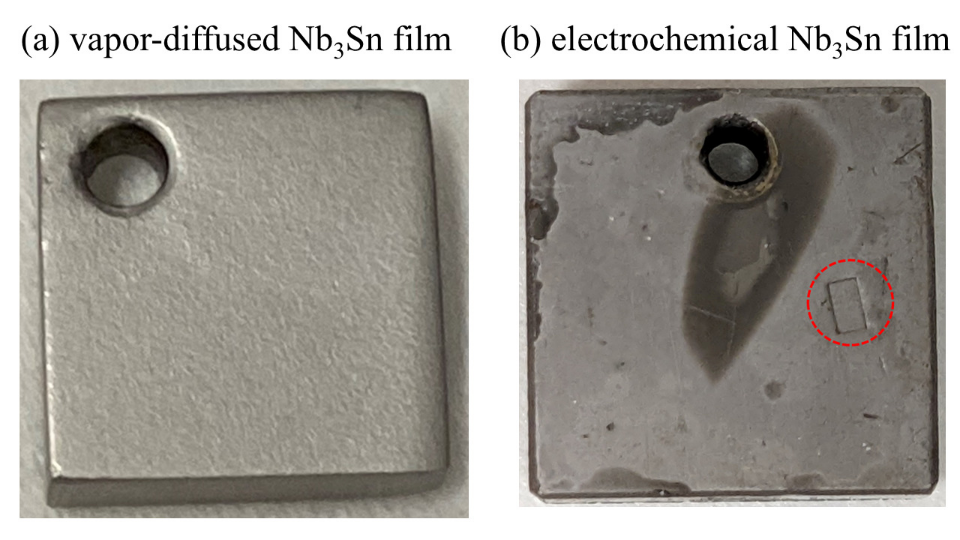
We use a near-field magnetic microwave microscope to investigate and compare rf vortex nucleation in two superconducting radio-frequency (SRF)-quality Nb3Sn films fabricated by different methods: a conventional vapor-diffused film and an electrochemically plated film followed by thermal annealing, both of which are deposited on Nb substrates. The microscope applies a localized rf magnetic field to the sample surface and measures the resulting third-harmonic response P3f, which is particularly sensitive to rf vortex nucleation triggered by surface defects. Both Nb3Sn films exhibit nontrivial P3f(T) structures below 7 K that display the key signatures associated with rf vortex nucleation at local defects. The electrochemical film additionally shows multiple P3f(T) structures between 14 K and 16 K that are absent in the vapor-diffused sample. Our results highlight the influence of fabrication method on rf vortex penetration properties and demonstrate the utility of third-harmonic response as a local diagnostic tool for surface defects in Nb3Sn films.
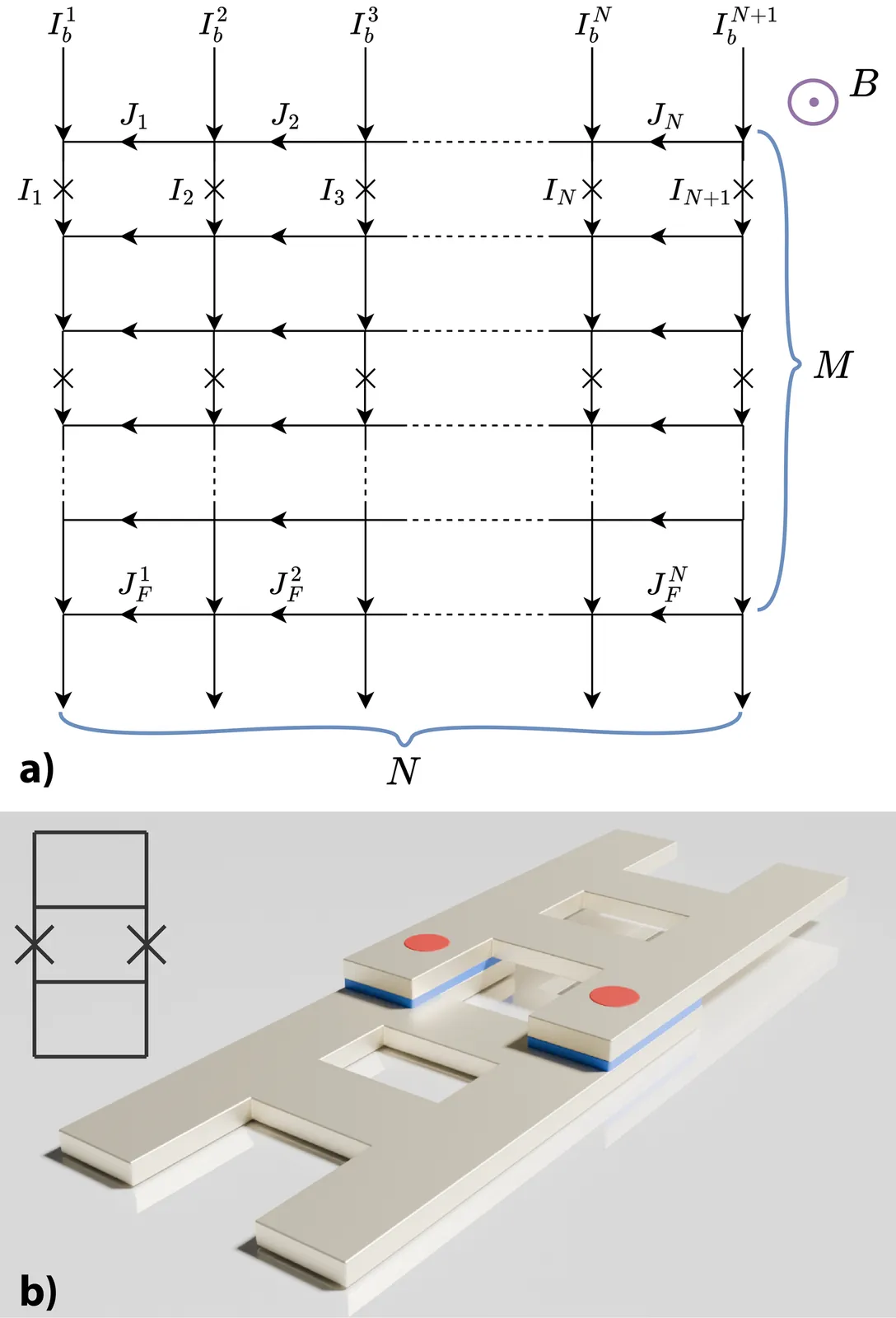
Superconducting Quantum Interference Devices (SQUIDs), formed by incorporating Josephson junctions into loops of superconducting material, are the backbone of many modern quantum sensing systems. It has been demonstrated that, by combining multiple SQUID loops into a two-dimensional (2D) array, it is possible to fabricate ultra-high-performing Radio frequency sensors. However, to function as absolute magnetometers, current-in-use arrays require the area of each SQUID loop in the array to be incommensurate and, in turn, forbid the achievement of their full potential in terms of quantum-limited performances. This is because imposing incommensurability in the areas contrasts with optimised performance in each single SQUID loop. In this work, we report that by selectively inserting bare sections of a superconducting circuit with no Josephson junctions, 2D SQUID arrays can operate as an absolute magnetometer even when no physical area spread is applied. Based on a generalisation of current available theories, a complete analytical formulation for the one-to-one correspondence between the distribution of these bare loops and what we call a synthetic area spread is unveiled. This synthetic spread represents the equivalent physical spread of incommensurate SQUID loops that you will use to obtain the absolute Voltage-Magnetic Flux response if no bare loops were in use. Our work opens the way to a broader use of this technology for the fabrication of ultra-high-performance absolute quantum sensors. Our approach is also experimentally verified by fabricating several 2D SQUID arrays incorporating bare superconducting loops and by demonstrating that they behave in alignment with what is suggested by our theory.
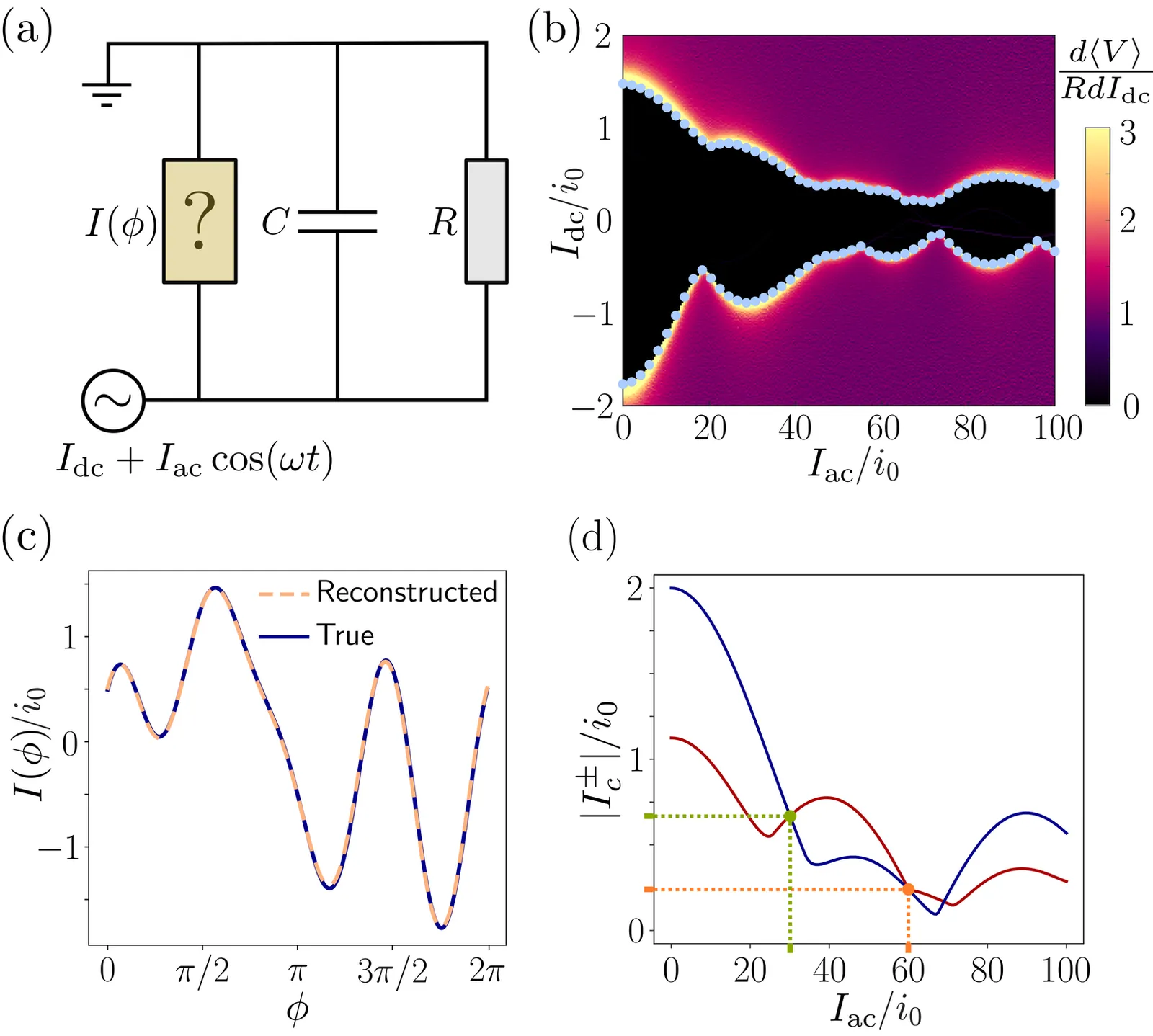
Extracting the current-phase relationship (CPR) of a single superconducting junction is challenging in practice and traditionally involves embedding the junction in a larger superconducting circuit containing SQUIDs and/or resonators. Applying ac driving to the junction has proven to be a viable and less invasive way to extract information about the few lowest harmonics of the CPR, by locating the integer and fractional Shapiro steps in the IV-curve of the driven junction. Here, we present an alternative driving-based method that allows to extract the full harmonic content of a CPR in a non-invasive way, by fitting the measured critical currents of the driven junction as a function of driving power. We test our method, both using numerical simulations and in experiments, and we show that it works very accurately, also in the presence of noise.
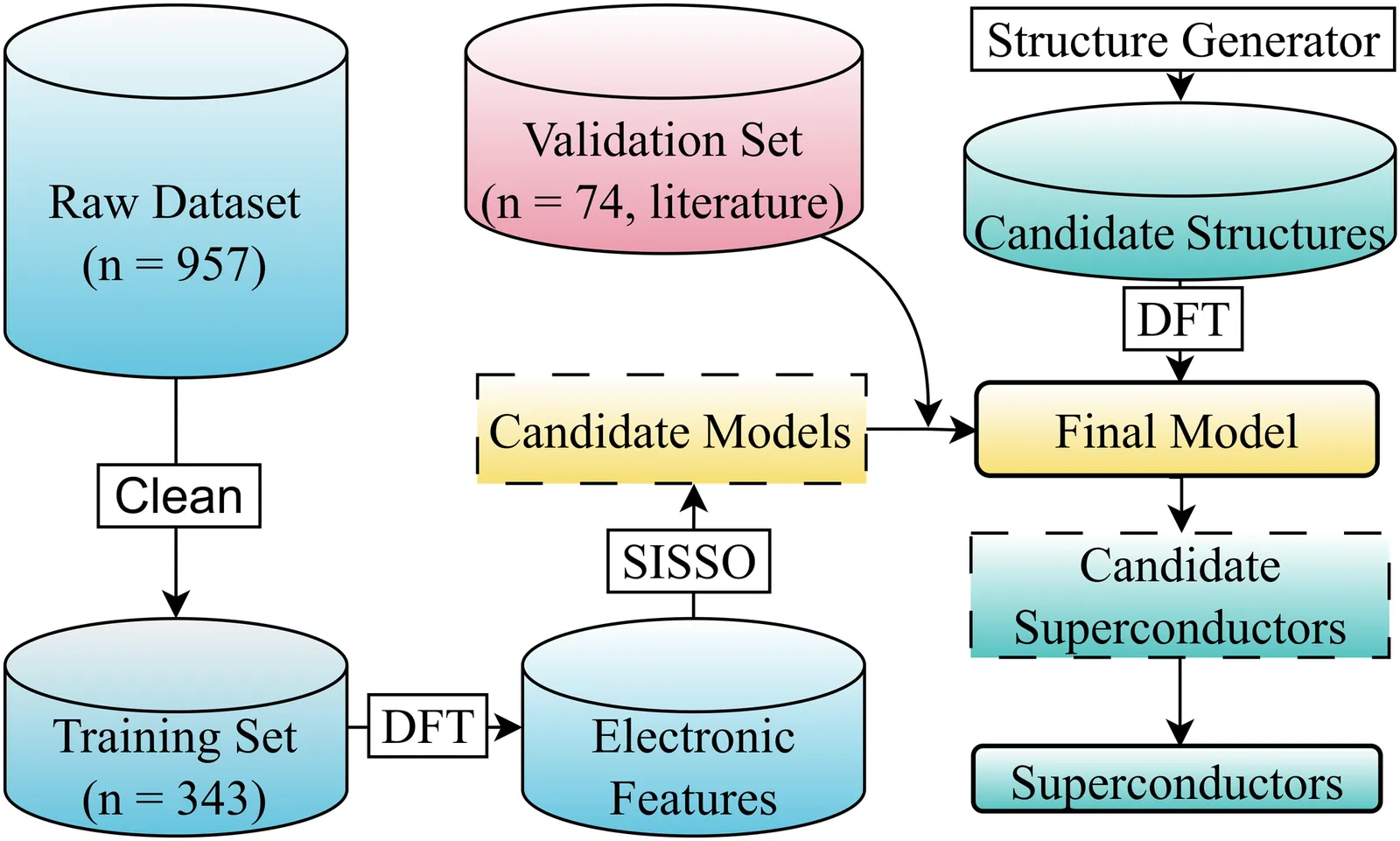
Room temperature superconductivity remains elusive, and hydrogen-base compounds despite remarkable transition temperatures(Tc) typically require extreme pressures that hinder application. To accelerate discovery under moderate pressures, an interpretable framework based on symbolic regression is developed to predict Tc in hydrogen-based superconductors. A key descriptor is an integrated density of states (IDOS) within 1 eV of the Fermi level (EF), which exhibits greater robustness than conventional single-point DOS features. The resulting analytic model links electronic-structure characteristics to superconducting performance, achieves high accuracy (RMSEtrain = 20.15 K), and generalizes well to external datasets. By relying solely on electronic structure calculations, the approach greatly accelerates materials screening. Guided by this model, four hydrogen-based candidates are identified and validated via calculation: Na2GaCuH6 with Tc =42.04 K at ambient pressure (exceeding MgB2), and NaCaH12, NaSrH12, and KSrH12 with Tc up to 162.35 K, 86.32 K, and 55.13 K at 100 GPa, 25 GPa, and 25 GPa, respectively. Beyond rapid screening, the interpretable form clarifies how hydrogen-projected electronic weight near EF and related features govern Tc in hydrides, offering a mechanism-aware route to stabilize high-Tc phases at reduced pressures.